

Introduction: Understanding the Power of IPL Match ID
The Indian Premier League (IPL) is not just a cricket tournament; it is a global spectacle powered by technology, data, and real-time engagement. While fans enjoy thrilling matches, big sixes, and nail-biting finishes, there is a powerful system working silently behind the scenes — and at the center of it lies the IPL Match ID.
The IPL Match ID is a unique identifier assigned to every match played in the tournament. It acts as a digital fingerprint that helps track, organize, and manage all match-related information. From live scores and ball-by-ball commentary to player statistics and fantasy cricket points, everything is connected through the IPL Match ID.
In today’s fast-paced digital world, where millions of fans follow matches across apps, websites, and live broadcasts, the IPL Match ID ensures that every piece of data is accurate and synchronized. Without it, delivering real-time updates and maintaining detailed match records would be nearly impossible.
In this article, we will explore how the IPL Match ID works, why it is so important, and how it enhances the overall cricket experience for fans, analysts, and platforms alike.
What is an IPL Match ID and how does it work?
The IPL Match ID is a unique numerical code assigned to every match in the Indian Premier League. It may look simple on the surface, but it plays a critical role in managing and organizing match-related data across multiple platforms. Every time a new IPL match is scheduled, a specific IPL Match ID is generated and linked to that particular game.
At its core, the IPL Match ID acts as a central reference point. It connects all the essential details of a match, including team names, player lineups, venue, date, and timing. Once the match begins, this same IPL Match ID is used to track every event in real time — such as runs scored, wickets taken, overs completed, and even ball-by-ball commentary.
The working process of IPL Match ID is highly systematic. Before the match starts, the ID is already embedded into various systems like live score platforms, broadcasting software, and fantasy cricket applications. As the match progresses, data is continuously updated and tagged with the IPL Match ID. This ensures that every update you see — whether on a mobile app or a TV screen — is accurate and synchronized.
Another important aspect of how IPL Match ID works is its role in data retrieval. Whenever a user opens a scorecard or checks match statistics, the system uses the IPL Match ID to fetch the exact data related to that specific match. This makes the entire process fast, reliable, and efficient.
In simple terms, the IPL Match ID works like a backbone for digital cricket operations. It keeps everything organized, connected, and instantly accessible, making it possible for millions of fans to enjoy a seamless and real-time IPL experience.
Why IPL Match ID is Important in Modern Cricket
In the digital era of cricket, where millions of fans rely on instant updates and real-time insights, the IPL Match ID has become an essential component of the entire ecosystem. It is not just a technical detail used by developers; it is a powerful tool that ensures accuracy, speed, and consistency across all cricket platforms.
One of the primary reasons the IPL Match ID is important is its role in real-time data accuracy. Every run, wicket, and delivery is recorded and tagged with a specific IPL match ID. This ensures that all platforms — whether mobile apps, websites, or TV broadcasts — display the same information without any mismatch or delay.
Another major significance of IPL Match ID lies in live score synchronization. When millions of users are checking scores at the same time, the system uses this unique identifier to fetch and update match data instantly. Without IPL Match ID, delivering seamless live updates would be extremely difficult and prone to errors.
The IPL Match ID also plays a crucial role in fantasy cricket platforms. These platforms depend on accurate match data to calculate user points. By using IPL Match ID, they can precisely track player performances and ensure fair scoring. This builds trust among users and enhances the overall gaming experience.
In addition, IPL Match ID is vital for data analytics and performance tracking. Analysts use it to study player performance, team strategies, and match trends. Since every piece of data is linked to a specific match ID, it becomes easier to compare performances across different games and seasons.
Another important aspect is content organization and archiving. Sports websites and apps store thousands of match records, and IPL Match ID helps them manage this data efficiently. Whether it’s retrieving an old scorecard or generating match highlights, everything is made possible through this unique identifier.
Furthermore, IPL Match ID supports broadcasting technology. Live TV graphics, score overlays, and commentary systems all rely on this ID to display accurate and synchronized information during matches.
In conclusion, the IPL Match ID is a foundational element of modern cricket technology. It ensures that everything — from live scores to historical data — is organized, accurate, and instantly accessible. Without it, the smooth digital experience that fans enjoy today would simply not be possible.
Role of IPL Match ID in Live Scores and Real-Time Updates
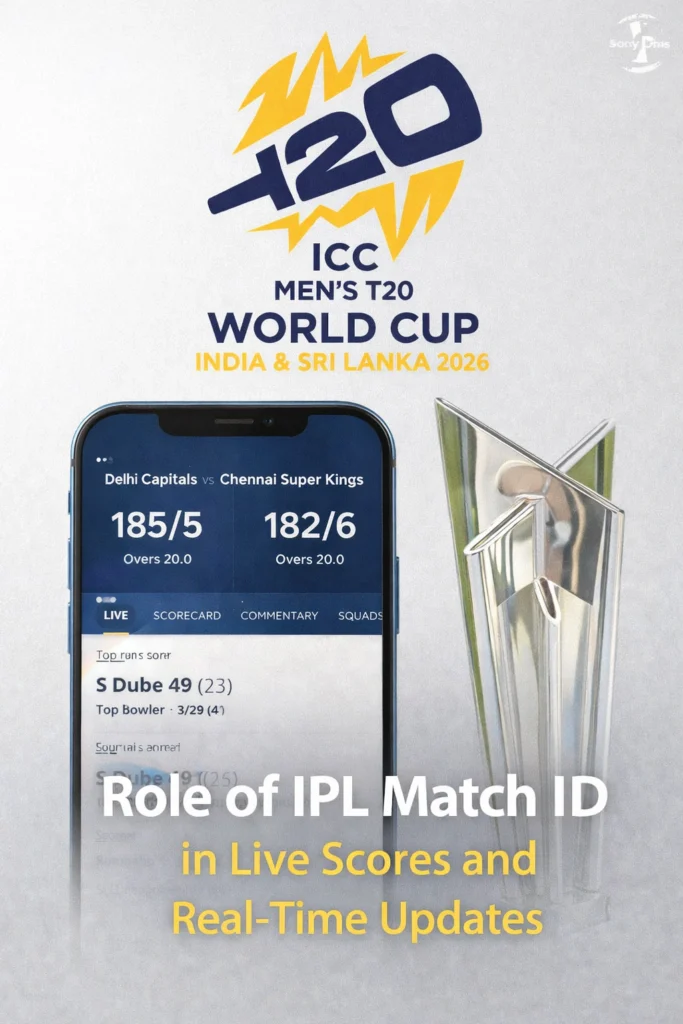
In today’s fast-moving digital environment, cricket fans expect instant access to live scores and match updates. Whether they are watching the game on television, following it on a mobile app, or checking updates on a website, everything needs to be fast and accurate. This is where the IPL Match ID plays a crucial role.
The IPL Match ID acts as the core reference point for all live data systems. As soon as a match begins, every single event—from the first ball to the final delivery—is recorded and linked to that specific IPL match ID. This ensures that all updates are correctly assigned to the right match without any confusion.
When a player hits a boundary or a wicket falls, the data is instantly captured and sent to servers. These servers use the IPL Match ID to identify which match the update belongs to. Within seconds, the updated score appears across multiple platforms, including mobile apps, sports websites, and live broadcast graphics.
Another important aspect is real-time synchronization. Millions of users may be tracking the same match at the same time, but thanks to the IPL Match ID, everyone sees consistent and accurate information. It eliminates the risk of mismatched scores or delayed updates, creating a smooth experience for users worldwide.
The IPL Match ID also supports ball-by-ball commentary. Every delivery is logged with detailed information such as runs scored, type of shot, bowler details, and match situation. This data is tied to the IPL Match ID, allowing platforms to provide detailed commentary that updates instantly.
In addition, push notifications and alerts rely heavily on IPL Match ID. When users receive updates like “Wicket fallen” or “50 scored,” these alerts are triggered based on match-specific data linked to the IPL match ID.
Live score widgets, scorecards, and match summaries are all powered by this identifier. Whenever a user opens a match page, the system fetches all relevant data using the IPL Match ID, ensuring that the displayed information is accurate and up to date.
In simple terms, the IPL Match ID is the engine that drives live cricket updates. It connects data sources, ensures synchronization, and delivers real-time information to millions of fans without delay. Without it, the fast and seamless live cricket experience we enjoy today would not be possible.
IPL Match ID in Data Analysis and Performance Insights
Beyond live updates and score tracking, the IPL Match ID also plays an important role in deeper analysis and performance evaluation. While fans may focus on runs and wickets, analysts and teams rely on structured data to understand how the game is evolving. This is where match identification systems become extremely useful.
Every match generates a massive amount of data. From batting patterns and bowling variations to field placements and partnerships, everything is recorded and stored. By assigning a unique reference to each game, analysts can easily organize and study this information without confusion.
For example, when experts want to review a player’s performance in a specific game, they can quickly access all related data through that match reference. This includes ball-by-ball details, scoring areas, strike rotation, and pressure moments. It helps in building a complete picture rather than relying on basic statistics.
Teams also use this data to improve strategies. Coaches and support staff analyze past matches to identify strengths and weaknesses. They can study how a player performed in certain conditions or against specific opponents. This level of insight is only possible because every match is clearly separated and recorded.
Another important use is in comparing performances across multiple games. Analysts can track trends such as consistency, form, and impact in different situations. Whether it is a batsman’s performance in chase scenarios or a bowler’s effectiveness in death overs, all such insights come from well-organized match data.
Media platforms and commentators also benefit from this system. It allows them to present meaningful statistics during live coverage, making the viewing experience more informative and engaging.
In simple terms, while fans may not directly notice it, the structured identification of matches helps transform raw data into valuable insights. It supports better decision-making, smarter strategies, and a deeper understanding of the game.
How IPL Match ID Supports Fantasy Cricket Platforms
Fantasy cricket has become a major part of the IPL experience, allowing fans to actively participate in matches by creating their own teams and earning points based on real player performances. Behind this engaging system, structured match data plays a key role, and this is where the IPL Match ID becomes highly valuable.
Every fantasy platform depends on accurate and real-time match information. The IPL Match ID helps these platforms connect player performances directly to the correct match. Whether it is runs scored, wickets taken, catches, or strike rates, all statistics are tracked and assigned properly using this unique identifier.
When a user selects players for a fantasy team, the platform maps those players to a specific match. As the game progresses, performance data is continuously updated. The IPL Match ID ensures that all these updates are linked to the right match, allowing the system to calculate points accurately without any confusion.
Another important role is in real-time point calculation. As soon as a player hits a boundary or takes a wicket, the data is processed and points are updated instantly. This real-time experience is made possible because the match data is clearly organized and tracked.
The IPL Match ID also helps in managing multiple matches happening across the tournament. Since there can be several games in a short span, platforms need a reliable way to separate data. This identifier ensures that each match is handled independently, preventing errors in scoring or player tracking.
In addition, it supports features like leaderboards, contest results, and performance summaries. Once the match ends, the final data linked to the IPL Match ID is used to declare winners and distribute rewards fairly.
For users, this creates a smooth and trustworthy experience. They can rely on the platform knowing that their points are calculated correctly based on actual match performance.
In essence, the IPL Match ID acts as a foundation for fantasy cricket systems. It keeps everything organized, accurate, and synchronized, allowing millions of users to enjoy a competitive and engaging gaming experience during the IPL season.
Use of Match Identification in Broadcasting and Media Coverage
Modern cricket broadcasting is far more advanced than it used to be. Viewers no longer just watch the game; they experience it through detailed graphics, instant replays, and real-time statistics. Behind this smooth presentation lies a well-structured system that helps organize match data efficiently.
Every live broadcast depends on accurate and synchronized information. From on-screen scoreboards to player statistics, everything must update instantly as the match progresses. A unique match reference allows broadcasting systems to pull the correct data and display it without delays or confusion.
For example, when a batsman reaches a milestone or a bowler takes a wicket, the information appears on the screen within seconds. This is possible because the system already knows which match the data belongs to and updates it accordingly. It ensures that viewers receive consistent information whether they are watching on television or streaming online.
Commentary teams also rely on this structured data. They receive detailed insights such as past performances, head-to-head records, and situational statistics during the match. This helps them provide more informative and engaging commentary rather than just describing what is happening on the field.
Replay and highlight systems are another important area where match identification is useful. Key moments like boundaries, wickets, and turning points are tagged and stored. This makes it easy for broadcasters to quickly show replays or compile match highlights after the game ends.
Media platforms and sports journalists benefit as well. They use organized match data to create reports, summaries, and post-match analysis. Since each match is clearly recorded, retrieving accurate information becomes simple and efficient.
Overall, structured match tracking plays a silent but important role in enhancing how cricket is presented to the audience. It ensures that everything viewers see — from live scores to expert insights — is timely, accurate, and easy to understand.
Role in Historical Records and Match Archives
Over the years, the IPL has produced countless memorable moments, from record-breaking innings to dramatic last-over finishes. Preserving these moments accurately is essential, and this is where structured match tracking becomes highly valuable.
Every match is stored as part of a larger archive, allowing fans, analysts, and organizations to revisit past games whenever needed. A unique match reference ensures that each game is recorded separately with all its details intact. This includes scorecards, player performances, match results, and key highlights.
When someone searches for an old match, the system can quickly retrieve all relevant information without confusion. Whether it’s a game from the current season or one played many years ago, the data remains organized and easily accessible. This is especially useful for researchers and analysts who study trends over long periods.
Historical comparisons also become much easier with properly stored match data. Experts can compare performances across seasons, analyze how teams have evolved, and track records over time. For example, identifying the highest scores, best bowling figures, or fastest chases relies on well-maintained archives.
Media platforms often use these records to create engaging content. Articles like “Top IPL Matches of All Time” or “Best Performances in IPL History” depend on accurate historical data. Without a clear system for organizing matches, such content would be difficult to produce.
Fans also benefit from this archival system. They can relive iconic moments, revisit classic matches, and explore detailed statistics from past seasons. It adds depth to the overall cricket experience and keeps the history of the tournament alive.
In simple terms, proper match identification ensures that every IPL game becomes a permanent part of cricket history. It allows the tournament’s legacy to be preserved, studied, and enjoyed for years to come.
Technical Structure Behind IPL Match ID Systems
Behind the excitement of every IPL game lies a strong technical framework that manages and processes massive amounts of data. At the center of this system is the IPL Match ID, which acts as a key element in organizing information efficiently across databases and platforms.
In technical terms, the IPL Match ID works as a primary key in database systems. This means every match is stored as a unique record, and all related data — such as player statistics, ball-by-ball updates, and match results — is connected to this single identifier. This structure allows systems to quickly store, update, and retrieve information without confusion.
When a match is scheduled, its IPL Match ID is created and linked to various data tables. These tables may include team details, player profiles, match events, and scoring information. Instead of storing all data in one place, it is distributed across multiple tables but connected through the same match identifier. This makes the system more organized and efficient.
Another important aspect is API integration. Many apps and websites rely on APIs (Application Programming Interfaces) to fetch live cricket data. The IPL Match ID is used as a parameter in these API requests. For example, when a user opens a match page, the system sends a request using the IPL Match ID to retrieve specific details like scores, commentary, and statistics.
The IPL Match ID also helps in automation. Modern systems are designed to update data automatically as the match progresses. Since every update is linked to a unique identifier, the system can process information in real time without manual input.
Scalability is another key benefit. During live matches, millions of users may access data simultaneously. A well-structured system using IPL Match ID ensures that servers can handle high traffic while maintaining speed and accuracy.
Security and data integrity are also improved through this approach. Since each match has a unique reference, it reduces the chances of data overlap or errors, ensuring reliable information across all platforms.
In summary, the IPL Match ID is not just a simple number but a critical part of the technical infrastructure. It enables efficient data management, fast retrieval, and seamless integration across digital platforms, making modern cricket experiences possible.
Challenges and Limitations of IPL Match ID Systems
While the IPL Match ID is a powerful and essential part of modern cricket infrastructure, it is not without its challenges. Managing real-time data for millions of users across multiple platforms requires precision, and even small issues can affect the overall experience.
One of the main challenges is data synchronization. Since multiple platforms rely on the same match data, any delay or mismatch can create inconsistencies. For example, if one system updates slightly faster than another, users may see different scores for a brief moment. Maintaining perfect synchronization across all systems is a complex task.
Another limitation is dependency on data providers. Most platforms rely on third-party data feeds. If there is a delay or error at the source, it directly impacts all systems using that data. Even though the IPL Match ID helps organize information, it cannot prevent issues caused by incorrect or delayed input.
High traffic during live matches is another challenge. Popular IPL games attract millions of viewers at the same time. Systems must handle massive numbers of requests linked to a single match. Even with a structured identifier like IPL Match ID, servers can face pressure, leading to slower updates or temporary outages.
There is also the issue of integration across different technologies. Various platforms — mobile apps, websites, and broadcast systems — may use different technologies and formats. Ensuring that all of them interpret and use the IPL Match ID correctly requires careful planning and standardization.
Error handling is another important factor. If the wrong match ID is assigned or used incorrectly, it can lead to data being displayed for the wrong match. Although such cases are rare, they highlight the importance of maintaining strict data validation processes.
Finally, as technology continues to evolve, systems must remain scalable and adaptable. New features like advanced analytics, interactive content, and AI-driven insights require even more complex data handling. The IPL Match ID system must continuously evolve to support these growing demands.
In conclusion, while the IPL Match ID is a strong foundation for managing cricket data, it also comes with technical challenges. Addressing these issues is essential to ensure a smooth, accurate, and reliable experience for fans, platforms, and broadcasters alike.
Future Scope of IPL Match ID in Advanced Cricket Technology
As cricket continues to evolve with technology, the role of structured match identification is expected to grow even further. What currently supports live scores and basic analytics will soon become a key driver of advanced innovations in the game.
One of the most exciting areas is artificial intelligence and predictive analysis. With well-organized match data, systems can study patterns and predict outcomes such as win probabilities, player performance, and match scenarios. This allows fans to gain deeper insights and makes the viewing experience more interactive.
Another emerging trend is augmented and immersive viewing. Future broadcasts may include real-time overlays showing player stats, field positions, and match insights directly on the screen. These features rely on precise data mapping, which is made possible through structured match tracking.
The growth of interactive fan engagement is also closely connected to this system. Features like live polls, prediction games, and second-screen experiences depend on accurate and real-time match data. Fans will not just watch matches but actively participate in them through digital platforms.
In addition, personalized content delivery is becoming more important. Streaming platforms can recommend highlights, player performances, or key moments based on user preferences. Since each match is uniquely identified, it becomes easier to deliver tailored content to individual users.
The integration of wearable technology and player tracking is another area of development. Data such as player movement, speed, and fitness metrics can be linked to specific matches, providing deeper insights for teams and analysts.
From a technical perspective, systems will continue to become more scalable and efficient. With increasing global viewership, platforms must handle larger volumes of data while maintaining speed and accuracy. Structured identifiers will remain central to managing this complexity.
In simple terms, the future of cricket technology will rely heavily on organized and reliable data systems. As innovations continue to shape the game, the importance of structured match tracking will only increase, helping deliver richer, smarter, and more engaging experiences for fans around the world.
Conclusion: Why IPL Match ID Matters More Than You Think
At first glance, the IPL Match ID may seem like just a technical detail hidden behind the scenes. However, as we have explored throughout this article, it plays a far more significant role in shaping the modern cricket experience.
From live score updates and real-time synchronization to fantasy cricket, broadcasting, and advanced analytics, everything depends on a well-structured system. The IPL Match ID acts as the central link that keeps all match-related data organized, accurate, and instantly accessible across platforms.
It ensures that millions of fans receive the same information at the same time, without confusion or delay. It also helps analysts, developers, and media professionals work with reliable data, enabling better insights and richer content.
As technology continues to evolve, the importance of IPL Match ID will only increase. Future innovations like AI-driven predictions, immersive viewing experiences, and personalized content will rely even more on precise and well-managed data systems.
In simple terms, while players create unforgettable moments on the field, the IPL Match ID ensures those moments are captured, processed, and delivered seamlessly to fans everywhere.
So, the next time you check a live score or follow a match online, remember that behind that smooth experience is a powerful system — and at its core is the IPL Match ID, quietly making everything work perfectly.
Frequently Asked Questions (FAQs) About IPL Match ID
1. What is an IPL Match ID?
The IPL Match ID is a unique number assigned to every match in the Indian Premier League. It helps systems track and manage all match-related data such as scores, player stats, and commentary.
2. Why is IPL Match ID important?
The IPL Match ID is important because it ensures accurate data tracking, real-time updates, and proper synchronization across apps, websites, and broadcasting platforms.
3. How does IPL Match ID help in live score updates?
Every live update, including runs, wickets, and overs, is linked to a specific IPL Match ID. This allows platforms to instantly fetch and display the correct match information.
4. Is IPL Match ID useful for fantasy cricket?
Yes, fantasy cricket platforms use the IPL Match ID to track player performance and calculate points accurately based on real match data.
5. Can users see IPL Match ID directly?
In most cases, users do not notice the IPL Match ID. It works in the background, but some advanced platforms and APIs may display it.
6. How can I check live IPL matches and details?
You can check live matches, scores, and updates by visiting platforms like
👉 t20worldcup
which provide real-time cricket data and match insights.
7. Does IPL Match ID remain the same after the match ends?
Yes, the IPL Match ID remains the same even after the match is completed. It is used for storing historical data, scorecards, and match records.
8. Is IPL Match ID used in past match analysis?
Absolutely. Analysts use the IPL Match ID to access detailed historical data and compare performances across different matches and seasons.
9. Who uses IPL Match ID the most?
The IPL Match ID is widely used by developers, data providers, broadcasters, fantasy platforms, and analysts to manage and analyze cricket data.
10. Will IPL Match ID become more important in the future?
Yes, with the rise of AI, advanced analytics, and interactive features, the IPL Match ID will play an even bigger role in delivering smarter and more engaging cricket experiences.
