
Introduction
In today’s digital era, sports betting has moved far beyond traditional bookmakers and physical betting shops. With just a smartphone and internet connection, anyone can participate in wagering on their favorite matches within seconds. At the center of this rapidly expanding ecosystem is one essential element — the Sport Betting ID.
A Sport Betting ID is more than just a username and password. It is a gateway into the global betting marketplace, where millions of users place wagers on cricket leagues, football tournaments, basketball games, and international sporting events every day. It connects an individual to betting platforms, financial transactions, promotional offers, and real-time match odds — all in one digital account.
However, while creating a Sport Betting ID may appear simple, its impact can be significant. It introduces not only opportunities for entertainment and potential winnings but also financial risks, psychological triggers, and legal considerations. Many new users focus only on the excitement of placing bets, without fully understanding how the system works or the responsibilities that come with it.
This article explores the concept of a Sport Betting ID in depth — explaining how it functions, why it is important, the benefits and risks involved, and the key factors every bettor should carefully consider before getting started. Whether you are new to online betting or seeking a clearer understanding of how betting accounts operate, this guide will provide valuable insight into the realities behind the screen.
Understanding How a Sport Betting ID Actually Works
A Sport Betting ID may look simple on the surface — just a login and password — but behind that small digital gateway operates a complex system of verification, tracking, financial processing, and behavioral monitoring. To truly understand the realities of online betting, it is important to break down how this ID functions within the larger betting ecosystem.
1. Registration and Account Creation
The journey begins when a user signs up on a betting platform. During registration, the system collects basic details such as:
- Full name
- Date of birth
- Email address
- Mobile number
- Residential information
In regulated markets, identity verification (KYC – Know Your Customer) is mandatory. Users may need to upload government-issued identification and proof of address before their Sport Betting ID becomes fully active.
This step is not just administrative — it protects platforms from fraud, prevents underage gambling, and ensures compliance with financial regulations.
2. Wallet Integration and Fund Management
Once the Sport Betting ID is verified, it is linked to a digital wallet inside the platform. This wallet allows users to:
- Deposit money
- Withdraw winnings
- Track transaction history
- View bonus balances
Every deposit and bet is recorded automatically under the unique ID. Unlike cash betting, online transactions create a permanent digital trail. This data helps platforms monitor unusual patterns, detect suspicious activity, and manage risk exposure.
However, for users, this also means spending can accumulate quickly without the physical sensation of handing over cash — a key psychological factor in online gambling behavior.
3. Access to Betting Markets
After funding the account, the Sport Betting ID provides entry into various betting markets. These markets may include:
- Pre-match betting
- Live or in-play betting
- Tournament winner predictions
- Player performance bets
- Over/under and spread bets
The ID functions as a control panel. With one click, a bettor can place wagers across multiple sports and events happening around the world simultaneously.
The convenience is powerful — and so is the temptation.
4. Real-Time Odds and Algorithmic Systems
Modern betting platforms use advanced algorithms to adjust odds in real time. These odds are influenced by:
- Match progress
- Player injuries
- Betting volume
- Statistical models
The Sport Betting ID connects users directly to this constantly updating system. During live matches, odds may change within seconds. This creates urgency and can encourage impulsive decision-making.
The faster the system works, the faster money can be won — or lost.
5. Bonuses and Promotional Tracking
Most platforms attach promotional offers directly to a Sport Betting ID. These may include:
- Welcome bonuses
- Reload bonuses
- Cashback offers
- Referral rewards
Each offer is linked to wagering requirements tracked automatically by the system. The ID ensures that users must complete specific betting conditions before withdrawals are permitted.
Many bettors misunderstand these conditions, which can lead to frustration and repeated betting to “unlock” bonuses.
6. Behavioral Monitoring and Risk Control
In regulated environments, platforms monitor betting behavior for signs of problem gambling. A Sport Betting ID helps detect:
- Rapid deposit increases
- Continuous betting without breaks
- High-risk wagering patterns
- Unusual account activity
Some platforms send automated alerts encouraging responsible gambling. Others may temporarily restrict accounts showing harmful behavior patterns.
This monitoring serves both legal compliance and brand protection purposes.
7. Withdrawal and Settlement Process
When a bet wins, the payout is credited directly to the Sport Betting ID wallet. Withdrawal requests are processed after verification checks, which may include:
- Identity confirmation
- Bonus clearance validation
- Fraud prevention review
Processing times vary depending on payment method and platform policies. While deposits are usually instant, withdrawals may take longer — a structural design that encourages continued betting rather than immediate cash-out.
8. Data Collection and Personalization
Every action under a Sport Betting ID generates data. Platforms analyze:
- Favorite sports
- Betting frequency
- Average stake size
- Winning and losing patterns
Using this information, companies personalize offers, notifications, and promotions to keep users engaged. This targeted marketing strategy is one of the strongest drivers of repeat betting activity.
Understanding this mechanism helps users recognize how platforms encourage ongoing participation.
The Bigger Picture
A Sport Betting ID is not just a simple login — it is the central node connecting identity verification, financial systems, risk management, behavioral analytics, and promotional strategies.
It offers speed, convenience, and access to global sporting events. But it also simplifies the process of spending money in high-risk environments.
Before placing any wager, it is essential to understand how the system behind the Sport Betting ID operates — because once active, every click carries financial consequences.
The Psychology Behind Sport Betting ID Usage
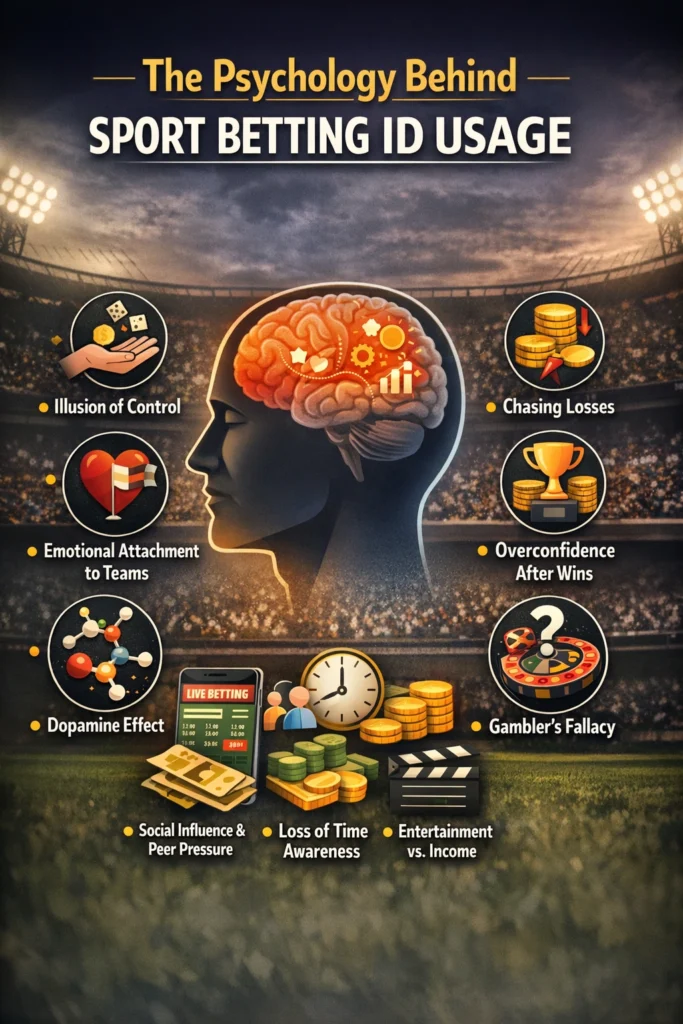
Behind every Sport Betting ID is not just a user account — but a human mind influenced by emotion, bias, hope, and risk perception. While many people believe betting decisions are based purely on logic or sports knowledge, psychology plays a far greater role than most bettors realize.
Understanding the mental forces at work can help individuals avoid impulsive behavior and long-term financial damage.
1. The Illusion of Control
One of the strongest psychological triggers in sports betting is the illusion of control. Because sports involve statistics, team history, player form, and expert analysis, bettors often believe they can predict outcomes accurately.
When someone creates a Sport Betting ID, they gain access to detailed stats, performance charts, and betting markets. This information can create confidence — sometimes false confidence. While research and knowledge can improve understanding, no bettor can control unpredictable elements such as injuries, weather changes, referee decisions, or unexpected performance swings.
The illusion of control makes risk feel smaller than it truly is.
2. Emotional Attachment to Teams
Fans naturally develop emotional bonds with their favorite teams and players. When using a Sport Betting ID, many bettors place wagers based on loyalty rather than probability.
This emotional bias leads to:
- Overestimating their team’s chances
- Ignoring negative performance trends
- Increasing bet size during big matches
Betting emotionally rather than strategically often results in avoidable losses.
3. The Dopamine Effect
Every time a bet is placed, the brain releases dopamine — the chemical associated with excitement and anticipation. Importantly, dopamine is released not only when winning, but also while waiting for the result.
Live betting intensifies this effect. As odds shift in real time, the anticipation cycle becomes shorter and more frequent. The Sport Betting ID provides instant access, allowing repeated bets within minutes.
This rapid cycle of risk and reward can become addictive, even if the bettor is losing money overall.
4. Chasing Losses
One of the most dangerous behaviors associated with a Sport Betting ID is “chasing losses.” After losing a bet, some users feel a strong urge to recover the lost money immediately.
This often leads to:
- Increasing bet amounts
- Taking higher risks
- Placing impulsive live bets
- Ignoring bankroll limits
Instead of recovering losses, this pattern frequently deepens financial damage. The belief that “the next bet will fix everything” is psychologically powerful but statistically risky.
5. Overconfidence After Wins
Winning can be just as psychologically risky as losing. After a series of successful bets, bettors may feel invincible. This overconfidence can cause:
- Larger stake sizes
- Riskier betting markets
- Reduced caution
The Sport Betting ID makes scaling up easy. With a few clicks, a user can double or triple previous bet amounts. Without strict discipline, a single loss can erase multiple previous wins.
6. The Gambler’s Fallacy
The gambler’s fallacy is the mistaken belief that past outcomes influence future independent events. For example:
- Believing a team “must win” after losing several matches
- Thinking a scoring drought guarantees an upcoming goal
- Assuming luck will “balance out” over time
Sports outcomes do not adjust to compensate for previous results. Each event remains uncertain. Yet this cognitive bias strongly affects betting behavior.
7. Social Influence and Peer Pressure
Social media, friends, and online communities significantly influence betting decisions. Seeing others share winning slips or large payouts can create pressure to participate.
A Sport Betting ID provides immediate access to act on that pressure. When major tournaments or finals take place, social hype can push individuals into betting even if they initially had no intention to do so.
This social reinforcement normalizes risk-taking behavior.
8. The “Small Bet” Justification
Many people justify betting by saying, “It’s just a small amount.” While occasional small bets may seem harmless, repeated small wagers can accumulate into significant losses over time.
Digital platforms make micro-betting easy. The absence of physical cash reduces the emotional weight of spending. A Sport Betting ID allows seamless transactions, which can mask how quickly funds are decreasing.
9. Loss of Time Awareness
Online betting platforms are designed for continuous engagement. With multiple matches happening across time zones, there is always another event to bet on.
Users may lose track of:
- Time spent on the platform
- Total money wagered in a session
- Emotional fatigue
The more frequently a Sport Betting ID is used, the greater the exposure to cumulative risk.
10. The Entertainment vs. Income Confusion
A critical psychological trap is confusing entertainment with income generation. Some users begin betting for fun but gradually shift toward viewing it as a way to earn money.
This mindset change increases pressure and emotional stress. When betting becomes financially “necessary,” rational decision-making often declines.
Professional betting requires strict discipline, advanced data analysis, and emotional control — skills most casual users do not consistently apply.
Why Understanding Psychology Matters
The true risk of a Sport Betting ID does not lie only in the odds — it lies in human behavior. Betting platforms are structured to maximize engagement. Psychological triggers such as anticipation, reward cycles, and personalization strategies encourage continued participation.
Recognizing these influences does not mean betting must be avoided entirely. It means awareness is essential. When users understand the mental patterns at play, they can:
- Set strict financial limits
- Avoid emotional decisions
- Take breaks after losses
- Treat betting as controlled entertainment
In the next section, we will examine the financial realities of sports betting — including bankroll management, long-term loss probabilities, and how platforms maintain profitability.
The Financial Realities of Using a Sport Betting ID
While psychology influences decision-making, the long-term outcome of sports betting is ultimately determined by mathematics. Every Sport Betting ID operates within a system designed to generate profit for the betting platform. Understanding the financial mechanics behind that system is essential before risking money.
Betting is not structured as an equal game between the bettor and the operator. The advantage — even if small — always belongs to the platform.
1. The House Edge Explained
Every betting platform builds a margin into its odds. This margin is known as the house edge.
For example, in a perfectly balanced event with two equal outcomes, true probability might suggest even odds. However, bookmakers slightly adjust the payout in their favor. That small difference ensures that, over thousands or millions of bets, the platform remains profitable.
Even a 3–7% margin can generate massive revenue when applied to high betting volumes. For the individual bettor, this means:
- Short-term wins are possible
- Long-term profitability is statistically unlikely
A Sport Betting ID gives access to the market — but the mathematical structure always favors the operator.
2. Why Most Bettors Lose Over Time
Many users experience occasional wins, especially early on. However, long-term patterns often show consistent losses. This happens because:
- Emotional betting overrides strategy
- Bankroll management is ignored
- Odds margins accumulate over repeated wagers
- Impulsive live betting increases risk exposure
The more frequently a Sport Betting ID is used, the greater the exposure to the house edge.
Consistency in betting activity typically benefits the platform, not the bettor.
3. Bankroll Management: The Missing Discipline
Professional bettors — a small minority — treat betting like a financial investment model. They follow strict bankroll management principles such as:
- Betting only 1–5% of total bankroll per wager
- Setting loss limits
- Avoiding emotional increases in stake size
- Tracking performance data
Most casual users do not follow these rules. Instead, they adjust bet sizes based on mood, confidence, or recent results.
Without structured bankroll management, even a skilled bettor can lose control quickly.
4. The Danger of Unlimited Deposits
One of the biggest financial risks tied to a Sport Betting ID is instant deposit capability. Unlike physical betting environments, online platforms allow:
- One-click deposits
- Multiple funding methods
- Instant wallet top-ups
This convenience removes natural spending barriers. When losses occur, adding more funds becomes effortless.
Over time, repeated small deposits can quietly turn into substantial financial loss.
5. Bonus Traps and Wagering Requirements
Bonuses appear attractive but often come with strict wagering requirements. For example:
- A deposit bonus may require betting the bonus amount 10–20 times before withdrawal
- Minimum odds restrictions may apply
- Bonus funds may expire within limited timeframes
To clear these conditions, bettors must place multiple wagers — increasing exposure to risk.
In many cases, the bonus system is designed to increase betting volume rather than increase user profit.
6. Debt and Financial Stress
For some users, betting transitions from entertainment to financial strain. Warning signs include:
- Borrowing money to fund betting
- Using credit cards for deposits
- Missing bill payments
- Hiding financial activity from family
Once debt becomes involved, the emotional pressure intensifies. The urge to “win back” money grows stronger, often leading to higher-risk decisions.
A Sport Betting ID can quickly shift from a leisure tool to a source of financial anxiety.
7. The Myth of “Recovering Everything”
A common financial misconception is that one large win can erase all past losses. In reality:
- Recovering losses often requires larger, riskier bets
- Increased risk increases probability of further loss
- Emotional decision-making reduces strategic thinking
Mathematically, chasing losses increases long-term negative expectation.
Accepting losses as final — rather than temporary setbacks — is financially healthier.
8. Time Investment vs. Financial Return
Many bettors spend hours analyzing matches, tracking statistics, and watching games live. When evaluating total time invested versus net financial outcome, the effective “hourly return” is often negative.
This hidden cost includes:
- Time away from work or study
- Emotional stress
- Sleep disruption during late matches
- Mental fatigue
When assessing betting activity, both money and time should be considered.
9. When Betting Stops Being Entertainment
Financially responsible betting treats wagers as entertainment expenses — similar to buying a movie ticket or attending a live event.
The shift becomes dangerous when:
- Betting is expected to cover living expenses
- Wins are relied upon for financial stability
- Emotional well-being depends on outcomes
A Sport Betting ID should never become a primary financial strategy.
10. Protecting Yourself Financially
To reduce financial risk, bettors should consider:
- Setting strict monthly deposit limits
- Using only disposable income
- Tracking every deposit and withdrawal
- Taking breaks after losses
- Avoiding credit-based funding
Self-awareness and discipline are more important than sports knowledge when it comes to long-term financial safety.
The Bottom Line
A Sport Betting ID offers access to excitement and potential short-term gains. But the financial system behind online betting is structured for operator profitability, not guaranteed user success.
Understanding the mathematics, risks, and behavioral patterns involved can prevent significant financial damage.
Legal and Regulatory Landscape of Sport Betting ID
Before creating or actively using a Sport Betting ID, understanding the legal framework surrounding online sports betting is essential. Laws differ widely from country to country — and sometimes even between states or provinces within the same country.
Betting without understanding the regulatory environment can expose users to legal trouble, financial fraud, or loss of funds with no legal protection.
1. Regulated vs. Unregulated Markets
Online betting environments generally fall into two categories:
Regulated Markets
Governments license and monitor betting operators. Platforms must follow strict rules related to:
- Age verification
- Identity confirmation (KYC)
- Anti-money laundering compliance
- Fair gaming standards
- Responsible gambling policies
In regulated markets, users receive stronger legal protection. If disputes arise, there are official regulatory bodies where complaints can be filed.
Unregulated or Offshore Markets
Some platforms operate without proper licensing in certain regions. While they may still offer a Sport Betting ID, users face higher risks such as:
- Delayed or denied withdrawals
- Limited dispute resolution
- Data security concerns
- Sudden account suspension
Without regulation, user protection is significantly weaker.
2. Age Restrictions and Verification
Most regulated jurisdictions require bettors to be at least 18 or 21 years old. When registering for a Sport Betting ID, identity verification ensures compliance with age laws.
Attempting to bypass age restrictions can lead to:
- Permanent account bans
- Confiscation of winnings
- Legal consequences in some regions
Verification protects both the user and the operator.
3. Tax Implications
In some countries, sports betting winnings are taxable income. In others, taxes are deducted at source by the operator. Regulations vary significantly.
Users should understand:
- Whether betting profits must be reported
- Applicable tax rates
- Documentation requirements
Ignoring tax obligations can result in financial penalties.
4. Anti-Money Laundering (AML) Policies
Because betting platforms process large volumes of transactions, they are subject to strict financial monitoring rules in regulated markets.
A Sport Betting ID may be temporarily frozen if:
- Unusual deposit patterns occur
- Large transactions lack verification
- Suspicious activity is detected
These measures are designed to prevent fraud, terrorism financing, and illegal financial flows — but they can also cause inconvenience if documentation is incomplete.
5. Advertising and Promotion Regulations
Governments increasingly regulate how betting platforms advertise their services. Restrictions may include:
- No targeting of minors
- Clear display of risk warnings
- Limits on promotional claims
- Restrictions during live sports broadcasts
Despite these rules, advertising exposure remains high during major sporting events, influencing new Sport Betting ID registrations.
6. Self-Exclusion and Responsible Gambling Laws
In regulated markets, platforms must provide tools for responsible gambling, including:
- Deposit limits
- Session time limits
- Temporary account suspension
- Permanent self-exclusion options
Once self-excluded, a user cannot legally reopen their Sport Betting ID during the exclusion period.
These tools are designed to protect vulnerable individuals and reduce addiction risks.
7. Cross-Border Betting Risks
Some users attempt to access betting platforms that are not licensed in their country. While this may appear harmless, risks include:
- Payment processing blocks
- Account suspension
- Confiscated funds
- Legal consequences
Additionally, unlicensed platforms may not follow consumer protection standards.
Using a legally authorized operator reduces these risks significantly.
8. Data Privacy and Protection Laws
A Sport Betting ID stores sensitive personal and financial information. In regulated regions, data protection laws require platforms to:
- Encrypt personal information
- Prevent unauthorized data sharing
- Provide transparency on data usage
In unregulated environments, data protection standards may be weak or unclear.
Users should review privacy policies before registering.
9. The Role of Licensing Authorities
Licensing bodies oversee operator compliance. They may:
- Conduct audits
- Investigate user complaints
- Enforce penalties
- Suspend licenses
A legitimate betting platform typically displays licensing information on its website footer.
Checking for proper licensing is one of the simplest ways to reduce legal risk.
10. Why Legal Awareness Matters
Using a Sport Betting ID without understanding local laws can lead to:
- Loss of funds
- Limited legal recourse
- Financial penalties
- Account termination
Legal compliance protects both financial interests and personal data.
Final Reflection on Legal Considerations
Online sports betting continues to expand globally, but regulation evolves constantly. What is legal today in one region may be restricted tomorrow.
Before creating or actively using a Sport Betting ID, users should verify:
- Local gambling laws
- Platform licensing status
- Tax responsibilities
- Responsible gambling protections
How to Choose a Safe and Reliable Sport Betting Platform
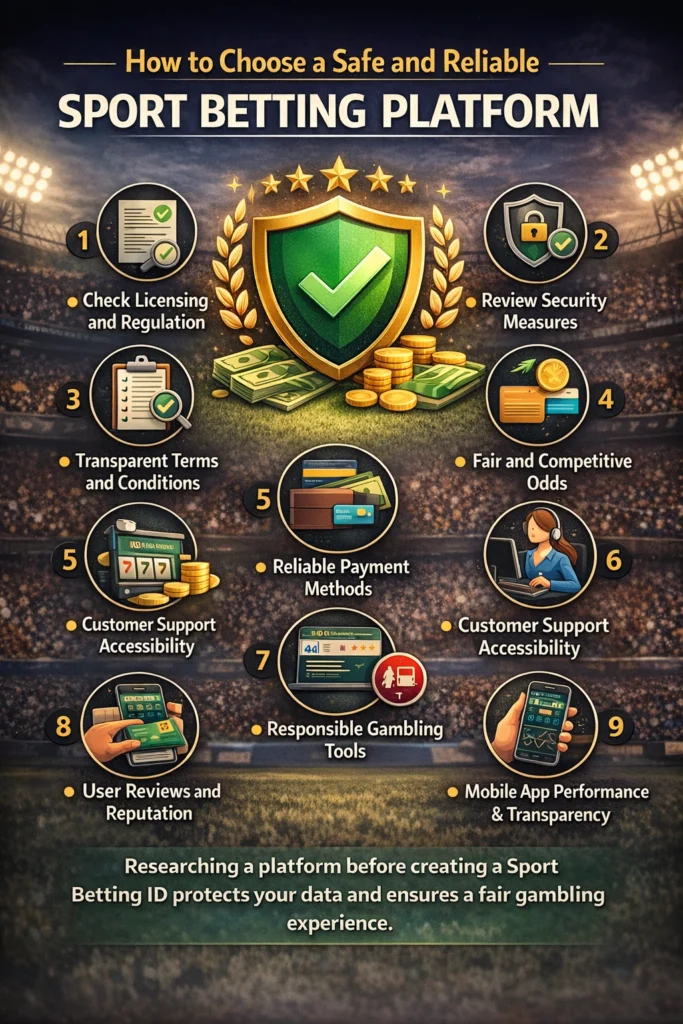
Creating a Sport Betting ID is easy. Choosing the right platform to create it on is far more important.
With hundreds of betting websites and apps available, not all platforms offer the same level of security, transparency, or fairness. Some operate under strict regulation, while others prioritize aggressive marketing over user protection.
Before registering a Sport Betting ID, evaluating the credibility of a betting platform can protect both your money and personal data.
1. Check Licensing and Regulation
The first and most critical step is verifying whether the platform is licensed by a recognized regulatory authority.
A legitimate betting platform typically:
- Displays licensing information clearly
- Provides registration numbers
- Lists the regulatory authority name
- Links to responsible gambling resources
If licensing details are hidden or unclear, that is a major red flag.
Regulated platforms must follow strict operational standards, including fair odds policies, secure payment processing, and dispute resolution mechanisms.
2. Review Security Measures
A Sport Betting ID stores personal data, transaction history, and financial information. Strong security protocols are essential.
Look for:
- HTTPS encryption (secure connection)
- Two-factor authentication (2FA)
- Secure payment gateways
- Transparent privacy policies
Platforms that do not offer advanced security features increase the risk of account hacking and identity theft.
3. Transparent Terms and Conditions
Many users ignore terms and conditions — until a withdrawal problem occurs.
Before creating a Sport Betting ID, carefully review:
- Withdrawal processing times
- Bonus wagering requirements
- Account suspension policies
- Deposit limits
- Verification procedures
If rules are overly complex, vague, or unfairly restrictive, reconsider registering.
Transparency indicates professionalism.
4. Fair and Competitive Odds
Odds determine potential returns. While no platform eliminates the house edge, some offer more competitive pricing.
Comparing odds across multiple platforms can reveal whether:
- Margins are excessively high
- Payout rates are reasonable
- Markets are consistently adjusted
Extremely attractive promotions combined with poor odds may reduce overall value.
5. Reliable Payment Methods
A trustworthy betting platform offers secure and widely recognized payment options.
Check for:
- Multiple deposit methods
- Clear withdrawal policies
- No hidden transaction fees
- Reasonable processing times
Delayed withdrawals are one of the most common user complaints in unreliable platforms.
Your Sport Betting ID should give you easy access to both deposits and withdrawals — not just deposits.
6. Customer Support Accessibility
Professional platforms invest in responsive customer service.
Reliable signs include:
- 24/7 live chat
- Email support
- FAQ sections
- Transparent complaint procedures
If support is slow, unresponsive, or difficult to contact, resolving account issues may become stressful.
7. Responsible Gambling Tools
A reputable platform promotes safe betting behavior. It should offer:
- Deposit limits
- Loss limits
- Session time reminders
- Self-exclusion options
If a platform encourages constant betting without providing control tools, that signals profit prioritization over user welfare.
8. User Reviews and Reputation
Independent reviews and user feedback provide valuable insight into platform reliability.
Pay attention to:
- Withdrawal experiences
- Account verification delays
- Complaint resolution history
- Platform stability
Consistent negative feedback is a warning sign.
However, balance reviews carefully — isolated complaints do not always indicate systemic issues.
9. Mobile App Performance and Transparency
Most users access their Sport Betting ID via mobile devices. A professional platform should offer:
- Stable app performance
- Transparent bet slips
- Clear transaction tracking
- Instant balance updates
Technical glitches during live betting can cause unexpected losses or missed opportunities.
10. Red Flags to Avoid
Avoid platforms that:
- Guarantee profits
- Offer unrealistic returns
- Lack licensing details
- Delay withdrawals repeatedly
- Provide unclear bonus conditions
- Send aggressive promotional spam
If something feels misleading or overly promotional, trust your instincts.
The Smart Approach to Platform Selection
Creating a Sport Betting ID is a personal financial decision. Choosing the right platform reduces unnecessary risk and improves transparency.
A safe betting environment does not eliminate financial loss — but it ensures:
- Fair operations
- Secure transactions
- Legal compliance
- Responsible gambling options
Before clicking “Register,” take time to research thoroughly.
Final Checklist and Conclusion: What Every Sport Betting ID Holder Must Remember
After exploring the psychology, financial risks, legal structure, and platform selection process, everything comes down to one critical point: awareness.
A Sport Betting ID is easy to create. Managing it responsibly is the real challenge.
Before placing another wager, take a moment to review this practical checklist. It can protect both your money and your mindset.
The Responsible Bettor’s Final Checklist
1. Financial Control Comes First
Ask yourself honestly:
- Am I using only spare money that I can afford to lose?
- Have I fixed a strict monthly betting limit?
- Would losing this amount affect my essential expenses?
If betting money overlaps with rent, bills, savings, or family needs, the risk is already too high.
2. Emotional Discipline Matters
- Am I betting for entertainment, not income?
- Am I trying to recover previous losses?
- Do I increase my bets after losing?
Loss-chasing is one of the biggest dangers tied to any Sport Betting ID. Emotional decisions almost always override logic.
3. Platform Awareness
Whether you are exploring sports insights on t20worldcup or considering placing wagers through platforms like diamondexch99, always evaluate:
- Licensing and credibility
- Withdrawal transparency
- Responsible gambling tools
- Clear terms and conditions
Not every platform offers the same level of safety. Research protects your investment.
4. Time Monitoring
Money is not the only cost.
- How many hours are spent checking odds?
- Has betting reduced productivity?
- Do match outcomes affect your mood for the entire day?
Time loss can silently become just as damaging as financial loss.
5. Accept the Mathematical Reality
Every betting system includes a house edge. This means:
- Short-term wins are possible
- Long-term consistent profit is rare
- The platform always operates with an advantage
Understanding this prevents unrealistic expectations.
The Core Truth About a Sport Betting ID
A Sport Betting ID is simply a digital access key. It connects you to:
- Global sports events
- Real-time betting markets
- Instant transactions
- Promotional incentives
But it also connects you to:
- Psychological triggers
- Rapid spending cycles
- Financial volatility
- Behavioral risks
The system is built for engagement. Your protection comes from discipline.
When to Step Back
Consider taking a break or closing your account if you notice:
- Increasing deposit frequency
- Betting to escape stress
- Borrowing money to gamble
- Hiding activity from family
- Feeling anxious before or after matches
Walking away is not weakness. It is control.
Balanced and Informed Betting
Sports betting should never replace stable income or financial planning. It should never become a solution to financial pressure.
If you choose to use a Sport Betting ID, treat it as controlled entertainment — not an investment strategy.
Set limits.
Track spending.
Accept losses.
Avoid emotional reactions.
And remember — the smartest bet you can place is knowing when not to place one at all.
Frequently Asked Questions (FAQ) About Sport Betting ID
1. What is a Sport Betting ID?
A Sport Betting ID is a registered online account that allows users to place bets on sports events through a betting platform. It connects your personal details, transaction history, deposits, withdrawals, and betting activity under one unique login.
2. Is creating a Sport Betting ID legal?
Legality depends on your country or state regulations. In some regions, online sports betting is fully licensed and regulated. In others, it may be restricted or prohibited. Always check local gambling laws before registering.
3. What documents are required to create a Sport Betting ID?
Most regulated platforms require identity verification (KYC). Common documents include:
- Government-issued ID (passport, driving license, or national ID)
- Proof of address (utility bill or bank statement)
- Date of birth confirmation
Verification helps prevent fraud and underage gambling.
4. Can I have multiple Sport Betting IDs?
Most platforms allow only one account per user. Creating multiple accounts can result in:
- Permanent suspension
- Confiscation of winnings
- Blocked withdrawals
Always follow platform terms and conditions.
5. How do deposits and withdrawals work?
After creating a Sport Betting ID, you can deposit funds using approved payment methods such as bank transfers, digital wallets, or cards. Withdrawals are processed after verification checks and may take anywhere from a few hours to several days depending on the platform.
6. Is sports betting profitable in the long term?
For most users, long-term profitability is unlikely due to the built-in house edge. While short-term wins are possible, consistent profit requires strict bankroll management, discipline, and advanced analytical skills.
7. What are the risks of using a Sport Betting ID?
Key risks include:
- Financial loss
- Emotional stress
- Loss-chasing behavior
- Gambling addiction
- Data security risks (on unregulated platforms)
Understanding these risks is essential before betting.
8. What is live or in-play betting?
Live betting allows users to place wagers while a match is ongoing. Odds change in real time based on match events. While exciting, live betting can increase impulsive decisions and rapid losses.
9. Can I lose more money than I deposit?
In standard sports betting accounts, you typically cannot lose more than your wallet balance unless using credit-based systems. However, repeated deposits can result in significant cumulative losses.
10. How can I bet responsibly?
Responsible betting includes:
- Setting deposit limits
- Using only disposable income
- Avoiding emotional decisions
- Taking breaks after losses
- Using self-exclusion tools if needed
Betting should be treated as entertainment, not as a reliable source of income.
11. How do I close my Sport Betting ID?
Most platforms allow account closure through customer support or account settings. You can also request temporary suspension or permanent self-exclusion if you want to stop betting activity.
12. What should I do if I feel betting is becoming a problem?
If you notice signs like loss-chasing, financial strain, or emotional distress, consider:
- Activating deposit limits
- Temporarily suspending your account
- Seeking professional support
- Talking to a trusted family member
Recognizing the issue early is the most important step toward regaining control.
