

Introduction
Cricket is no longer limited to stadium seats or television screens. The way fans connect with the sport has changed dramatically, and many enthusiasts today want to get online cricket id to feel closer to every ball, every over, and every turning point of a match. Earlier, a viewer waited for commentary and highlights, but now fans prefer instant information, real-time updates, and continuous engagement. This growing curiosity to get online cricket id comes from the desire to experience cricket actively rather than passively.
When people decide to get online cricket id, they are not simply creating a login — they are entering a live digital match environment. Here, numbers move with every delivery, sessions change instantly, and match momentum becomes visible second by second. Fans who get online cricket id often say the match feels faster, sharper, and more intense because they follow each moment closely instead of waiting for summaries. The traditional style of watching cricket feels slow once someone gets used to the experience after they get online cricket id.
The popularity of getting online cricket id has grown because modern audiences want control over information. They want updates before commentators react, they want patterns before analysts explain, and they want involvement instead of observation. To get online cricket id means the fan is mentally participating in the game flow — reading situations, understanding pressure phases, and reacting instantly to events on the field. This is why discussions among friends now often start with whether someone has decided to get online cricket id before an important match.
Another reason people prefer to get online cricket id is the continuous connection with the match. Cricket is full of pauses — field adjustments, bowling changes, reviews — but when you get online cricket id, those pauses become moments of anticipation rather than waiting time. The screen keeps updating, and the viewer stays engaged throughout the innings. Instead of watching only boundaries and wickets, fans who get online cricket id follow dot balls, singles, and momentum shifts with equal attention.
Today’s cricket follower wants depth. Getting online cricket id provides that depth by presenting the match as a flowing sequence of events rather than scattered highlights. Over time, regular users who get online cricket id begin to understand match rhythm better — when pressure builds, when scoring accelerates, and when a turning point is approaching. The experience becomes less about random excitement and more about continuous awareness.
In simple terms, the decision to get online cricket id reflects how cricket fandom has evolved. Fans no longer want distance between themselves and the match. They want proximity, speed, and clarity. They want to read the game as it unfolds. That is why more and more followers now choose to get online cricket id and transform ordinary match watching into a real-time interactive experience.
What Happens After You Get Online Cricket ID
After someone decides to get online cricket id, the experience changes immediately. The match is no longer something happening far away on a screen — it becomes a flowing sequence of live information. Instead of waiting for commentators to explain situations, the viewer starts reading the game directly through numbers, timing, and movement.
At first, most users only watch the panel while the match runs in the background. They compare what they see on television with what they see on the dashboard. Within a short time, they notice the panel reacts faster. A single ball changes multiple indicators at once, and gradually the user begins to understand the rhythm of live match behavior.
This stage is important because it transforms curiosity into familiarity.
Learning the Match Flow
When a person first gets online cricket id, they focus mainly on runs and wickets. But soon they start recognizing patterns:
- Consecutive dot balls build pressure
- Strike rotation stabilizes innings
- Boundaries break bowling momentum
- Wickets reset match direction
The panel becomes less about numbers and more about storytelling. Every over writes a new paragraph of the match narrative.
Understanding Momentum
Cricket is a momentum sport. A team dominating for ten minutes can suddenly struggle in the next five. After you get online cricket id, momentum becomes visible instead of theoretical.
You begin noticing:
- How field placements affect scoring pace
- Why certain overs feel tighter than others
- When a batter is settling versus attacking
- When bowlers are forcing mistakes
This awareness is what keeps users engaged. They are no longer guessing randomly — they are interpreting situations.
Reaction Speed Changes
Another noticeable shift after getting access is reaction timing. Television viewers react after events happen. Interactive viewers anticipate before the ball is delivered.
You start asking questions every delivery:
Will the bowler change length?
Is the batter preparing for a big shot?
Is pressure building for a wicket?
The brain moves from watching to predicting. That mental activity makes even quiet overs interesting.
The Role of Breaks
Innings breaks, drinks intervals, and reviews used to be waiting periods. After you get online cricket id, they become analysis time. Users review what already happened and prepare expectations for what comes next.
Instead of leaving the screen, they stay connected because the match story continues in their mind.
Building Familiarity With Match Phases
Over time, users recognize common patterns across different matches:
Powerplay uncertainty
Middle overs stabilization
Late overs acceleration
This familiarity does not remove unpredictability, but it improves understanding. The viewer feels closer to how players might be thinking on the field.
Emotional Adjustment
Initially, reactions are intense because everything feels fast. Later, experienced users become calmer. They learn cricket always changes direction. A strong phase can collapse quickly, and a weak start can recover.
After regular use, the focus shifts from excitement to observation. The match becomes less stressful and more analytical.
From Viewer to Analyst
The biggest change after someone gets online cricket id is mindset. The person stops asking only “what happened” and starts asking “why it happened.”
They notice bowling plans
They notice batting tempo
They notice pressure overs
Cricket becomes a thinking activity rather than background entertainment.
In simple words, getting access does not just add information — it adds perspective.
The fan does not leave the couch, yet mentally steps closer to the pitch.
Why the Experience Feels Different From Normal Match Watching
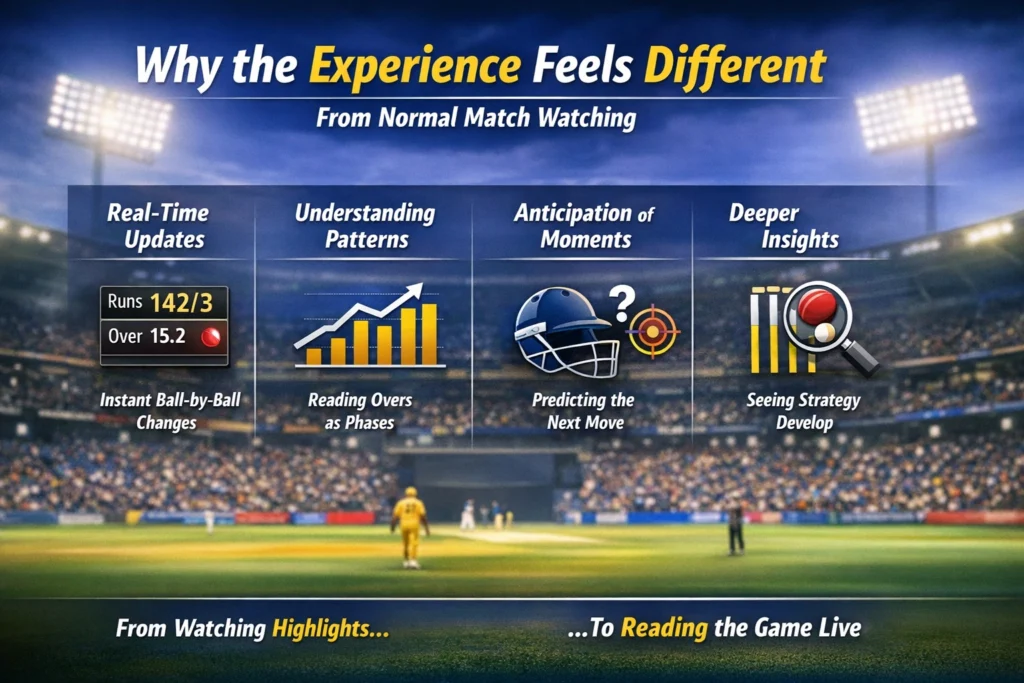
Many people assume that when they get online cricket id, they will simply watch the same match with extra numbers on the side. But after a few overs, they realize the difference is much deeper. The match does not just look different — it feels different.
Traditional viewing is event-based.
Interactive viewing is moment-based.
On television, attention rises only during big incidents — a boundary, a wicket, or a review. In a live panel environment, attention stays active every delivery because each ball changes the situation slightly. Even a quiet defensive shot carries meaning.
The Brain Stays Continuously Engaged
Normally, while watching cricket, viewers relax between deliveries. Conversations happen, phones are checked, and focus returns only when commentators raise their voices.
After you get online cricket id, the mind rarely drifts away.
Every ball becomes a small decision point:
- Was that defensive intent or caution?
- Did the bowler test swing or line?
- Is the batter waiting for a specific over?
The brain begins tracking sequences instead of highlights. Overs connect into patterns rather than isolated moments.
Time Feels Faster
One surprising effect reported by users is time compression. A 3-hour match feels shorter. Not because overs are fewer — but because the brain processes more information per minute.
Attention density increases.
Instead of watching:
40 important moments
You experience:
240 micro-moments
The brain measures time through memory markers. More markers make time appear faster.
Silence Becomes Suspense
In normal viewing, dot balls feel uneventful.
After you get online cricket id, dot balls gain meaning. Consecutive quiet deliveries indicate pressure building. The viewer senses something approaching — either a mistake or a release shot.
This anticipation transforms calm overs into psychological tension.
Commentary Becomes Secondary
Interestingly, many users start lowering commentary volume. They still watch the match but rely less on explanation. They prefer interpreting situations themselves.
Instead of being told what is happening, they observe it unfolding.
The viewer shifts from audience to reader — reading the language of the game.
Every Match Becomes Unique
Without interaction, matches sometimes feel similar, especially across long tournaments. But once someone gets online cricket id, small differences stand out:
Pitch pace
Bowling confidence
Batting patience
Field pressure
No two innings feel identical anymore because the viewer notices details beyond the scoreboard.
Emotional Control Improves Over Time
At first, involvement feels intense. Later, experienced users react more calmly because they understand cricket’s variability. They learn that momentum swings are natural, not shocking.
The system trains patience.
The viewer stops overreacting to single deliveries and starts understanding phases.
Watching Turns Into Reading the Game
Ultimately, the biggest difference is perception. You no longer just watch players perform actions — you interpret intentions behind actions.
A short ball is not just a short ball.
It is a plan.
A slow over is not boring.
It is pressure construction.
Once this perspective develops, ordinary viewing rarely feels equally engaging again.
In short, when you get online cricket id, cricket stops being a sequence of highlights and becomes a continuous narrative — written ball by ball in real time.
The Psychology Behind Getting an Online Cricket ID
The growing interest in why people want to get online cricket id is not only about technology or faster updates. The real reason sits inside human psychology. Cricket already contains uncertainty, and the human brain is naturally attracted to uncertain outcomes. We enjoy predicting what might happen next.
When someone watches a match normally, predictions remain in their head.
When they get online cricket id, those predictions receive instant feedback.
This feedback loop is powerful.
The Prediction Reward Cycle
Every delivery in cricket creates a question:
Will the batter attack?
Will the bowler defend?
Will the field stop the run?
After a fan gets online cricket id, the brain begins running constant micro-predictions. The moment the ball finishes, the brain checks if it guessed correctly. If yes — satisfaction. If no — curiosity.
That repeated cycle keeps attention locked.
Psychologists describe this as a reward anticipation loop. The reward is not money or result — it is confirmation of understanding. People enjoy feeling they read the situation correctly.
Control in an Uncertain Game
Cricket is unpredictable. Edges fall short, yorkers become full tosses, simple catches drop. The lack of certainty creates excitement but also distance — viewers can only accept what happens.
After someone gets online cricket id, they feel closer to the process. They cannot control the game, yet they understand its movement better. Understanding gives a sense of involvement, and involvement gives satisfaction.
The mind prefers participation over helpless observation.
Continuous Attention and Focus
Modern digital life has shortened attention spans. Short videos, scrolling feeds, and instant updates trained the brain to expect constant stimulation. Traditional sports sometimes feel slow to new viewers.
Interactive cricket changes that.
Every few seconds a new event occurs. The brain receives fresh input repeatedly. Instead of waiting minutes for excitement, anticipation renews ball by ball. This matches modern cognitive habits, which is why younger audiences adapt quickly after they get online cricket id.
Social Validation
Another psychological factor is shared interpretation. Fans rarely experience cricket alone anymore. After they get online cricket id, discussions with friends become analytical:
“Pressure is building”
“Next over will decide tempo”
“Bowler changed plan”
When predictions match reality, people feel validated. The system becomes a communication language among fans — a shared way to read the match.
Learning Satisfaction
Human brains enjoy learning patterns. Cricket provides endless patterns — batting tempo, bowling variation, over phases, risk timing.
The more someone uses the panel after they get online cricket id, the more patterns they recognize. Recognition produces confidence, and confidence produces enjoyment.
Instead of randomness, the match starts feeling understandable.
Emotional Balance Over Time
Interestingly, long-term users often become calmer viewers. Because they witness constant fluctuations, they accept unpredictability more easily. A wicket no longer feels shocking; it feels like a phase shift.
The experience teaches patience — a rare effect in fast digital entertainment.
Why People Continue Using It
People do not return only for excitement. They return because:
They feel mentally involved
They enjoy reading the game
They like predicting outcomes
They share analysis socially
The attraction is cognitive engagement rather than simple stimulation.
In essence, the reason people get online cricket id is psychological immersion.
The match stops being distant entertainment and becomes an active mental activity — a conversation between the game and the viewer’s mind.
Maintaining Balance While Using an Online Cricket ID
After someone decides to get online cricket id, excitement naturally increases. The match becomes sharper, faster, and more engaging. But like any highly interactive digital activity, the experience feels best when balance exists. The purpose is to enjoy cricket more deeply — not to let the game occupy every moment of attention.
Healthy users understand this early, while others learn it with time.
Setting Viewing Intentions
Before the match begins, experienced viewers usually decide why they are watching:
- For enjoyment of the game
- For understanding match strategy
- For following a favorite team
Having a clear intention keeps the mind steady. Without it, attention can wander endlessly because live interaction never truly pauses.
When people get online cricket id with a defined purpose, they remain relaxed even during tense moments.
Avoiding Continuous Attachment
One common mistake is staying connected to every match of every day. Cricket seasons are long — leagues, tours, and tournaments run back-to-back. Trying to follow all of them reduces enjoyment and creates fatigue.
Balanced users choose selected matches.
They watch with focus, then disconnect comfortably.
The experience stays fresh instead of exhausting.
Managing Emotional Reactions
Cricket changes direction quickly. A dominant innings collapses. A weak team recovers. After you get online cricket id, these swings feel immediate because updates happen instantly.
The best approach is acceptance:
- Expect surprises
- Avoid reacting to single deliveries
- Focus on overall flow
With time, viewers notice the game feels more interesting when reactions stay calm. The mind observes rather than struggles.
Taking Breaks Between Innings
Innings intervals are natural reset points. Instead of reviewing constantly, stepping away for a few minutes helps the brain relax. Returning later restores clarity.
Short breaks prevent mental overload and keep attention sharp for the next phase.
Separating Cricket From Daily Responsibilities
Cricket is entertainment, not routine obligation. The match should fit around life, not replace it. People who maintain this boundary enjoy the experience for years because it never feels heavy.
Once someone gets online cricket id and treats it like scheduled leisure — similar to watching a movie — the activity remains positive.
Recognizing When to Pause
Some days concentration feels low, or mood feels tense. On such days, skipping a match often feels better than forcing involvement. The game will continue tomorrow.
Experienced followers understand that enjoyment depends on mental state more than match importance.
Long-Term Enjoyment
Balance transforms short excitement into lasting interest. Without balance, intensity fades quickly. With balance, every match feels new.
The goal is simple:
Stay interested, not overwhelmed.
In the end, getting access is only the beginning.
Knowing when to watch — and when to step away — is what keeps cricket engaging across seasons and years.
Choosing the Right Platform Environment
When people decide to get online cricket id, they often focus only on access speed. But the surrounding environment matters just as much as the login itself. A smooth, stable, and understandable interface shapes the entire experience. Even a passionate cricket follower loses interest quickly if the panel feels confusing or unreliable.
The difference between a good and frustrating experience usually comes from small details.
Stability Over Appearance
Many newcomers expect colorful graphics and complex layouts. Surprisingly, long-time users prefer simplicity. A clean panel with steady updates is more valuable than a stylish one that freezes during crucial overs.
During high-pressure moments — final overs, close chases, or sudden collapses — stability becomes essential. If updates pause for even a few seconds, the connection between viewer and match breaks.
So after you get online cricket id, performance matters more than design.
Clear Information Layout
A comfortable panel presents information in a readable way. The viewer should immediately understand:
Current match situation
Recent over pattern
Run pace direction
Game phase change
When information appears cluttered, the brain spends more effort decoding the screen than understanding the match. Good layout reduces effort and improves focus.
Speed of Updates
Cricket is a timing sport. A late update changes perception of the game. Fast refresh rates keep reactions synchronized with the actual play.
Users often compare live broadcast with panel movement. When both feel aligned, confidence grows. When delay appears, attention shifts back to television only.
That is why experienced followers value responsiveness when they get online cricket id.
Consistency Across Matches
A reliable environment behaves the same way every match day. Consistent behavior builds familiarity. The viewer stops thinking about the interface and focuses completely on cricket.
Inconsistent systems force constant adjustment, which breaks immersion.
Support and Communication
Sometimes access issues happen — internet fluctuations, device changes, or login confusion. Clear communication channels solve problems quickly and maintain trust.
People stay where they feel guided, not where they feel lost.
Comfort Creates Engagement
The ideal environment fades into the background. The user stops noticing the panel itself and concentrates on the match flow. This is the point where technology succeeds — when it becomes invisible.
After that moment, the experience feels natural, almost like sitting in a commentary box reading the game live.
In simple terms, getting access is only step one.
The environment determines whether the fan watches the screen — or truly connects with the match.
The Future of Digital Cricket Interaction
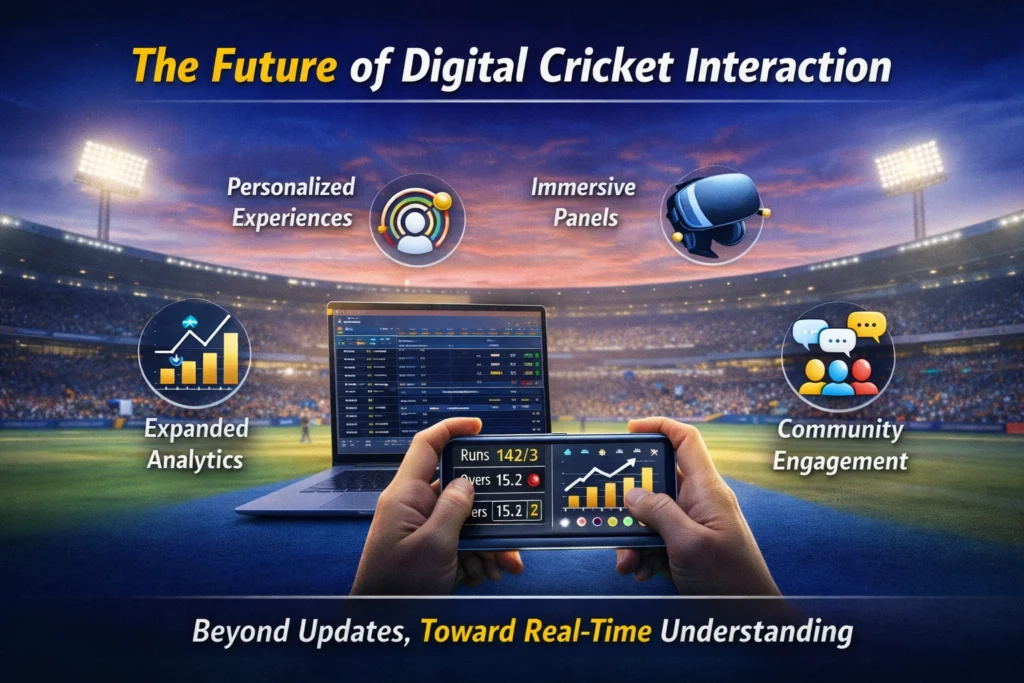
As more fans choose to get online cricket id, the relationship between the sport and its audience continues to evolve. Cricket has always adapted — from radio commentary to television broadcasting, from scorecards to high-definition analytics. Now the next shift is interactive viewing, where the fan does not just receive information but interprets it continuously.
The future will not replace traditional watching.
It will deepen it.
From Information to Insight
Earlier, viewers depended on experts to explain why a team was winning or losing. With interactive panels, fans themselves begin recognizing patterns — scoring pace changes, bowling pressure, batting patience.
In the coming years, this understanding will become more common. More viewers will read the game rather than wait for explanations. Getting familiar with the match flow after you get online cricket id will feel natural for new generations of cricket followers.
Faster Match Awareness
Broadcast delays and highlight packages once defined how quickly fans understood a match. Now awareness happens instantly. The moment a delivery ends, the situation becomes clear.
Future systems will likely refine this further — presenting cleaner match phases and clearer transitions so viewers understand not just what happened, but what is building toward happening.
Cricket will feel less like a sequence of overs and more like a continuous storyline.
Smarter Fan Conversations
As interaction increases, discussions around cricket are also changing. Conversations move beyond simple reactions:
Instead of:
“Good shot”
Fans say:
“That over shifted pressure”
When more people get online cricket id, match discussions become analytical rather than emotional alone. The community understanding of cricket strategy naturally grows.
Learning the Game Naturally
Younger viewers often learn faster through doing rather than listening. Interactive following teaches concepts like strike rotation, field pressure, and over planning without formal coaching.
In the future, many fans will understand match tempo instinctively because they grew up reading live situations instead of memorizing rules.
Cricket Remains Human
Even with advancing digital interaction, one thing will not change — unpredictability. Edges, weather, nerves, and instinct will always influence results. Technology may improve understanding, but it will never remove uncertainty.
That uncertainty is why people stay interested.
The panel explains the journey,
but the players still write the story.
A More Personal Viewing Era
Ultimately, the future points toward personalized engagement. Each viewer follows the match at their own depth — some casually, some analytically. Those who get online cricket id simply choose a closer perspective.
Not closer to control the match,
but closer to feel its rhythm.
Cricket has moved from being watched…
to being experienced.
And in the years ahead, the line between fan and analyst will continue to blur — not because the game changed, but because the way we connect to it did.
How New Users Adapt After They Get Online Cricket ID
When a newcomer decides to get online cricket id, the first few matches feel fast and unfamiliar. The screen moves quickly, numbers change constantly, and every delivery seems important. But after a short period, adaptation begins. The viewer starts understanding the flow, and using the panel becomes natural instead of confusing.
This adaptation process is almost the same for everyone who gets online cricket id.
First Stage: Observation
Right after users get online cricket id, they mainly compare the panel with live match broadcast. They watch a ball on screen and immediately check how the panel reacts. This builds trust and comfort.
During this phase they notice:
- Updates appear instantly
- Overs show pattern development
- Pressure builds gradually
At this point the user is still watching cricket normally, but learning how the digital environment reflects the game.
Second Stage: Recognition
After a few matches, people who get online cricket id stop checking every number and start recognizing behavior. Instead of reading everything, they understand key signals automatically.
They begin to see:
- Quiet overs forming pressure
- Fast scoring changing tempo
- Wickets altering direction
The panel stops feeling like data and starts feeling like match language.
Third Stage: Anticipation
Now the viewer begins predicting moments before they happen. This is where engagement increases most after someone gets online cricket id.
They ask themselves before each ball:
Is the batter preparing to attack?
Is the bowler slowing pace?
Is a field change forcing risk?
Sometimes they are right, sometimes not — but anticipation keeps focus active.
Fourth Stage: Interpretation
Experienced users who get online cricket id no longer react to single deliveries. They watch phases instead of moments.
They notice:
Pressure building across overs
Recovery after boundaries
Momentum shifts after mistakes
The match becomes a story unfolding instead of isolated actions.
Fifth Stage: Comfort
Finally, comfort develops. The user does not feel rushed anymore. The fast movement that once felt overwhelming now feels smooth. Watching without the panel feels incomplete because the brain expects continuous context.
At this stage, getting online cricket id has changed the viewing habit permanently.
Why Adaptation Happens Quickly
Cricket already has structure — overs, innings, phases. The digital environment simply makes that structure visible. Because the brain naturally seeks patterns, learning happens faster than expected.
Most people adapt within a few matches because:
The game repeats similar situations
The panel reflects those situations clearly
Recognition improves confidence
In simple words, when someone gets online cricket id, they do not learn a new game —
they learn to notice the game more carefully.
The match was always detailed.
Now the viewer can finally see those details in real time.
Common Mistakes People Make After They Get Online Cricket ID
When someone first decides to get online cricket id, excitement often leads to over-engagement. The match feels closer, faster, and more detailed than normal viewing, and beginners sometimes try to follow everything at once. Over time they realize that the experience becomes smoother when they avoid certain common habits.
Learning what not to do is part of understanding the system.
Watching Every Match
One of the earliest mistakes after users get online cricket id is trying to follow every available game. Because access feels immediate, they remain connected throughout the day.
Very quickly, fatigue appears.
Cricket seasons are long — international tours, leagues, and tournaments overlap. Selective viewing keeps the mind fresh and the match enjoyable. Experienced users prefer fewer matches with better focus rather than constant attention.
Reacting to Every Ball
Beginners often treat each delivery as a final result. A boundary creates excitement; a dot ball creates concern. But cricket works in phases, not single moments.
After some experience with online panels, users learn:
One over rarely decides an innings
Pressure develops gradually
Momentum shifts take time
Understanding this reduces unnecessary tension.
Ignoring Match Context
When people first get online cricket id, they watch numbers closely but sometimes forget match situation — pitch behavior, target size, or game format.
A scoring rate that looks slow may be correct for the surface.
An aggressive over may be risky in longer formats.
Context gives meaning to data. Without it, interpretation becomes inaccurate.
Staying Connected Without Breaks
Continuous attention reduces clarity. After long sessions, even simple patterns feel confusing. Short pauses between innings help reset concentration and improve understanding.
Balanced viewers step away briefly and return with a clearer perspective.
Expecting Predictability
Another mistake is assuming patterns guarantee outcomes. The panel shows tendencies, not certainty. Cricket always includes human error, weather changes, and unexpected performances.
After regular use, people accept uncertainty as part of the experience rather than a flaw.
Comparing With Others Constantly
Social discussions are enjoyable, but constantly matching opinions can distract from personal observation. The best understanding comes from watching calmly and forming independent conclusions.
Conversation enhances experience — it should not replace it.
Learning From Experience
Every viewer who gets online cricket id gradually corrects these habits. With time, they stop reacting instantly and start observing patiently. The match feels clearer and more enjoyable once expectations align with reality.
In the end, the system works best when treated as a guide, not a rush.
Avoiding small mistakes turns fast information into meaningful understanding — and keeps cricket entertaining instead of overwhelming.
Turning Information Into Understanding
After spending time with the system, people who get online cricket id notice an important shift — they stop merely seeing updates and start understanding the match. At the beginning, the panel looks like moving numbers. Later, it becomes a language describing what players are trying to do.
The difference is subtle but powerful.
Reading Overs Instead of Deliveries
New users react ball by ball. Experienced viewers read overs as complete units. An over tells a short story:
- Defensive beginning
- Pressure in middle deliveries
- Release shot at the end
Instead of reacting six times, the mind interprets one sequence. This makes the match easier to follow and more meaningful.
Recognizing Player Intentions
After regular use following they get online cricket id, fans begin noticing intention rather than action.
A batter defending repeatedly may be settling
A bowler changing length may be testing patience
A slow over may be deliberate pressure
Cricket stops looking random and starts appearing strategic.
Identifying Turning Points
Highlights show wickets and boundaries, but turning points often happen earlier. A tight spell, a quiet partnership, or controlled singles can shift balance before big moments occur.
The panel helps viewers see buildup rather than just result.
Once people notice buildup, they anticipate outcomes more calmly.
Understanding Match Phases
Every innings moves through stages:
Beginning uncertainty
Middle stabilization
End acceleration
By observing these phases repeatedly after they get online cricket id, users learn when teams are planning and when they are reacting. This understanding adds depth to viewing.
Patience Improves Accuracy
Quick judgments often feel wrong in cricket because the game evolves slowly. Experienced followers pause before conclusions. They watch a few overs, then decide what direction the match is taking.
Patience turns fast information into clear understanding.
Enjoyment Increases Naturally
Interestingly, the more a viewer understands, the less stressful the match feels. Instead of constant surprise, they experience unfolding drama. Suspense remains, but confusion reduces.
They are not guessing anymore — they are observing.
A New Way to Watch Cricket
Eventually, when someone regularly follows matches after they get online cricket id, they realize they are no longer watching highlights in real time. They are reading a live narrative created by players on the field.
The scoreboard shows results.
The flow explains reasons.
In simple terms, information shows what happened.
Understanding shows why it happened.
And that transformation is what keeps the experience engaging match after match.
How It Changes the Way Fans Talk About Cricket
Once people regularly get online cricket id and follow matches through live interaction, conversations about cricket naturally begin to change. The difference appears most clearly when fans discuss a game after it ends. Instead of only remembering big shots and wickets, they remember phases, pressure, and turning moments that were not obvious on highlights.
The language of discussion becomes deeper.
From Reaction to Analysis
Earlier, match conversations sounded like:
“Great innings”
“Poor bowling”
“Lucky catch”
After fans get online cricket id, discussions become more descriptive:
“That spell created pressure before the wicket”
“The batter slowed tempo intentionally”
“The field forced risky shots”
The match is no longer judged only by outcomes, but by the sequence leading to outcomes.
Remembering Overs, Not Just Highlights
Traditional viewers recall sixes and dismissals. Interactive viewers recall entire overs. They remember when scoring slowed, when singles rotated, and when momentum began shifting.
Because they followed every delivery closely, memory stores patterns rather than isolated events.
This makes post-match discussion feel closer to expert commentary.
Better Understanding Between Fans
When multiple people get online cricket id, they begin sharing observations during the match itself. Instead of waiting for the end, conversations happen live:
One notices pressure building
Another notices batting adjustment
Another predicts acceleration phase
Agreement or disagreement becomes part of entertainment. Cricket turns into collaborative thinking rather than silent watching.
Respect for Strategy Increases
Fans start appreciating subtle skills:
Dot-ball control
Strike rotation
Field positioning influence
These elements were always part of cricket but often ignored in casual viewing. Interactive following highlights their importance.
Fewer Extreme Reactions
Because viewers see gradual changes, they react less dramatically to sudden moments. A wicket feels like the result of pressure rather than random misfortune. A boundary feels like release rather than miracle.
Understanding reduces overreaction.
Learning Without Coaching
Interestingly, many fans improve their cricket knowledge without studying formally. By observing live patterns repeatedly after they get online cricket id, they naturally learn tactics that coaches teach beginners.
The game teaches itself through repetition.
A Shared Language of the Game
Over time, communities develop a shared understanding of match flow. Terms like pressure phase, tempo shift, and recovery overs become normal conversation. Fans feel connected not just by supporting a team, but by understanding the match together.
Cricket has always been discussed passionately.
Now it is discussed thoughtfully.
And that change happens because closer observation turns spectators into interpreters of the game rather than simple viewers.
Conclusion
The decision to get online cricket id reflects how modern fans want to experience cricket today — not from a distance, but from within the flow of the match itself. What once depended entirely on commentary and highlights has now become a continuous real-time understanding of momentum, pressure, and turning phases. The game has not changed, the pitch is still 22 yards, but the way people connect to it has evolved.
As viewers spend more time following matches through this interactive approach, they begin noticing patterns, reading overs, and understanding why moments happen instead of only reacting after they happen. Cricket becomes calmer, clearer, and more meaningful. The excitement remains, yet it is supported by awareness rather than confusion.
For readers who want to explore more match insights and cricket interaction content, you can visit
t20worldcup
And for broader online gaming related platforms, you can check
mahadevcasino
In the end, choosing to get online cricket id is not about replacing traditional watching — it is about deepening it. The scoreboard shows the result, but involvement reveals the journey. The most enjoyable experience comes when the fan stays balanced, observes patiently, and lets cricket remain what it has always been: unpredictable, strategic, and endlessly fascinating.
FAQs – Get Online Cricket ID
1. What does it mean to get online cricket id?
To get online cricket id means receiving personal access to a live cricket interaction panel where you can follow matches ball-by-ball with real-time updates, match flow indicators, and live game movement.
2. Is it difficult to understand after you get online cricket id?
No. At first the screen may look fast, but most users understand the basics within one or two matches. The system becomes clear once you observe a few overs and recognize patterns.
3. Why do people prefer to get online cricket id instead of normal watching?
Because it turns passive watching into active following. Instead of waiting for commentary, users see match changes instantly and understand momentum as it develops.
4. Do I need cricket knowledge before I get online cricket id?
Basic knowledge helps, but it is not required. Regular viewing automatically improves understanding because the panel shows match behavior continuously.
5. Can beginners use it comfortably?
Yes. Beginners usually start by comparing the live match with the panel. Within a short time they adapt and begin recognizing scoring patterns and pressure phases.
6. Does getting online cricket id predict match results?
No. It reflects live match situations and probability patterns, not guaranteed outcomes. Cricket always remains unpredictable.
7. How long does it take to learn after getting online cricket id?
Most users feel comfortable within a few matches. Familiarity increases naturally as you watch more overs and understand match rhythm.
8. Is it necessary to follow every match after getting online cricket id?
Not at all. The best experience comes from selective viewing. Watching chosen matches keeps the experience enjoyable and prevents overload.
9. Why does the match feel faster after I get online cricket id?
Because you process every delivery instead of only major highlights. Continuous attention makes time feel shorter.
10. What is the main benefit of getting online cricket id?
The main benefit is deeper engagement — you stop just watching cricket and start understanding how the match unfolds ball by ball.
