

Introduction
Cricket Book ID has become a commonly discussed term among modern cricket followers who want more than traditional match viewing. A Cricket Book ID is now seen as a digital access identity that connects fans directly with live cricket activity in real time. Instead of depending only on television or score websites, users prefer a Cricket Book ID to stay continuously updated and interact with match progress. Because cricket today is followed on mobile devices, the need for a Cricket Book ID keeps increasing among both casual viewers and dedicated fans.
Many users search for a Cricket Book ID before major tournaments begin because a Cricket Book ID allows them to follow overs, sessions, partnerships, and momentum without interruption. During international series, leagues, and domestic competitions, a Cricket Book ID becomes a personal cricket companion. The popularity of a Cricket Book ID grows especially during high-pressure matches where every ball changes the situation. Fans feel that a Cricket Book ID keeps them closer to the game than ordinary score updates.
A Cricket Book ID is not just about checking runs and wickets; it represents continuous cricket engagement. People who travel, work, or cannot watch full matches rely on a Cricket Book ID to remain connected with ongoing play. With the spread of smartphones, creating and using a Cricket Book ID has become simple, which explains why the term Cricket Book ID appears frequently in cricket discussions across online communities.
As cricket continues evolving in the digital era, the Cricket Book ID stands out as a practical way for fans to experience matches actively rather than passively. Whether it is a Test match session or a fast T20 chase, a Cricket Book ID helps the viewer follow the game ball by ball, making cricket engagement more personal and immediate.
How Digital Access Changed the Way Fans Follow Cricket
For a long time, cricket viewing depended on availability. If a television was nearby, a fan watched the match. If not, the experience was reduced to occasional score updates. This limitation shaped how earlier generations connected with the sport — they either watched fully or missed most of the action.
Modern digital platforms altered that habit. Now a match does not require a fixed location. A person commuting on a bus, waiting at an airport, or taking a short break at work can stay connected without interruption. The experience becomes flexible rather than scheduled.
This flexibility changes the rhythm of engagement. Instead of dedicating several hours to a match, viewers follow it in small intervals throughout the day. They check the progress repeatedly, observing how situations develop. The game becomes a continuous background narrative accompanying daily activities.
Another noticeable change is awareness of momentum. In earlier times, highlights summarized turning points after they happened. Today, fans observe pressure building in real time. A quiet spell of dot balls, a growing partnership, or a sudden collapse feels more dramatic because it is experienced gradually rather than reported afterward.
The emotional connection also becomes steadier. Instead of intense excitement followed by long gaps of disconnection, interest remains consistent. Even short glances at updates keep the mind engaged with the match story.
This does not replace traditional viewing. Watching a full match on a large screen still offers immersion and atmosphere. The digital approach simply complements it by filling the gaps when full attention is not possible.
In this way, cricket adapts naturally to modern lifestyles. The sport remains the same on the field, but the way people accompany it has quietly evolved.
Understanding Match Flow Through Continuous Updates
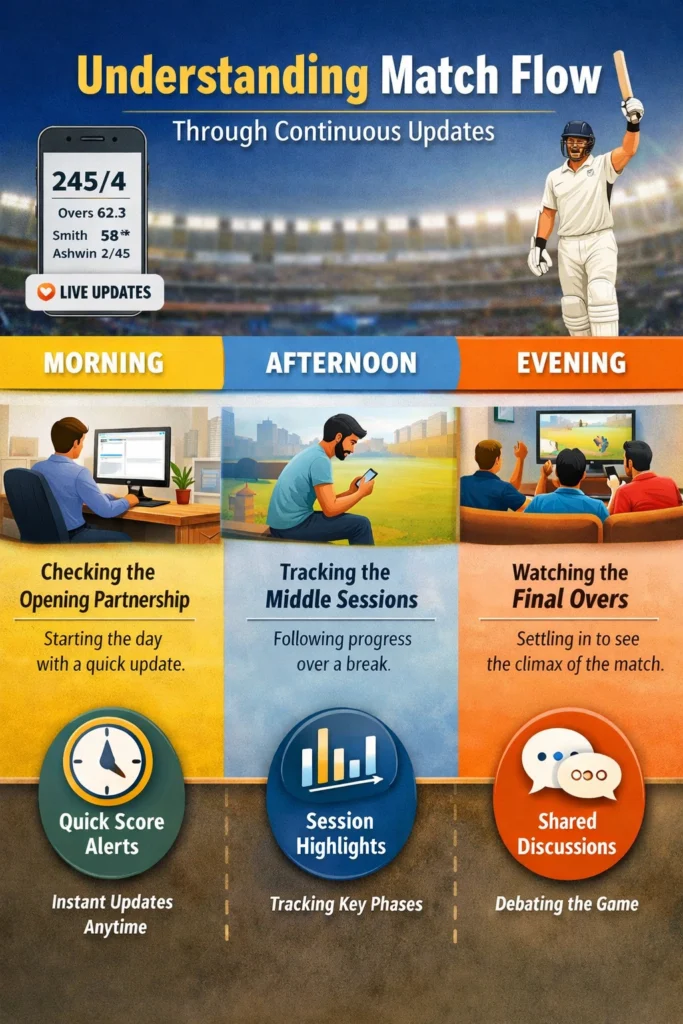
Cricket is often described as a game of patience, but its true character lies in gradual change. A team rarely wins in a single over; instead, advantage shifts little by little. For viewers who follow the match continuously, these subtle transitions become easier to recognize.
Consider a bowling spell where runs suddenly dry up. Nothing dramatic may appear on the scoreboard at first, yet tension builds with every dot ball. The batting side begins to take risks, field placements tighten, and pressure becomes visible even without commentary explaining it. When a wicket finally falls, it feels like the natural result of a longer process rather than a surprise moment.
The same applies to partnerships. Two players might score slowly for several overs, giving the impression of a quiet phase. Gradually the rhythm changes — singles become boundaries, and the field spreads wider. What looked ordinary begins shaping the entire innings. Observing this transformation step by step makes the match more understandable.
Continuous tracking also improves appreciation of strategy. Captains rotate bowlers not only to take wickets but to control pace. Batters accelerate at specific stages rather than randomly attacking. When updates are followed regularly, these decisions appear logical instead of unpredictable.
Another advantage is memory. When someone checks only occasional highlights, events feel disconnected. By contrast, frequent short updates create a mental timeline. The viewer remembers how the match reached its current point, making the ending more meaningful.
This style of following cricket turns the game into a developing story. Each over acts like a paragraph, each session like a chapter. By the time the result arrives, the journey feels complete because every stage was witnessed, even in brief moments.
The Role of Personal Preference in Modern Viewing
Every cricket follower watches the game differently. Some enjoy technical battles between bat and ball, while others wait for aggressive hitting and fast scoring. In earlier broadcasting formats, everyone received the same presentation regardless of individual interest. Modern platforms, however, allow each viewer to focus on what they personally find engaging.
A person interested in longer formats may pay attention to session progress, defensive technique, and endurance. Another viewer might look mainly at scoring speed and boundary frequency. Both are watching the same match, yet their experience becomes unique because they filter information differently.
This selective attention improves comfort. Instead of feeling overwhelmed by excessive details, the viewer notices patterns that matter most to them. Over time, it even shapes understanding of the sport. A fan who follows bowling patterns becomes sensitive to line and length changes, while someone focused on scoring pace recognizes ideal moments for acceleration.
Personal preference also affects emotional reaction. Close defensive contests bring satisfaction to one audience, whereas dramatic chases excite another. When the experience adapts to these expectations, interest lasts longer because the viewer remains connected to meaningful aspects of the match.
Importantly, this flexibility does not divide cricket followers; it simply broadens how the sport is appreciated. Conversations afterward become richer because different people observed different layers of the same game.
In this way, modern viewing respects individuality while preserving the shared excitement that has always defined cricket culture.
Staying Connected During Busy Schedules
Daily routines rarely align with match timings. Work hours, travel, study, and family responsibilities often overlap with important games. In earlier years, this meant missing long portions of play and relying on summaries later. While highlights explained the outcome, they rarely conveyed the feeling of how events unfolded.
Today, brief and frequent check-ins solve that problem. A person may follow the match for a few seconds at a time — during a break, while waiting in line, or between tasks. Each glance adds a small piece to the larger picture. Gradually, these moments combine into a complete understanding of the contest.
This method reduces the frustration of absence. Instead of returning to discover the result suddenly, the viewer watches progress step by step, even in limited time. Anticipation builds naturally because the mind stays aware of the current situation.
It also changes conversation habits. Friends and colleagues discuss matches throughout the day rather than only afterward. Someone might mention a strong partnership in the morning, another notices a collapse in the afternoon, and by evening everyone understands the full narrative.
Such flexibility keeps cricket present without demanding full attention continuously. The sport becomes part of daily rhythm rather than a separate activity requiring dedicated hours.
In a fast-moving lifestyle, this balance allows fans to remain involved while still managing responsibilities — maintaining connection without interruption
Building a Better Understanding of the Game
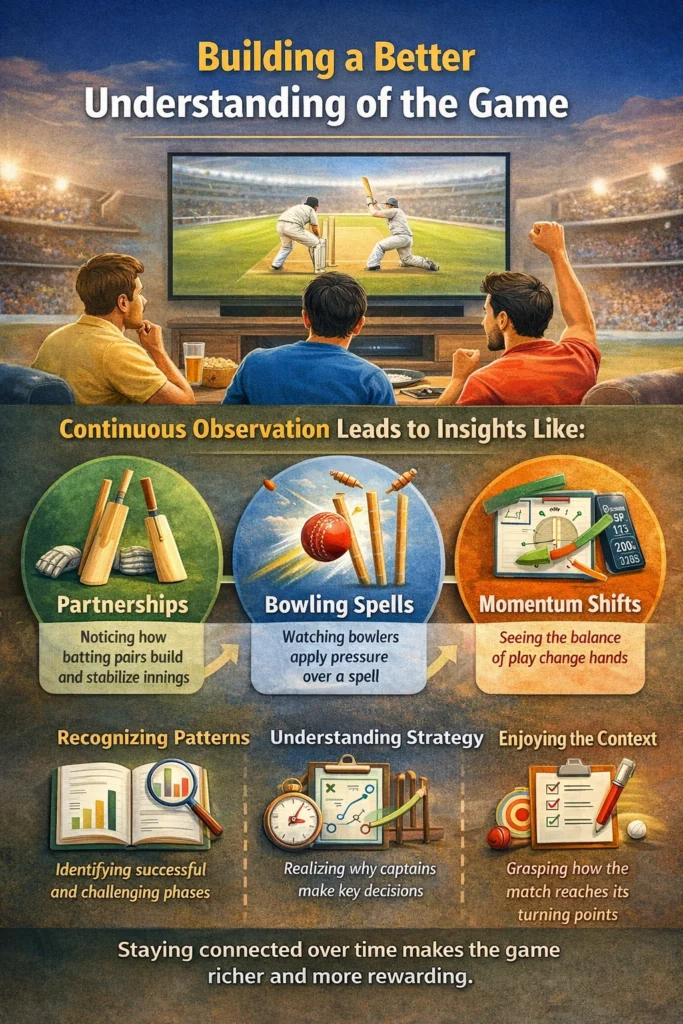
Regular exposure to match progress gradually improves how people read cricket. What first appears random begins to show structure. Viewers start noticing why certain overs feel tighter, why scoring slows at particular moments, and how small decisions influence later outcomes.
For example, a captain may introduce a defensive field not to stop boundaries entirely but to guide batters into risky singles. A bowler may deliver several similar balls before changing pace, setting up a mistake rather than forcing one immediately. These patterns become clearer when the match is followed consistently rather than only at dramatic highlights.
Batting strategy also becomes easier to appreciate. Early caution, middle-overs rotation, and late acceleration are not separate ideas but connected phases. When one stage succeeds, the next becomes possible. When it fails, pressure transfers forward. Observing this chain of cause and effect turns the match into a logical progression.
Over time, even new viewers begin predicting possibilities. They recognize when a partnership is stabilizing or when pressure is about to create a wicket. This anticipation increases enjoyment because the game feels interactive mentally, even without physical participation.
Understanding grows naturally through repetition. No technical study is required — only steady observation. Each match teaches something small, and those lessons accumulate across a season.
In this way, following cricket regularly transforms it from simple entertainment into a skill of reading situations, where every over contributes to a clearer picture of the sport’s deeper strategy.
Why Fans Prefer Cricket Book ID for Continuous Engagement
For many modern viewers, a Cricket Book ID has become the easiest way to remain connected with a live match throughout the day. Instead of waiting for television access, fans simply open their Cricket Book ID and instantly see match progress. The convenience of a Cricket Book ID means the game is always available, whether someone is at home, traveling, or working.
A major reason people choose a Cricket Book ID is consistency. A Cricket Book ID keeps the viewer aware of overs, score movement, and changing match situations without interruption. Because of this steady connection, users feel they are following the match rather than catching up with it later. The Cricket Book ID experience therefore feels more immediate and personal.
During tense moments, the value of a Cricket Book ID becomes clearer. When a partnership builds or wickets fall quickly, a Cricket Book ID allows fans to monitor every change. Instead of hearing the result afterward, the viewer observes the buildup through their Cricket Book ID step by step. This continuous awareness strengthens interest in the match.
Another advantage of a Cricket Book ID is accessibility. People who cannot watch a full broadcast still rely on a Cricket Book ID to stay informed. Over time, checking a Cricket Book ID becomes part of routine, similar to checking messages or daily news. The Cricket Book ID quietly integrates cricket into everyday life.
Because matches occur across different formats and time zones, a Cricket Book ID helps fans follow all of them without difficulty. Whether it is a morning session or a late-night chase, the Cricket Book ID provides ongoing connection. For regular followers, the Cricket Book ID becomes less of a tool and more of a constant companion during cricket season.
In this way, the Cricket Book ID supports continuous engagement, allowing viewers to experience the match gradually rather than discovering it only at the end.
The Balance Between Technology and Tradition
Even as digital tools grow more common, the essence of cricket remains rooted in tradition. The sound of bat meeting ball, the appeal of the crowd, and the patience required in long formats cannot be replaced by any screen. Technology simply offers another window through which the same moments can be appreciated.
Many supporters still prefer sitting down to watch important sessions in full. They value the atmosphere, commentary, and visual detail that only a proper broadcast provides. Digital tracking, on the other hand, fills the spaces in between — the hours when attention must shift elsewhere but curiosity remains.
This balance works because each method serves a different purpose. One provides immersion, the other continuity. Together they create a complete experience where the fan never feels disconnected from the match.
Interestingly, this combination can increase appreciation for traditional viewing. After following steady progress throughout the day, settling down to watch the closing overs feels more meaningful. The viewer understands how the situation developed and why each delivery matters.
Cricket has always adapted carefully, keeping its character while adjusting its presentation. From radio to television to mobile updates, each step expanded access without altering the core contest on the field.
In the same spirit, modern tools should be seen not as replacements but as companions — quiet additions that keep the story alive until the next time one can watch the action unfold in full.
A Shared Experience Beyond Location
Cricket has long been a conversation sport. People rarely keep their reactions to themselves; they discuss decisions, predict outcomes, and relive turning points together. In the past, these conversations mostly happened after the day’s play ended. Now they occur continuously as the match unfolds.
Friends in different cities can react to the same over within seconds. One might notice a careful defensive spell, another a shift in scoring pace. Even brief updates are enough to spark discussion, keeping everyone involved regardless of distance. The match becomes a common reference point throughout the day.
This ongoing interaction also changes how results are remembered. Instead of recalling only the final score, people remember moments — the steady partnership in the afternoon, the sudden breakthrough in the evening, or the tense final overs at night. Each person contributes a piece of the narrative based on what they observed.
Importantly, location no longer limits participation. Someone unable to watch a full broadcast still feels part of the collective experience. By following progress regularly, they can join conversations naturally without feeling they missed the story.
Cricket therefore keeps its social nature even as viewing habits evolve. The field may be far away, yet discussion brings it close, turning individual observation into shared memory.
Gradual Change and Lasting Interest
One of cricket’s unique strengths is its pace. Unlike faster sports where outcomes appear quickly, cricket allows tension to build slowly. This gradual development keeps attention alive because the situation rarely stays fixed for long. Small moments accumulate until they reshape the entire contest.
Following these changes regularly helps maintain interest over extended matches. A quiet session can still feel meaningful when its purpose becomes clear later. Careful defense may prepare for acceleration, and steady bowling may set up a decisive breakthrough. Each phase gains importance once its role in the larger story is understood.
This steady evolution prevents the experience from feeling repetitive. Even when the scoreboard moves slowly, the underlying balance shifts. Viewers notice field adjustments, bowling variations, and subtle shifts in confidence. Observing these details creates a sense of discovery that highlights alone cannot provide.
By the final stages, the result feels earned rather than sudden. The viewer remembers the path taken — the early caution, the middle overs pressure, and the closing tension. The ending becomes satisfying because it connects logically to earlier events.
Such continuity keeps cricket engaging across formats and durations. Whether a match lasts hours or days, its appeal lies in watching possibilities change over time, rewarding patience with understanding.
Looking Ahead to the Future of Fan Experience
As technology continues to develop, the way people accompany live matches will likely become even smoother. Faster connections and clearer interfaces will reduce delay and make updates feel almost instantaneous. The distance between the field and the follower will seem smaller than ever.
Future platforms may also present information in simpler visual forms. Instead of long explanations, viewers could understand match situations through quick indicators showing pressure, stability, or momentum. This would help both experienced followers and newcomers interpret the game without effort.
At the same time, the role of human insight will remain important. Commentary, analysis, and discussion give meaning to numbers by explaining intent and strategy. Technology can deliver data quickly, but interpretation still depends on understanding the sport’s logic.
The goal of upcoming developments is therefore balance — providing clarity without removing the imagination that makes cricket enjoyable. When tools remain supportive rather than overwhelming, they enhance curiosity instead of replacing it.
Cricket’s future engagement will likely blend tradition with quiet assistance from technology. The match will still unfold on grass under open skies, yet followers everywhere will feel closely connected to its progress, learning and reacting as events occur.
The Enduring Appeal of Following Every Moment
What keeps cricket interesting is not only the final result but the path taken to reach it. A match rarely turns on a single event; instead, many small passages shape the outcome. Observing these passages gives the game its depth.
A careful opening spell may not seem decisive at first, yet it can slow scoring enough to create pressure later. A modest partnership can stabilize an innings, allowing stronger hitters to play freely afterward. Even a quiet session contributes by setting expectations that the next phase must challenge.
When viewers stay aware of these details, the ending carries greater meaning. Victory feels constructed rather than accidental, and defeat appears understandable rather than sudden. The journey becomes as memorable as the scorecard.
This perspective also encourages patience. Not every over needs excitement to remain valuable. Some overs build context, others provide release, and together they form a complete narrative. Recognizing this rhythm allows fans to appreciate both calm and dramatic moments equally.
In the end, cricket rewards attention. Those who follow its progress step by step discover layers that casual observation misses. Each match tells a story, and every moment — however small — contributes to how that story is remembered.
Conclusion
Cricket today is followed in many different ways, yet its charm still lies in understanding how a match unfolds moment by moment. Modern platforms simply make that connection easier. Instead of discovering the result at the end, followers stay aware of progress throughout the day and feel involved in the developing story.
For readers who want to continue learning about match tracking and live cricket engagement, you can explore more details on our official guide at
t20worldcup
At the same time, the digital ecosystem around cricket keeps expanding through multiple partner platforms that offer additional experiences and communities. One such partner platform can be visited here:
mahadevcasino
These connections do not replace traditional viewing; they support it. Watching key moments on screen becomes more meaningful when the background journey is already understood. The viewer knows why pressure built, how partnerships formed, and what led to the final result.
Ultimately, cricket remains a narrative sport — a sequence of small decisions shaping a larger outcome. Whether someone watches continuously or checks progress in intervals, staying connected to that journey keeps the experience complete. The ending matters, but the path leading to it is what truly defines the game.
Frequently Asked Questions (FAQs)
1. What is a Cricket Book ID?
A Cricket Book ID is a personal access account used on certain cricket interaction platforms that lets users follow live match activity in real time instead of relying only on traditional broadcasts or delayed score summaries.
2. Why do people use a Cricket Book ID?
People use it to stay connected with ongoing matches throughout the day. It helps them track overs, score changes, and match flow even when they cannot watch the full game on television.
3. Can beginners understand match progress easily?
Yes. Even without deep technical knowledge, regular updates make it easier to notice partnerships, pressure phases, and turning points. Over time, viewers naturally start understanding the rhythm of the game.
4. Is it useful for all match formats?
It can be followed during Test matches, One Day games, and T20 matches. The experience differs slightly in each format because pacing and strategy change, but the connection to match progress remains similar.
5. Do I still need to watch live matches?
Watching full matches is still the best way to enjoy the atmosphere and visual detail. The digital experience simply helps you remain aware of developments when you are busy or away from a screen.
6. Does following regularly improve cricket knowledge?
Yes. Continuous observation helps viewers recognize patterns such as scoring phases, bowling spells, and momentum shifts, which gradually improves understanding of strategy.
7. Can I stay updated while traveling or working?
That is one of the main reasons people use it. Short and frequent checks allow fans to follow the match without interrupting daily routines.
8. Is this replacing traditional cricket viewing?
No. It complements traditional viewing by filling the gaps between watching sessions. Many fans combine both methods for a complete experience.
