
Introduction
Online Games Gambling has become one of the fastest-growing segments of the global digital entertainment industry. With the rise of high-speed internet, smartphones, and advanced gaming technology, gambling is no longer limited to physical casinos or betting shops. Today, millions of users can access online casino games, sports betting platforms, esports wagering, and virtual gaming experiences instantly from their devices.
The digital transformation has completely reshaped how people interact with games of chance. Online Games Gambling combines convenience, innovation, and real-time engagement, offering players immersive graphics, live dealer interaction, and secure payment systems. Whether it is spinning virtual slot machines, placing bets on live sports events, or participating in competitive esports betting, the experience is designed to be accessible and interactive.
At the same time, the rapid expansion of Online Games Gambling has raised important discussions about regulation, security, and responsible gaming. While the industry generates billions in revenue and creates new employment opportunities, it also presents risks such as addiction, financial loss, and cybersecurity concerns.
Understanding Online Games Gambling requires looking beyond entertainment. It involves exploring technology, psychology, economics, and legal frameworks that shape this modern industry. This guide provides a comprehensive overview of how online gambling works, why it continues to grow, and what players should know before participating in digital betting environments.
The Rise of Online Games Gambling in the Digital Era
Online Games Gambling has experienced explosive growth over the past decade, driven by rapid technological innovation and increasing internet penetration worldwide. What was once limited to desktop-based platforms has now evolved into a fully mobile, app-driven ecosystem where users can place bets, spin slots, and participate in live gaming experiences instantly.
One of the biggest factors behind this rise is smartphone accessibility. With affordable data plans and high-speed networks such as 4G and 5G, users can access gambling platforms anytime and anywhere. This convenience has significantly expanded the user base, attracting both casual players and professional bettors.
Another major contributor is the integration of live streaming technology. Live dealer casinos and real-time sports betting have created immersive experiences that replicate physical casino environments. Players can watch live matches, interact with dealers, and engage with other users through chat features, making Online Games Gambling more interactive than ever before.
Digital payment systems have also fueled growth. The availability of secure payment gateways, e-wallets, instant bank transfers, and cryptocurrencies has simplified deposits and withdrawals. Faster transactions increase user trust and encourage platform loyalty.
Marketing strategies have further accelerated expansion. Online Games Gambling platforms leverage social media promotions, influencer partnerships, referral bonuses, and targeted advertisements to attract new users. Welcome bonuses, free spins, cashback offers, and loyalty programs are used to retain players and enhance engagement.
The COVID-19 pandemic also played a role in accelerating adoption. With physical casinos temporarily closed in many regions, users shifted toward online alternatives. This behavioral shift continued even after restrictions were lifted, establishing Online Games Gambling as a permanent fixture in digital entertainment.
As competition increases, platforms continue investing in advanced graphics, artificial intelligence personalization, and gamification features. The industry’s growth shows no signs of slowing, positioning Online Games Gambling as one of the most dynamic sectors in the global online economy.
Technology Powering Online Games Gambling
The rapid expansion of Online Games Gambling would not have been possible without continuous technological innovation. Behind every digital casino, betting app, or esports wagering platform lies a complex system designed to ensure speed, security, fairness, and seamless user experience.
Advanced Software Architecture
Modern Online Games Gambling platforms are built using powerful gaming engines and cloud-based infrastructure. Cloud technology allows platforms to handle thousands—or even millions—of simultaneous users without performance issues. This ensures smooth gameplay, fast loading times, and uninterrupted betting during high-traffic events like major sports tournaments.
Game developers use sophisticated programming languages and graphic engines to create visually appealing and interactive gaming environments. High-definition animations, 3D effects, and realistic sound design enhance player immersion.
Random Number Generators (RNG) and Fairness
At the core of digital casino games is the Random Number Generator (RNG). This algorithm ensures that outcomes in games like slots, roulette, and blackjack are completely random and unbiased. Licensed platforms undergo independent audits to verify that their RNG systems meet fairness standards.
This transparency builds trust among users and strengthens the credibility of regulated Online Games Gambling platforms.
Artificial Intelligence and Personalization
Artificial Intelligence (AI) plays a major role in enhancing user experience. AI systems analyze player behavior to:
- Recommend relevant games
- Offer personalized bonuses
- Detect unusual activity
- Identify risky gambling patterns
By studying user habits, AI can also improve responsible gambling measures by sending alerts or limiting access if risky behavior is detected.
Live Streaming and Real-Time Interaction
Live dealer games rely on high-definition video streaming and real-time communication tools. Multiple camera angles, instant result tracking, and chat features create an environment that closely resembles a physical casino.
For sports betting, real-time data feeds update odds instantly based on match progress. This dynamic adjustment allows users to place in-play bets with up-to-the-second accuracy.
Blockchain and Cryptocurrency Integration
Blockchain technology has introduced greater transparency and security into Online Games Gambling. Some platforms use decentralized systems to record transactions and game results. Cryptocurrencies provide:
- Faster international transactions
- Lower processing fees
- Enhanced privacy
- Reduced fraud risk
Smart contracts also enable automatic payouts without manual processing delays.
Mobile Optimization and App Development
Mobile-first design is now a priority. Platforms optimize their websites and apps for smaller screens, touch controls, and fast navigation. Features such as biometric login (fingerprint or facial recognition) enhance both convenience and security.
Push notifications keep users informed about promotions, live matches, and bonus opportunities, increasing engagement.
Technology continues to redefine Online Games Gambling, making it more secure, immersive, and accessible. As innovations like virtual reality (VR), augmented reality (AR), and machine learning evolve further, the digital gambling landscape will likely become even more interactive and personalized in the coming years.
Legal Framework and Global Regulations in Online Games Gambling
As Online Games Gambling continues to expand globally, governments and regulatory bodies have developed various legal frameworks to control, monitor, and license operators. However, the legal status of online gambling differs significantly from country to country, creating a complex international landscape.
Regulated Markets
In some countries, Online Games Gambling is fully legal and regulated under strict licensing systems. Licensed operators must comply with government requirements that typically include:
- Age verification procedures
- Anti-money laundering (AML) policies
- Responsible gambling tools
- Regular financial audits
- Fairness testing of gaming software
Regulated markets aim to protect consumers while generating tax revenue for governments. Licensing authorities oversee operators to ensure transparency, fair play, and secure transactions.
Restricted or Prohibited Regions
In contrast, certain countries restrict or completely ban Online Games Gambling. Governments may block access to international gambling websites or prohibit financial institutions from processing gambling transactions.
Despite restrictions, offshore platforms sometimes operate in gray areas, targeting users in restricted markets. This creates challenges for enforcement and increases risks for players, as unregulated platforms may lack proper consumer protections.
Licensing Authorities and Compliance
In regulated jurisdictions, licensing bodies play a critical role. They ensure that operators follow strict compliance standards related to data protection, financial security, and fair gaming practices.
Operators must often:
- Display licensing information clearly
- Submit to independent testing agencies
- Maintain transparent terms and conditions
- Implement self-exclusion and player protection tools
Failure to comply can result in heavy fines, license suspension, or permanent shutdown.
Taxation and Economic Policies
Governments regulate Online Games Gambling not only for consumer protection but also for economic reasons. Tax policies vary and may include:
- Operator revenue taxes
- Player winnings taxes
- Licensing fees
- Advertising taxes
Tax structures can influence where companies choose to base their operations.
Advertising and Marketing Regulations
Advertising rules for Online Games Gambling are becoming stricter in many countries. Regulators may limit:
- Promotional claims
- Bonus transparency
- Influencer marketing
- Sports sponsorship visibility
- Targeted ads to minors
These restrictions aim to reduce the risk of gambling addiction and protect vulnerable audiences.
The Challenge of Cross-Border Gambling
One of the biggest regulatory challenges is cross-border accessibility. Because the internet is global, users can access platforms hosted in different countries. This makes enforcement difficult and requires international cooperation between regulatory bodies.
The legal environment surrounding Online Games Gambling is continuously evolving. As technology advances and digital participation increases, governments are working to balance innovation with consumer protection. The future of the industry will largely depend on how effectively regulators adapt to emerging technologies while maintaining fair and responsible gambling standards.
Responsible Gambling and Player Protection
As Online Games Gambling continues to grow, responsible gambling practices have become a central focus for regulators, operators, and advocacy groups. While digital platforms provide convenience and entertainment, they also increase accessibility, which can raise the risk of excessive gambling behavior. Ensuring player protection is essential for the long-term sustainability of the industry.
Understanding Responsible Gambling
Responsible gambling refers to maintaining control over betting behavior so that it remains a form of entertainment rather than a source of financial or emotional harm. It involves awareness, discipline, and the use of available safety tools provided by gambling platforms.
Players are encouraged to:
- Set personal spending limits
- Establish time limits for gaming sessions
- Avoid chasing losses
- Gamble only with disposable income
- Take regular breaks
Maintaining balance is key to preventing gambling from negatively affecting daily life.
Built-In Safety Tools
Modern Online Games Gambling platforms include several protective features designed to promote responsible play. These tools may include:
- Deposit limits (daily, weekly, or monthly)
- Loss limits
- Session time reminders
- Reality checks (time spent notifications)
- Cooling-off periods
- Self-exclusion programs
Self-exclusion allows players to block access to their accounts for a specified period or permanently if necessary.
Age Verification and Identity Checks
Preventing underage gambling is a critical responsibility. Licensed operators use identity verification systems to confirm a user’s age before allowing deposits or withdrawals. These systems may include document uploads, biometric checks, or third-party verification services.
Strict age control policies help protect minors from exposure to gambling-related risks.
AI Monitoring and Behavioral Tracking
Artificial intelligence plays an increasingly important role in player protection. AI systems can monitor betting patterns and detect signs of potentially harmful behavior, such as:
- Rapid deposit increases
- Extended gaming sessions
- Repeated high-risk bets
- Chasing losses
When unusual activity is detected, platforms may send warnings, suggest limit-setting, or temporarily restrict access.
Support Services and Counseling
Many regulated platforms provide links to professional support organizations that offer counseling and addiction assistance. These services may include:
- 24/7 helplines
- Online chat counseling
- Educational resources
- Financial management guidance
Encouraging open discussion about gambling risks helps reduce stigma and promotes healthier behavior.
The Role of Education and Awareness
Education is one of the most effective tools in promoting responsible Online Games Gambling. Players who understand odds, probabilities, and risk management are more likely to make informed decisions.
Transparency about house edges, payout percentages, and betting risks is essential for building trust and maintaining ethical standards.
Responsible gambling is not solely the player’s responsibility; it is a shared commitment between operators, regulators, and users. By combining advanced monitoring technology, strict regulatory frameworks, and personal awareness, the Online Games Gambling industry can continue to grow while minimizing harm and protecting vulnerable individuals.
Economic Impact of Online Games Gambling
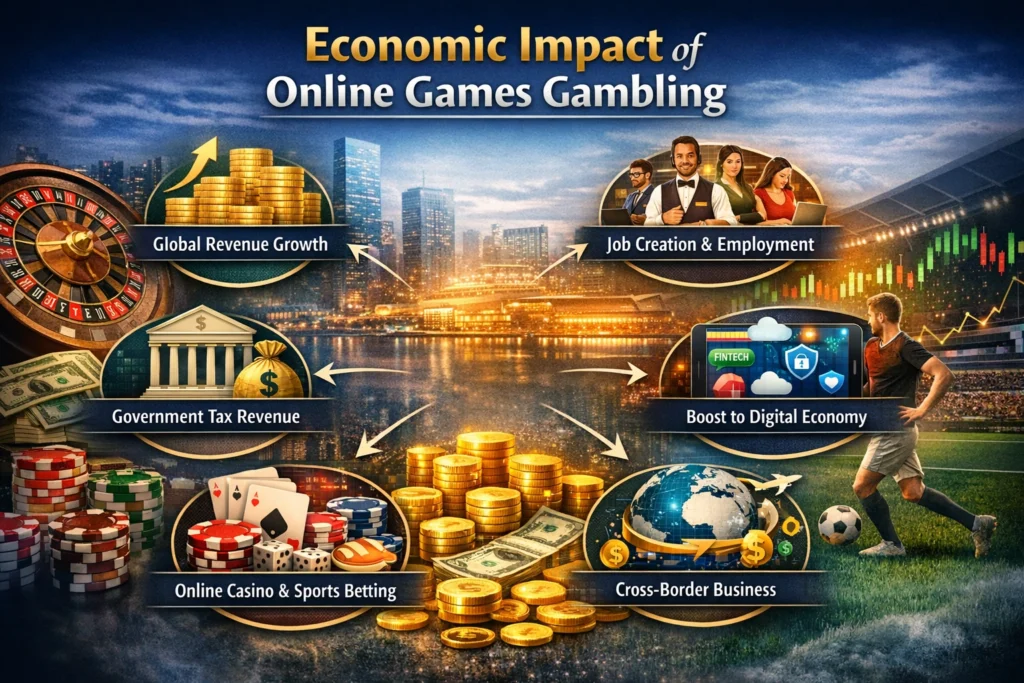
Online Games Gambling has developed into a multi-billion-dollar global industry that significantly influences national economies, digital markets, and employment sectors. Beyond entertainment, it functions as a major contributor to technological development, taxation revenue, and international business expansion.
Global Revenue Growth
The Online Games Gambling industry generates billions of dollars annually through:
- Online casino gaming
- Sports betting
- Esports wagering
- Virtual gaming platforms
- Mobile gambling applications
Revenue growth is driven by increasing smartphone penetration, expanding internet access in developing regions, and the legalization of online betting in new markets. As more countries regulate digital gambling, tax revenues continue to rise.
Employment Opportunities
Online Games Gambling supports a wide range of jobs across multiple industries. Employment opportunities include:
- Software developers
- Game designers
- Cybersecurity specialists
- Data analysts
- Customer support teams
- Marketing professionals
- Live streaming production staff
- Payment processing experts
Live dealer studios alone require professional dealers, camera operators, studio managers, and technical support teams, creating thousands of jobs worldwide.
Government Tax Revenue
In regulated markets, governments collect substantial tax income from licensed operators. Tax structures may include:
- Gross gaming revenue taxes
- Corporate taxes
- Licensing fees
- Advertising levies
These funds often support public services such as healthcare, education, infrastructure, and community development projects.
Boost to the Digital Economy
Online Games Gambling stimulates growth in related digital industries, including:
- Fintech and payment gateways
- Cybersecurity services
- Cloud hosting providers
- Digital marketing agencies
- Streaming technology platforms
The demand for secure payment systems and fraud prevention solutions has accelerated innovation within financial technology sectors.
Cross-Border Business Expansion
Because Online Games Gambling operates globally, companies frequently establish headquarters in jurisdictions with favorable regulations. This creates international business networks and foreign investment flows.
Some countries position themselves as gambling hubs by offering attractive licensing frameworks, stable regulatory environments, and competitive tax structures.
Economic Risks and Social Costs
While the economic benefits are substantial, there are also social considerations. Problem gambling can lead to financial hardship, debt, and productivity loss. Governments must balance revenue generation with responsible gambling policies to minimize social harm.
Investment in education, prevention programs, and addiction treatment services is often necessary to offset potential negative effects.
The economic impact of Online Games Gambling extends far beyond entertainment. It fuels innovation, creates employment, strengthens digital infrastructure, and contributes to national revenues. However, sustainable growth depends on responsible regulation and effective social safeguards that protect consumers while supporting economic development.
Social Impact and Cultural Influence of Online Games Gambling
Online Games Gambling is not just a financial or technological phenomenon—it has also reshaped social behavior, entertainment culture, and digital interaction worldwide. As gambling moves from physical venues into online spaces, it influences how communities engage with sports, gaming, and social media.
Integration with Digital Entertainment
Online Games Gambling has merged with mainstream entertainment platforms. Sports streaming services, gaming platforms, and social media networks often feature betting-related content, sponsorships, and advertisements. Major sporting events now commonly include betting odds integrated into broadcasts, normalizing wagering as part of the viewing experience.
Esports tournaments, in particular, have strengthened the link between competitive gaming and digital betting. Younger audiences who follow online gaming competitions are increasingly exposed to wagering opportunities tied to their favorite teams and players.
Influence on Sports Culture
Sponsorship deals between gambling operators and sports organizations have become widespread. Betting brands often appear on team jerseys, stadium banners, and broadcast advertisements. This visibility reinforces the connection between Online Games Gambling and professional sports.
Live betting has also changed how fans watch games. Instead of being passive viewers, many participants actively engage by placing in-play bets, tracking odds, and analyzing performance statistics in real time.
Social Interaction and Community Engagement
Online Games Gambling platforms often include chat rooms, multiplayer tournaments, leaderboards, and live dealer interaction. These features create a sense of digital community where users share strategies, celebrate wins, and discuss outcomes.
Gamification elements—such as achievement badges, rankings, and loyalty programs—encourage continued participation and competition among players.
Changing Perceptions of Gambling
In the past, gambling was often viewed as an activity limited to casinos or betting shops. Today, Online Games Gambling is marketed as a form of digital entertainment similar to online gaming. The sleek design, mobile apps, and modern branding contribute to a shift in perception, especially among younger adults.
However, this normalization also raises concerns about increased exposure and early adoption.
Impact on Youth and Vulnerable Groups
While regulated markets impose age restrictions, digital marketing and social media exposure can indirectly influence underage audiences. The blending of gaming culture and gambling elements sometimes blurs boundaries, especially in environments that include loot boxes, in-game purchases, and prize-based competitions.
This cultural overlap highlights the importance of education, parental awareness, and strict regulatory enforcement.
Ethical Considerations
As Online Games Gambling becomes more embedded in daily digital life, ethical questions arise:
- Should gambling advertising be limited during major sporting events?
- How transparent should platforms be about winning probabilities?
- What responsibilities do influencers have when promoting betting platforms?
Balancing commercial freedom with consumer protection remains an ongoing challenge.
Online Games Gambling continues to shape modern digital culture by merging entertainment, competition, and financial risk into one accessible ecosystem. While it enhances engagement and community interaction, it also requires careful oversight to ensure that cultural integration does not come at the expense of social well-being.
Future Trends and Innovations in Online Games Gambling
The future of Online Games Gambling is being shaped by rapid technological progress, evolving consumer behavior, and changing regulatory frameworks. As digital infrastructure improves globally, the industry is expected to become more immersive, personalized, and technologically advanced.
Virtual Reality (VR) and Augmented Reality (AR) Casinos
One of the most anticipated innovations in Online Games Gambling is the integration of Virtual Reality and Augmented Reality. VR casinos aim to replicate the experience of walking through a physical casino floor. Players can interact with tables, slot machines, and other participants in a 3D virtual environment using VR headsets.
Augmented Reality may enhance mobile gambling by overlaying digital elements onto real-world environments, making the experience more interactive and visually engaging.
Artificial Intelligence Expansion
Artificial Intelligence will continue to transform Online Games Gambling in several ways:
- Hyper-personalized gaming recommendations
- Advanced fraud detection systems
- Real-time risk assessment
- Improved customer support through AI chatbots
Machine learning algorithms can analyze vast amounts of user data to optimize gameplay experience while identifying harmful betting patterns earlier than ever before.
Blockchain and Decentralized Platforms
Blockchain technology is expected to expand within Online Games Gambling. Decentralized gambling platforms aim to increase transparency by allowing users to verify game fairness through publicly recorded transactions.
Smart contracts can automate payouts instantly after a game outcome is confirmed, reducing delays and building trust among players.
Cryptocurrency usage is also likely to grow, offering faster cross-border payments and enhanced privacy.
Gamification and Skill-Based Elements
The line between gaming and gambling is gradually narrowing. Future platforms may incorporate more skill-based mechanics to attract younger audiences accustomed to video games. Leaderboards, tournaments, and competitive challenges will continue to drive engagement.
Gamification elements such as levels, missions, and reward milestones are likely to become more advanced and interactive.
Mobile-First and Micro-Betting Trends
As smartphone usage continues to rise, Online Games Gambling will increasingly prioritize mobile optimization. Micro-betting—placing small wagers on specific moments within live events—will grow in popularity due to its fast-paced and engaging nature.
For example, users might bet on the outcome of a single play in a sports match or a short segment of a game rather than the entire event.
Stricter Regulations and Responsible Innovation
While innovation drives growth, stricter regulations are also expected. Governments are likely to introduce:
- Enhanced advertising restrictions
- Mandatory affordability checks
- Stronger data privacy laws
- Improved player protection measures
Future success in Online Games Gambling will depend on balancing innovation with ethical responsibility.
Integration with the Metaverse
Some experts predict that Online Games Gambling may eventually integrate into metaverse environments. In such ecosystems, users could interact through digital avatars, attend virtual tournaments, and participate in immersive gambling experiences within interconnected virtual worlds.
The future of Online Games Gambling will be defined by technological creativity, regulatory adaptation, and changing user expectations. As new innovations emerge, the industry must focus not only on growth and profitability but also on transparency, fairness, and long-term sustainability.
Challenges and Risks Facing Online Games Gambling
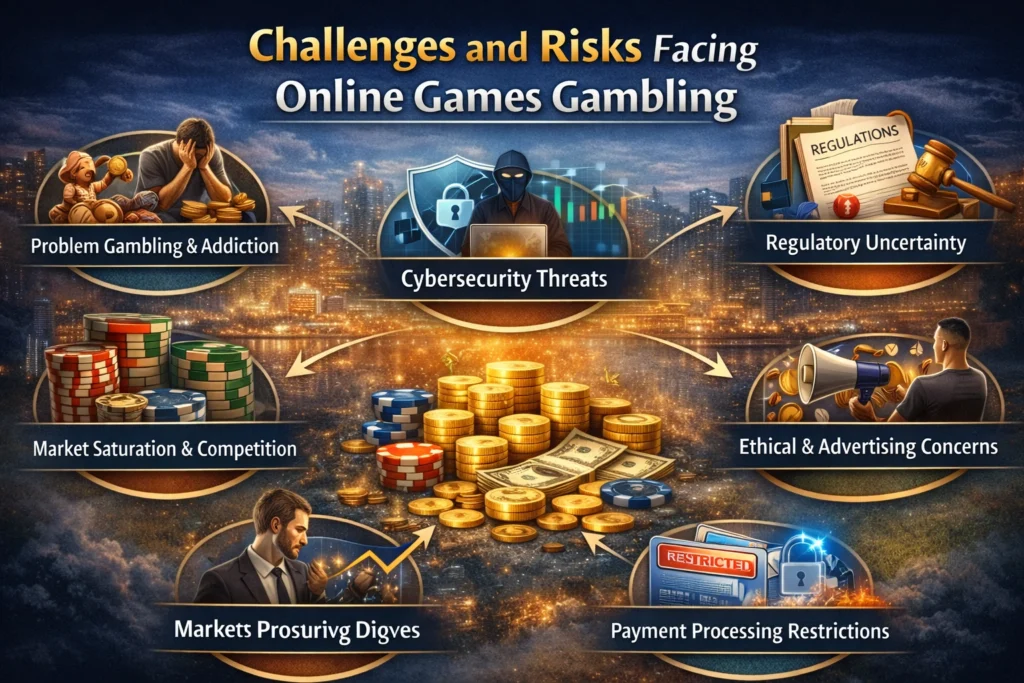
Despite its rapid growth and technological advancement, Online Games Gambling faces significant challenges that could shape its long-term future. While the industry offers innovation and economic benefits, it must address various operational, ethical, and regulatory risks to remain sustainable.
Problem Gambling and Addiction
One of the most serious concerns surrounding Online Games Gambling is the risk of addiction. The ease of access, 24/7 availability, and instant payment systems make it easier for individuals to gamble excessively. Unlike physical casinos, online platforms remove travel barriers and social visibility, which can sometimes increase risky behavior.
Problem gambling can lead to:
- Financial instability
- Debt accumulation
- Relationship issues
- Mental health challenges
- Reduced workplace productivity
Addressing addiction requires strong responsible gambling tools, early detection systems, and accessible support services.
Cybersecurity Threats
Online Games Gambling platforms handle sensitive user data, including financial details and personal identification documents. This makes them attractive targets for cybercriminals.
Common security risks include:
- Data breaches
- Phishing attacks
- Identity theft
- Payment fraud
- Distributed denial-of-service (DDoS) attacks
To combat these threats, platforms must invest heavily in encryption technologies, secure servers, two-factor authentication, and constant security monitoring.
Regulatory Uncertainty
The legal status of Online Games Gambling varies across jurisdictions and continues to evolve. Sudden regulatory changes, license revocations, or advertising restrictions can significantly impact operators.
Companies operating internationally must navigate complex compliance requirements, which may differ from one country to another. Regulatory uncertainty can create financial and operational instability.
Market Saturation and Competition
As more operators enter the industry, competition becomes increasingly intense. Market saturation can lead to aggressive marketing strategies, higher promotional spending, and reduced profit margins.
Smaller operators may struggle to compete with large, well-established brands that dominate advertising channels and sponsorship deals.
Ethical and Advertising Concerns
The promotion of Online Games Gambling, particularly during major sporting events or through social media influencers, raises ethical questions. Critics argue that excessive advertising may normalize gambling behavior and expose vulnerable audiences to risk.
Balancing commercial freedom with social responsibility remains an ongoing debate within the industry.
Payment Processing Restrictions
In some regions, banks and financial institutions restrict gambling-related transactions. Payment processing limitations can reduce accessibility and create operational challenges for operators.
Although cryptocurrencies offer alternative payment solutions, regulatory scrutiny of digital assets may introduce additional compliance requirements.
Online Games Gambling must continuously adapt to these challenges to maintain public trust and long-term stability. Strong security measures, responsible gambling initiatives, transparent operations, and regulatory compliance are essential for mitigating risks. The industry’s ability to address these concerns will determine how successfully it evolves in the coming years.
Frequently Asked Questions (FAQ) – Online Games Gambling
1. What is Online Games Gambling?
Online Games Gambling refers to placing bets or wagering money through internet-based platforms. It includes online casino games, sports betting, esports wagering, virtual games, and live dealer experiences that can be accessed via desktop or mobile devices.
2. Is Online Games Gambling legal?
The legality of Online Games Gambling depends on the country or region. Some jurisdictions fully regulate and license online gambling, while others restrict or ban it. Players should always check local laws before participating.
3. How do online casino games ensure fairness?
Most licensed platforms use Random Number Generator (RNG) software to produce unbiased and unpredictable results. Regulated operators are typically audited by independent testing agencies to verify fairness and transparency.
4. What payment methods are available in Online Games Gambling?
Common payment methods include:
- Credit and debit cards
- Bank transfers
- E-wallets
- Cryptocurrencies
- Mobile payment solutions
Availability may vary depending on the platform and region.
5. What is live betting?
Live betting, also known as in-play betting, allows users to place wagers during an ongoing sports match or event. Odds change in real time based on game progress, making it more dynamic and interactive.
6. Can Online Games Gambling be addictive?
Yes, gambling can become addictive if not managed responsibly. Because online platforms are available 24/7, it is important for players to set limits, manage budgets, and use responsible gambling tools provided by operators.
7. What are responsible gambling tools?
Responsible gambling tools may include:
- Deposit limits
- Loss limits
- Time reminders
- Cooling-off periods
- Self-exclusion programs
These tools help players maintain control over their gambling behavior.
8. Is Online Games Gambling safe?
Licensed and regulated platforms use encryption technology, secure payment gateways, and identity verification systems to protect users. However, players should always choose reputable platforms and avoid unverified websites.
9. What is the difference between skill-based and chance-based games?
Chance-based games, such as slots or roulette, rely primarily on random outcomes. Skill-based games, such as poker or certain fantasy sports formats, involve strategy and decision-making that can influence results.
10. What is the future of Online Games Gambling?
The future of Online Games Gambling is expected to include advanced technologies like artificial intelligence, blockchain integration, virtual reality casinos, and enhanced mobile gaming experiences. At the same time, stronger regulations and responsible gambling initiatives will likely shape industry growth.
Conclusion: The Evolving Landscape of Online Games Gambling
Online Games Gambling has firmly established itself as a dominant force in the digital entertainment industry. What began as simple online casino platforms has evolved into a sophisticated global ecosystem that combines advanced technology, real-time sports engagement, esports wagering, mobile applications, and immersive live dealer experiences. Platforms like t20worldcuplive continue to explore the connection between major sporting events and the growing interest in digital betting trends.
The industry’s rapid expansion has been fueled by constant innovation. Artificial intelligence, blockchain systems, cloud computing, and mobile-first development have completely transformed user experience. Players now expect secure transactions, instant withdrawals, personalized bonuses, and seamless gameplay across devices. At the same time, external betting platforms such as betflashfun reflect how competitive and diverse the Online Games Gambling market has become on a global scale.
However, with growth comes responsibility. Concerns around gambling addiction, cybersecurity risks, regulatory compliance, and ethical advertising remain central to the industry’s long-term sustainability. Operators must focus on transparency, fair play, and responsible gambling tools to maintain trust and credibility.
Economically, Online Games Gambling contributes significantly to digital economies, job creation, and tax revenues in regulated markets. Socially, it has reshaped how fans engage with sports, especially during global tournaments and live events. The integration of betting features into sports culture continues to influence user behavior and digital consumption patterns.
Looking ahead, the future of Online Games Gambling will depend on balanced growth—where innovation meets accountability. Platforms that prioritize user protection, secure technology, and ethical standards will shape the next phase of this evolving digital revolution.
