
Introduction
Games and gambling have fascinated humanity for centuries, blending entertainment, competition, and the irresistible allure of uncertainty. From ancient civilizations rolling handmade dice to modern players tapping smartphone screens for instant bets, the desire to test luck and skill has remained constant across time and cultures. Games bring people together through strategy, challenge, and recreation, while gambling adds the powerful element of financial risk and reward. Together, games and gambling represent one of the most enduring forms of human engagement.
At their core, games are structured activities designed for enjoyment, mental stimulation, or social interaction. They can involve skill, strategy, teamwork, or simple amusement. Gambling, however, introduces a wager — something of value placed on an uncertain outcome with the hope of gaining more in return. This added element of risk transforms a simple game into a high-stakes experience driven by anticipation and emotion.
The appeal of games and gambling lies in psychology as much as entertainment. The excitement of uncertainty, the possibility of winning, and the competitive spirit trigger powerful emotional and neurological responses. For many people, this creates harmless fun and memorable social experiences. For others, the same thrill can become addictive, leading to financial strain and personal hardship.
In today’s digital era, games and gambling have evolved dramatically. Online platforms, mobile apps, live streaming, and virtual environments have made participation easier and more accessible than ever before. The boundaries between gaming and gambling are increasingly blurred, raising new questions about regulation, ethics, and responsible participation.
Understanding games and gambling requires looking beyond the surface excitement. It involves exploring their history, psychological foundations, economic impact, risks, and future trajectory. By examining both the entertainment value and the potential consequences, we gain a clearer perspective on why games and gambling continue to captivate millions around the world — and why balance and awareness are more important than ever.
The Historical Roots of Games and Gambling
The story of games and gambling begins long before modern casinos and online betting platforms. Human beings have always been drawn to structured play and risk-taking, using games not only for entertainment but also for social bonding, cultural rituals, and even economic development.
Archaeological discoveries show that early forms of dice were used in ancient Mesopotamia around 3000 BCE. These dice, often carved from bones or stones, were used in simple games of chance. In ancient China, early lottery-style systems were reportedly used to fund major state projects, including large infrastructure developments. Meanwhile, in ancient Rome, betting on gladiator contests and chariot races became widespread, even though authorities sometimes attempted to restrict it.
Throughout history, games evolved alongside civilizations. In ancient Egypt, board games such as Senet were popular among both royalty and common citizens. In India, early versions of card and strategy games developed, influencing modern playing cards and competitive games. As trade routes expanded, games spread across continents, adapting to local cultures and traditions.
By the Middle Ages, card games had become popular across Europe. Gambling houses began operating informally in cities, where merchants and nobles gathered to play games of chance. In the 17th century, one of the earliest recognized public gambling houses was established in Italy, marking the beginning of organized casino-style gambling.
The 18th and 19th centuries saw gambling grow in popularity, especially in Europe and the United States. Riverboat gambling in America became iconic, particularly along the Mississippi River. Later, cities such as Las Vegas transformed gambling into a large-scale entertainment industry, combining casinos with luxury hotels, live performances, and tourism.
The 20th century introduced a new chapter with the rise of government-regulated lotteries. Many countries legalized lotteries to generate revenue for public services such as education and infrastructure. At the same time, casinos expanded globally, becoming symbols of glamour and high-stakes excitement.
The most dramatic transformation, however, came with the digital revolution. The late 20th and early 21st centuries introduced online casinos, virtual poker rooms, and mobile betting apps. Now, anyone with internet access can participate in games and gambling from virtually anywhere in the world.
From ancient dice to digital platforms, the historical journey of games and gambling reflects humanity’s enduring fascination with chance, strategy, and reward. What began as simple forms of recreation has grown into a global industry deeply embedded in modern culture.
Understanding the Difference: Games vs. Gambling
Although the terms are often used together, games and gambling are not identical. Understanding their distinction is essential to fully grasp their social, psychological, and financial impact.
What Are Games?
Games are structured activities played for entertainment, competition, learning, or social interaction. They may involve skill, strategy, teamwork, creativity, or chance. The primary purpose of games is engagement and enjoyment rather than financial gain.
Examples include:
- Board games like chess and Monopoly
- Video games and esports
- Outdoor sports such as cricket, football, or basketball
- Puzzle and strategy-based games
In most cases, games do not require wagering money. Even when prizes are involved, the central focus remains participation, skill development, or recreation.
Games stimulate the mind, improve coordination, encourage teamwork, and strengthen problem-solving abilities. They often serve as stress relievers and social bonding tools.
What Is Gambling?
Gambling involves wagering something of value — typically money — on an uncertain outcome with the primary goal of winning additional money or material gain. The element of financial risk is what separates gambling from regular gaming.
Common forms of gambling include:
- Casino games like roulette and blackjack
- Sports betting
- Lotteries
- Poker played for money
- Online betting platforms
Unlike games played purely for fun, gambling centers around risk and reward. The emotional intensity is often higher because financial stakes are involved.
Where the Line Gets Blurred
In today’s digital world, the boundary between games and gambling is becoming less clear. Many online games now include features such as:
- Loot boxes with random rewards
- Paid spins or chance-based upgrades
- In-game betting systems
These mechanics resemble gambling because they involve spending money for uncertain outcomes. As a result, debates continue about whether certain gaming features should be regulated as gambling.
Key Differences at a Glance
| Games | Gambling |
|---|---|
| Focus on entertainment and skill | Focus on financial gain |
| May involve strategy and learning | Primarily based on risk and probability |
| Usually no real-money risk | Requires wagering something of value |
| Lower financial consequences | Potential for financial loss |
Understanding this difference helps individuals make informed decisions. While games can provide healthy recreation and skill-building, gambling introduces financial and psychological risks that require awareness and responsibility.
Recognizing where entertainment ends and risk begins is crucial in navigating the modern world of games and gambling.
Types of Gambling
Gambling exists in many forms, ranging from traditional physical venues to fully digital platforms. While the core principle remains the same — risking something of value on an uncertain outcome — the structure, environment, and experience can vary significantly. Understanding the main types of gambling helps clarify how widespread and diverse this industry has become.
1. Casino Gambling
Casino gambling is one of the most recognizable forms of gambling worldwide. Casinos are designed to create an immersive environment filled with lights, sounds, and social energy that heightens excitement.
Common casino games include:
- Slot machines
- Blackjack
- Roulette
- Baccarat
- Poker
Most casino games are built on mathematical probabilities that give the house a long-term advantage. While players may experience short-term wins, the overall system ensures profitability for the casino over time.
Slot machines, in particular, are highly popular because they are simple to play and provide fast outcomes. Table games such as blackjack and poker attract players who enjoy strategy and interaction.
2. Sports Betting
Sports betting involves placing wagers on the outcome of sporting events. It has grown tremendously with the expansion of online platforms and mobile apps.
Popular betting markets include:
- Football matches
- Cricket tournaments
- Basketball games
- Horse racing
- Esports competitions
Unlike purely chance-based casino games, sports betting often involves analysis, statistics, and knowledge of teams or players. However, unpredictability remains a major factor, and even experts cannot eliminate risk.
Live betting — where wagers are placed during an ongoing event — has further increased excitement and impulsive decision-making.
3. Lottery and Raffles
Lotteries are often government-regulated and widely accessible. Participants purchase tickets and hope their chosen numbers match the official draw.
The main appeal lies in:
- Low entry cost
- Extremely large jackpots
- The dream of life-changing wealth
Although the odds of winning major prizes are very low, lotteries remain popular due to their simplicity and massive payout potential.
Raffles and community draws operate on a smaller scale but follow the same principle of chance-based reward.
4. Online Gambling
The rise of the internet revolutionized gambling. Online platforms now provide:
- Virtual slot machines
- Live dealer table games
- Online poker rooms
- Mobile sports betting apps
Online gambling offers convenience, privacy, and constant accessibility. Players can place bets anytime and anywhere with an internet connection.
However, this convenience also increases potential risks. Without physical barriers such as travel or time limits, individuals may gamble more frequently and impulsively.
5. Informal and Social Gambling
Not all gambling takes place in casinos or online platforms. Informal gambling occurs in everyday settings such as:
- Friendly poker nights
- Office betting pools
- Casual wagers between friends
- Festival or cultural event betting traditions
While often considered harmless fun, informal gambling can still involve financial risk and should be approached responsibly.
The Expanding Landscape
The world of gambling continues to evolve. Technology, legalization changes, and shifting cultural attitudes are constantly reshaping how people engage with betting activities.
From glamorous casinos to smartphone apps, gambling has become more accessible than ever before. Each type offers a different experience, but all share a common foundation: uncertainty combined with the possibility of reward.
Understanding these different forms is essential for recognizing both their entertainment value and their potential risks.
The Psychology Behind Games and Gambling
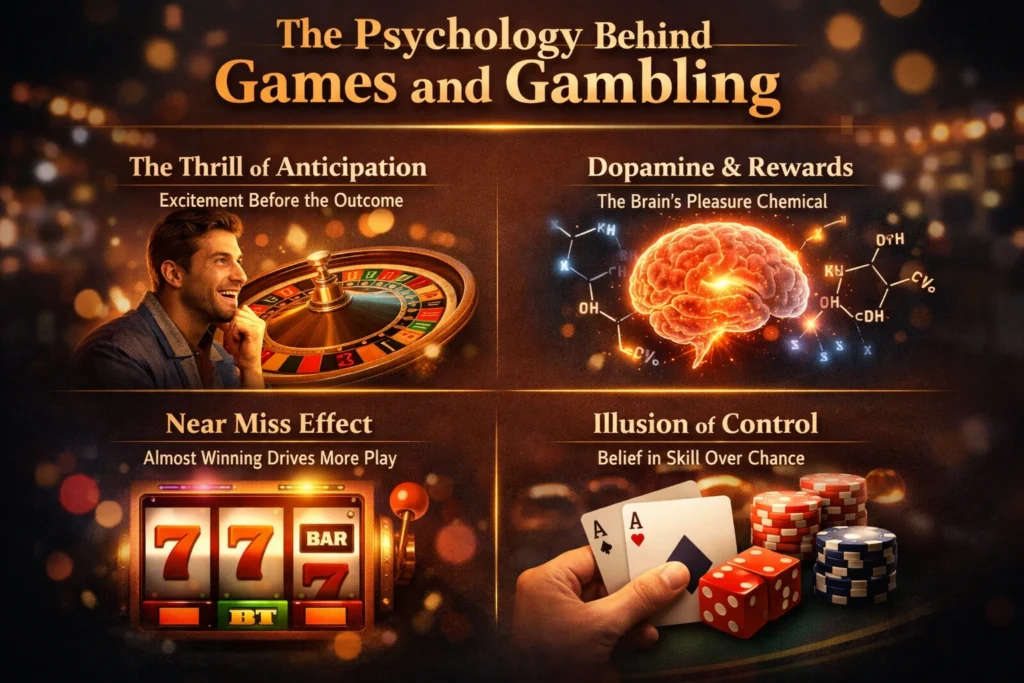
One of the most powerful forces driving games and gambling is psychology. While money, competition, and entertainment play obvious roles, the deeper appeal lies in how the human brain responds to risk, reward, and uncertainty. Understanding the psychological mechanisms behind gambling helps explain why it can be thrilling for some and addictive for others.
The Thrill of Uncertainty
Humans are naturally drawn to uncertainty when a reward is involved. When someone places a bet or spins a roulette wheel, the brain releases dopamine — a chemical associated with pleasure, motivation, and anticipation. Interestingly, dopamine spikes not only when a person wins, but also in the moments leading up to the outcome.
This anticipation creates excitement. The “what if” feeling — what if I win? what if this is the big one? — keeps people engaged. The uncertainty itself becomes rewarding.
The Reward System and Reinforcement
Gambling operates on what psychologists call a variable reward schedule. This means rewards are given unpredictably. Research shows that unpredictable rewards are more engaging than predictable ones.
For example:
- A slot machine does not pay out on a fixed schedule.
- A sports bet may win after several losses.
- A poker hand might suddenly change the game’s outcome.
This irregular reinforcement strengthens behavior. The brain learns that a win could happen at any moment, encouraging continued play.
The Near-Miss Effect
A near-miss occurs when someone almost wins — such as matching two jackpot symbols instead of three. Even though it is technically a loss, the brain often interprets it as progress.
Studies show that near-misses activate reward-related areas of the brain similarly to actual wins. This creates the illusion that success is close, motivating the player to try again.
Illusion of Control
In many gambling activities, players believe their skills, rituals, or strategies can influence outcomes — even in games that are purely random.
Examples include:
- Blowing on dice before rolling
- Choosing specific “lucky” numbers
- Believing in hot and cold streaks
This illusion of control increases confidence and reduces the perception of risk, even when outcomes are statistically independent.
Social and Environmental Influence
Casinos and gambling platforms are intentionally designed to stimulate the senses:
- Bright lights
- Celebratory sounds
- Clocks often hidden from view
- Complimentary rewards or bonuses
These environmental factors encourage longer play sessions and reinforce positive emotional experiences.
Social influence also plays a role. Seeing others win can trigger excitement and competitive feelings. In group settings, people may take bigger risks than they would alone.
Emotional Escape
For some individuals, gambling becomes more than entertainment. It can serve as an escape from stress, loneliness, boredom, or financial pressure.
The immersive nature of games provides temporary distraction from real-life concerns. However, when gambling becomes a coping mechanism, it can develop into a harmful cycle.
Why Psychology Matters
The psychological appeal of games and gambling explains both their popularity and their potential dangers. The same brain mechanisms that create excitement can also lead to compulsive behavior if not managed carefully.
Recognizing these psychological triggers allows individuals to make more conscious decisions. Awareness transforms gambling from an emotional impulse into a deliberate choice.
Understanding the mind behind the bet is one of the most important steps in maintaining balance in the world of games and gambling.
Skill vs. Luck: The Ongoing Debate
One of the most discussed aspects of games and gambling is the balance between skill and luck. Many players believe that knowledge, strategy, and experience can significantly improve their chances of winning. While this is true in certain cases, the role of luck can never be completely eliminated. Understanding this distinction is crucial for realistic expectations.
Pure Games of Chance
Some forms of gambling rely almost entirely on randomness. In these games, no strategy can change the mathematical odds.
Examples include:
- Lottery draws
- Slot machines
- Roulette (outside of betting patterns)
In these cases, outcomes are determined by random number generators or physical mechanics. Each spin or draw is independent of the previous one. A losing streak does not increase the chances of a win on the next attempt, even though many players believe it does.
The house edge ensures that, over time, the operator maintains a statistical advantage.
Games with a Skill Component
Other forms of gambling involve a measurable degree of skill. While luck still influences short-term outcomes, strategy and knowledge can improve long-term performance.
Examples include:
- Poker
- Blackjack
- Sports betting
- Fantasy sports contests
In poker, for instance, understanding probability, reading opponents, and managing risk can significantly impact results. Similarly, sports betting may involve research, statistics, and analytical thinking.
However, even in skill-based gambling, chance plays a role. A skilled poker player can still lose due to an unlucky hand. A well-researched sports bet can fail due to unexpected events like injuries or weather conditions.
The Danger of Overestimating Skill
One of the psychological risks in gambling is overconfidence. When players experience early success, they may attribute wins entirely to skill while blaming losses on bad luck.
This mindset can lead to:
- Larger bets
- Riskier decisions
- Ignoring statistical reality
Believing that skill overrides probability often results in financial loss over time.
Short-Term Wins vs. Long-Term Odds
In the short term, almost anyone can win. This unpredictability fuels excitement and encourages continued play. However, over the long term, mathematical probability becomes dominant.
Casinos and betting platforms rely on this principle. Their systems are designed so that, collectively, players lose more than they win.
Understanding the difference between short-term variance and long-term expectation is essential for responsible participation.
Why This Debate Matters
The skill-versus-luck discussion shapes how individuals approach gambling. If someone views gambling purely as entertainment, they are less likely to expect consistent profit. But if they believe skill guarantees success, they may treat gambling as a reliable income source — which can be dangerous.
Games and gambling can include elements of strategy, but they always involve uncertainty. Recognizing the limits of control helps maintain realistic expectations and reduces the risk of harmful behavior.
In the end, whether driven by skill or luck, gambling remains an activity rooted in probability — and probability always has the final say.
Economic Impact of Games and Gambling
Games and gambling are not only sources of entertainment; they are also major economic forces. Across the world, the gambling industry generates hundreds of billions of dollars annually. From luxury casinos and online platforms to state-run lotteries and sports betting companies, gambling contributes significantly to national and local economies.
Revenue Generation and Taxation
Governments often regulate and tax gambling activities. Revenue from casinos, lotteries, and betting platforms contributes to:
- Public infrastructure projects
- Education funding
- Healthcare programs
- Community development initiatives
State lotteries, in particular, are commonly promoted as tools for supporting public services. In many regions, a portion of ticket sales is allocated directly to education or social welfare programs.
This financial contribution makes gambling politically and economically significant.
Employment and Tourism
Large-scale casinos and entertainment complexes create jobs in areas such as:
- Hospitality
- Security
- Marketing
- Event management
- Technology and IT services
Cities known for gambling often experience tourism growth. Visitors travel not only to gamble but also to enjoy hotels, restaurants, live performances, and shopping experiences.
The ripple effect extends to local businesses, transportation services, and retail industries.
The Online Economy
The rise of online gambling has introduced a new digital economy. Technology companies develop software, payment systems process transactions, and marketing agencies promote betting platforms.
Mobile apps and online casinos operate globally, generating cross-border revenue. Cryptocurrency gambling has also emerged, adding new financial dynamics to the industry.
However, digital expansion means money flows quickly and sometimes across jurisdictions with limited oversight.
The Hidden Economic Costs
While gambling generates revenue, it also carries economic risks. Problem gambling can lead to:
- Personal debt
- Bankruptcy
- Job loss
- Increased reliance on social welfare systems
Families affected by gambling addiction may face financial instability, which can indirectly impact broader economic systems.
Communities may also experience higher rates of financial crime linked to gambling-related debt.
Balancing Profit and Responsibility
The economic debate around games and gambling often centers on balance. Supporters argue that regulated gambling stimulates growth, creates jobs, and funds public services. Critics highlight the social costs and potential harm to vulnerable individuals.
Effective regulation aims to strike a balance between economic benefit and consumer protection. This includes enforcing responsible gambling policies, transparency in odds, and support systems for addiction recovery.
A Complex Financial Landscape
Games and gambling represent a powerful intersection of entertainment and economics. While they provide revenue and employment opportunities, they also create financial vulnerabilities for individuals and families.
Understanding both the visible profits and hidden costs is essential for evaluating the true economic impact of gambling. Like the games themselves, the financial outcomes are complex — influenced by regulation, behavior, and the delicate balance between opportunity and risk.
The Dark Side: Problem Gambling and Addiction
While many people participate in games and gambling for entertainment, not everyone is able to maintain control. For some individuals, gambling shifts from a recreational activity to a compulsive behavior that can disrupt finances, relationships, and mental health. Understanding the darker side of gambling is essential in recognizing its full impact.
What Is Problem Gambling?
Problem gambling refers to gambling behavior that becomes difficult to control and begins to negatively affect a person’s life. It exists on a spectrum — from mild risky behavior to severe gambling disorder.
Unlike casual players who set limits and accept losses, individuals with gambling problems often feel an overwhelming urge to continue betting despite harmful consequences.
Signs and Warning Indicators
Common warning signs include:
- Spending more money than planned
- Chasing losses in an attempt to recover money
- Borrowing funds or selling possessions to gamble
- Lying to family or friends about gambling habits
- Feeling restless or irritable when not gambling
- Neglecting work, studies, or relationships
One of the most dangerous patterns is “chasing losses.” After losing money, a person may increase their bets in hopes of winning it back, often leading to even greater losses.
The Brain and Addiction
Gambling addiction affects the brain’s reward system in ways similar to substance addictions. The release of dopamine during wins — and even near-wins — reinforces the behavior. Over time, the brain may require higher risks or larger bets to achieve the same emotional stimulation.
This creates a cycle:
- Bet placed
- Emotional high or anticipation
- Temporary relief or excitement
- Loss or win
- Urge to repeat
The cycle can become deeply ingrained, making it difficult to stop without support.
Emotional and Social Consequences
The consequences of compulsive gambling extend beyond finances. They may include:
- Anxiety and depression
- Guilt and shame
- Relationship breakdowns
- Social isolation
- Increased stress levels
In severe cases, financial desperation may lead to legal problems or harmful coping behaviors.
Families are often deeply affected. Trust issues, financial instability, and emotional strain can damage long-term relationships.
Why Some People Are More Vulnerable
Certain factors may increase vulnerability to gambling addiction:
- High stress levels
- Financial difficulties
- Impulsivity traits
- Exposure to gambling at a young age
- Co-existing mental health conditions
Accessibility also plays a role. With online gambling available 24/7, individuals may find it harder to disconnect.
Recovery and Support
The good news is that gambling addiction is treatable. Recovery may involve:
- Cognitive behavioral therapy (CBT)
- Support groups
- Financial counseling
- Self-exclusion programs from gambling platforms
- Setting strict spending and time limits
Early awareness is critical. Recognizing unhealthy patterns before they escalate can prevent severe consequences.
A Necessary Conversation
Games and gambling can be entertaining, but ignoring the risks does not make them disappear. Open conversations about addiction, responsible behavior, and mental health reduce stigma and encourage those struggling to seek help.
Understanding the dark side does not mean condemning gambling entirely. It means acknowledging that excitement and risk must be balanced with awareness and self-control.
In the world of games and gambling, the greatest victory is not a jackpot — it is the ability to stay in control.
The Role of Technology in Modern Gambling
Technology has dramatically transformed the world of games and gambling. What once required physical presence in a casino or betting shop can now be done instantly from a smartphone. This digital shift has reshaped accessibility, user experience, marketing strategies, and even the psychological impact of gambling.
Mobile Gambling and 24/7 Access
Smartphones have made gambling more convenient than ever. With a few taps, users can:
- Place sports bets
- Spin virtual slot machines
- Join live poker tables
- Participate in real-time casino games
This constant availability removes traditional barriers such as travel time, operating hours, or physical cash limits. While convenient, 24/7 access also increases the risk of impulsive behavior and extended play sessions.
The ease of access has made gambling more integrated into everyday life.
Live Dealer and Streaming Technology
Modern platforms now offer live dealer games, where real dealers host blackjack, roulette, and baccarat tables through high-definition video streams. This creates a more immersive and realistic experience.
Live chat features allow players to interact with dealers and other participants, combining digital convenience with social engagement.
This blend of technology and human interaction makes online gambling feel more authentic and emotionally engaging.
Artificial Intelligence and Data Personalization
Artificial intelligence (AI) plays a growing role in online gambling platforms. AI systems can:
- Analyze user behavior
- Recommend games based on preferences
- Send personalized promotions
- Detect suspicious activity or fraud
While personalization enhances user experience, it can also encourage increased spending by targeting players with tailored incentives.
At the same time, AI is being used to identify patterns of problem gambling and trigger responsible gaming interventions.
Cryptocurrency and Digital Payments
Digital payment systems have simplified transactions. Credit cards, e-wallets, and cryptocurrencies allow instant deposits and withdrawals.
Cryptocurrency gambling adds:
- Increased anonymity
- Faster global transactions
- Fewer banking restrictions
However, anonymity can make regulation more challenging and may increase risks for vulnerable users.
Virtual Reality and the Future
Emerging technologies like virtual reality (VR) and augmented reality (AR) are shaping the next phase of gambling. Virtual casinos may soon allow players to walk through digital gaming floors, interact with avatars, and simulate real-world casino experiences from home.
As technology evolves, the line between gaming entertainment and gambling experiences may blur even further.
The Double-Edged Sword of Innovation
Technology has made games and gambling more immersive, convenient, and globally accessible. It has also introduced new challenges, including:
- Increased exposure to young audiences
- Faster spending cycles
- Reduced social barriers to excessive gambling
Innovation brings opportunity, but it also requires stronger safeguards, education, and responsible design.
In the modern era, technology is not just shaping how gambling happens — it is shaping who participates, how often they play, and how deeply they engage.
Responsible Gambling: Maintaining Control in Games and Gambling
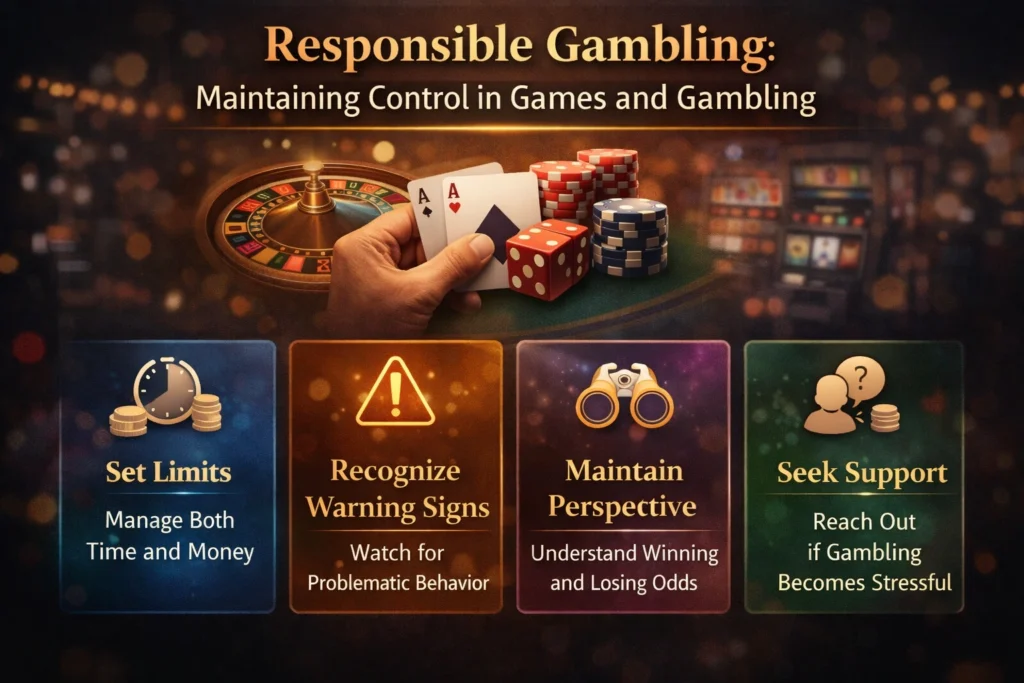
As the popularity of games and gambling continues to rise, the importance of responsible gambling becomes more critical than ever. While games and gambling can provide entertainment, excitement, and social engagement, they also involve financial risk. Practicing responsible behavior ensures that games and gambling remain enjoyable rather than harmful.
Responsible gambling is not about avoiding games and gambling entirely. Instead, it is about understanding limits, managing risk, and maintaining control while participating in games and gambling activities.
Setting Financial Limits in Games and Gambling
One of the most important principles of responsible games and gambling is setting a clear budget. Before engaging in games and gambling, individuals should decide:
- How much money they can afford to lose
- How much time they are willing to spend
- When to stop, regardless of wins or losses
Games and gambling should never involve borrowed money, essential savings, or funds meant for bills and daily expenses. Treating games and gambling as a form of paid entertainment — similar to buying a movie ticket — helps maintain perspective.
Time Management in Games and Gambling
Time control is just as important as financial control. Extended sessions of games and gambling can lead to fatigue, emotional decision-making, and impulsive bets.
Healthy habits include:
- Taking regular breaks
- Avoiding late-night gambling sessions
- Balancing games and gambling with other activities
- Not gambling during stressful emotional states
Games and gambling should fit into life — not take over it.
Recognizing Risk Patterns in Games and Gambling
Responsible participation in games and gambling requires self-awareness. Warning signs may include:
- Increasing bet sizes after losses
- Feeling anxious when not gambling
- Prioritizing games and gambling over responsibilities
- Hiding games and gambling activities from others
Recognizing these patterns early prevents games and gambling from turning into compulsive behavior.
Self-Exclusion and Support Tools
Modern games and gambling platforms often provide responsible gambling tools such as:
- Deposit limits
- Loss limits
- Time reminders
- Self-exclusion programs
These tools help individuals control their games and gambling habits. Using them proactively shows strength, not weakness.
Many organizations and support groups also provide assistance for individuals struggling with games and gambling addiction.
Changing the Mindset Around Games and Gambling
A key principle of responsible games and gambling is mindset. Games and gambling should never be viewed as guaranteed income sources. The odds in most games and gambling activities favor the operator over time.
Approaching games and gambling with realistic expectations reduces disappointment and financial strain. Wins should be treated as temporary bonuses, not long-term strategies.
Balance Is the Real Win
Games and gambling can be exciting and entertaining when practiced responsibly. The goal is not to eliminate games and gambling from society but to ensure that individuals participate in games and gambling with awareness and discipline.
When limits are respected, and expectations remain realistic, games and gambling can remain what they are meant to be — forms of entertainment, not financial lifelines.
In the world of games and gambling, the greatest success is not measured by jackpots or winnings. It is measured by control, balance, and the ability to walk away.
Social and Cultural Influence of Games and Gambling
Games and gambling are not just personal activities; they are deeply connected to society and culture. Across different regions of the world, games and gambling carry unique meanings, traditions, and social acceptance levels. The influence of games and gambling extends beyond casinos and betting platforms — it shapes entertainment, media, celebrations, and even community identity.
Cultural Acceptance of Games and Gambling
In some societies, games and gambling are widely accepted forms of entertainment. Casino tourism, sports betting, and national lotteries are normalized parts of everyday life. In other cultures, games and gambling may be restricted due to religious, moral, or legal concerns.
Cultural perspectives on games and gambling often depend on:
- Religious beliefs
- Historical traditions
- Government regulations
- Social attitudes toward risk
For example, certain festivals and celebrations include traditional games and gambling activities as part of cultural expression. In these contexts, games and gambling are seen as social bonding experiences rather than purely financial ventures.
Media and Entertainment Influence
Movies, television shows, and digital content frequently glamorize games and gambling. Casino scenes often portray luxury, excitement, and dramatic wins. Professional poker tournaments are broadcast as competitive sports. Sports betting advertisements present games and gambling as thrilling and rewarding experiences.
This media portrayal shapes public perception. When games and gambling are consistently shown as glamorous or profitable, people may underestimate the risks involved.
Social media also plays a role. Influencers and streamers sometimes share live betting sessions, normalizing frequent gambling behavior among younger audiences.
Games and Gambling in Sports Culture
Sports and gambling are increasingly interconnected. Sponsorships, advertisements, and partnerships between betting companies and sports organizations have expanded globally.
Fans often engage in games and gambling through:
- Match predictions
- Fantasy leagues
- Live sports betting
For many, betting enhances the excitement of watching sports. However, the integration of games and gambling into sports culture also raises concerns about overexposure and normalization.
Community and Social Bonding
Not all games and gambling experiences are high-stakes or commercial. Informal betting pools, friendly poker nights, and small community raffles can strengthen social bonds.
In these settings, games and gambling function as shared entertainment. The emphasis is often on participation rather than profit.
However, even in social environments, boundaries must be maintained to prevent financial strain or conflict.
The Influence on Younger Generations
Younger audiences are increasingly exposed to gambling-like mechanics in video games and digital platforms. Features such as loot boxes and randomized rewards introduce risk-reward systems at an early age.
As games and gambling continue to merge in digital spaces, cultural attitudes toward risk may evolve. Early exposure can shape future behavior patterns, making education and awareness essential.
A Reflection of Society
Games and gambling reflect broader societal values around competition, risk, reward, and ambition. They mirror our fascination with chance and our desire for sudden success.
At the same time, society shapes how games and gambling are regulated, perceived, and practiced. Cultural norms influence whether gambling is celebrated, restricted, or discouraged.
Understanding the social and cultural impact of games and gambling helps us see them not just as personal choices, but as collective experiences influenced by history, media, technology, and community values.
Youth Exposure and the Blurring Line Between Games and Gambling
As technology advances, the distinction between games and gambling is becoming increasingly blurred — especially for younger generations. Today’s digital environment exposes children and teenagers to gambling-like mechanics long before they are legally allowed to participate in traditional gambling activities. This shift raises important questions about awareness, regulation, and long-term impact.
Gambling Mechanics Inside Video Games
Many modern video games include features that resemble gambling systems. These mechanics often involve spending real or virtual currency for randomized rewards.
Common examples include:
- Loot boxes with random items
- Mystery packs or card openings
- Spin-to-win reward systems
- Upgrade chances based on probability
Although these features are often categorized as gaming elements, they function similarly to gambling because they involve paying for uncertain outcomes. The excitement of randomness mirrors traditional games and gambling experiences.
Early Exposure to Risk-Reward Systems
Games and gambling both rely heavily on risk-reward psychology. When young players repeatedly experience random reward systems, they may become accustomed to:
- Spending money for uncertain returns
- Experiencing dopamine spikes from random wins
- Accepting losses as part of the system
This early normalization of risk-taking behavior can shape future attitudes toward games and gambling. Research suggests that familiarity with gambling-style mechanics at a young age may increase interest in real-money gambling later in life.
The Role of Advertising and Influencers
Online platforms and social media contribute significantly to youth exposure. Influencers sometimes stream betting sessions, open virtual loot boxes, or promote gambling-related brands.
When young audiences see trusted personalities engaging in games and gambling activities, it can create a perception that gambling is a standard or harmless pastime.
Aggressive advertising campaigns for betting apps during sports events also increase visibility among teenagers who are passionate about sports culture.
Regulatory Challenges
Regulating the overlap between games and gambling presents challenges for policymakers. Traditional gambling laws often focus on real-money betting, while many gaming features operate in legal gray areas.
Some countries have begun investigating or restricting loot boxes and similar mechanics. Others require transparency about probability rates. However, global digital platforms make consistent enforcement difficult.
The Importance of Education
Education plays a critical role in addressing youth exposure to games and gambling mechanics. Parents, educators, and communities can:
- Teach financial literacy early
- Explain probability and risk
- Monitor online gaming activity
- Encourage balanced digital habits
Awareness empowers young people to make informed decisions as they grow older.
Protecting the Next Generation
Games and gambling are evolving together in the digital age. While innovation brings entertainment value, it also increases responsibility.
Protecting younger generations does not mean eliminating games and gambling entirely. Instead, it requires transparency, responsible design, and open conversations about risk and reward.
As games and gambling continue to integrate into digital culture, society must ensure that excitement never outweighs protection — especially when it comes to developing minds.
The Future of Games and Gambling
The future of games and gambling is being shaped by rapid technological innovation, changing regulations, and evolving consumer behavior. As digital platforms expand and new forms of interactive entertainment emerge, games and gambling are entering a new era — one defined by immersion, personalization, and global accessibility.
Virtual Reality and Immersive Casinos
Virtual reality (VR) is expected to transform games and gambling into fully immersive experiences. Instead of simply clicking a screen, players may:
- Walk through virtual casino floors
- Sit at digital poker tables with avatars
- Interact with dealers and other players in 3D environments
These innovations will blur the boundaries between physical casinos and online gambling. Games and gambling may soon feel almost identical to real-world experiences — without requiring travel.
Artificial Intelligence and Smart Systems
Artificial intelligence will continue to reshape games and gambling platforms. AI-driven systems can:
- Personalize gaming recommendations
- Monitor user behavior for risk patterns
- Adjust promotions based on playing habits
- Improve fraud detection and security
While AI enhances efficiency and customization, it also raises ethical questions. If algorithms encourage longer engagement, the balance between entertainment and exploitation becomes critical.
Blockchain and Transparent Gaming
Blockchain technology may introduce greater transparency in games and gambling. Provably fair systems allow players to verify that outcomes are random and not manipulated.
Cryptocurrency integration will likely expand, offering faster cross-border transactions and increased privacy. However, regulators may tighten oversight to prevent misuse.
Regulation and Responsible Innovation
As games and gambling evolve, governments are likely to implement stricter regulatory frameworks. Future policies may include:
- Stronger age verification systems
- Advertising restrictions
- Mandatory responsible gambling tools
- Clear disclosure of odds and probabilities
The goal will be to protect consumers while allowing innovation to continue.
The Rise of Hybrid Entertainment
The line between games and gambling will likely continue to blur. Esports betting, skill-based casino games, and gamified betting apps are already merging gaming culture with gambling mechanics.
Younger audiences may engage with games and gambling in entirely new formats — through social platforms, metaverse environments, and interactive streaming experiences.
A Future Built on Balance
The future of games and gambling holds enormous potential. Technology will make experiences more immersive, personalized, and accessible than ever before. At the same time, increased accessibility demands stronger responsibility.
Games and gambling will continue to evolve, but the core elements will remain unchanged: risk, reward, psychology, and human curiosity.
Ultimately, the success of the future gambling landscape will depend not only on innovation, but on ethical design, informed users, and balanced regulation. The thrill will remain — but so must awareness.
Conclusion: The Fine Line Between Entertainment and Risk
Games and gambling have evolved from ancient traditions into a powerful global industry driven by technology, psychology, and human ambition. From casual social games to high-stakes betting platforms, games and gambling continue to capture attention because they combine excitement, competition, and the possibility of reward. They reflect our natural attraction to uncertainty and our desire to test luck, skill, and strategy.
At their best, games and gambling provide entertainment, community engagement, and thrilling experiences. Sports fans enhance their passion through predictions, online platforms expand accessibility, and digital innovation keeps reshaping the landscape. Informational platforms like t20worldcup help readers stay informed about trends, events, and developments connected to games and gambling culture.
However, the same features that make games and gambling exciting also create risks. The psychology of anticipation, instant digital access, and the promise of quick rewards can lead to impulsive decisions. Without awareness and discipline, games and gambling may result in financial loss, emotional stress, and long-term consequences.
That is why responsible participation is essential. Whether someone explores industry insights, follows sports updates, or visits platforms such as betflash, the mindset should always remain balanced. Games and gambling should be approached as entertainment — never as guaranteed income or financial strategy.
The future of games and gambling will continue to expand through technology, mobile access, and immersive digital environments. As innovation grows, so must education, regulation, and personal responsibility.
In the end, the real victory in games and gambling is not measured by winnings. It is measured by control, awareness, and the ability to enjoy the experience without letting risk take over. The thrill will always be there — but wisdom determines the outcome.
Frequently Asked Questions (FAQs) About Games and Gambling
1. What is the difference between games and gambling?
Games are structured activities played for entertainment, skill development, or competition, and they do not necessarily involve money. Gambling, however, involves wagering something of value — usually money — on an uncertain outcome with the goal of winning more. The key difference between games and gambling is the presence of financial risk.
2. Are all casino games purely based on luck?
Not all casino games rely entirely on luck. Some, like slot machines and roulette, are mostly chance-based. Others, such as poker and blackjack, involve elements of strategy and skill. However, even skill-based games in gambling still include a degree of randomness and risk.
3. Can gambling be a reliable way to earn income?
Games and gambling should not be considered reliable income sources. While short-term wins are possible, most gambling systems are designed with a house edge, meaning the operator has a long-term statistical advantage. Gambling should be treated as entertainment, not financial planning.
4. What is responsible gambling?
Responsible gambling means participating in games and gambling with clear limits on time and money. It involves understanding the risks, avoiding emotional betting, and recognizing when to stop. Responsible gambling ensures that the activity remains enjoyable rather than harmful.
5. What are the signs of problem gambling?
Warning signs of gambling problems may include:
- Spending more money than planned
- Chasing losses
- Borrowing money to gamble
- Hiding gambling habits
- Feeling anxious or restless when not gambling
If games and gambling begin affecting finances, relationships, or mental health, it may be time to seek support.
6. Is online gambling safe?
Online gambling can be safe when using licensed and regulated platforms. However, the convenience of 24/7 access increases the risk of overspending. Players should always verify platform credibility and use responsible gambling tools such as deposit limits and time reminders.
7. How does psychology influence games and gambling?
Games and gambling trigger the brain’s reward system. The anticipation of winning releases dopamine, creating excitement. Features like near-misses and unpredictable rewards encourage continued play. Understanding this psychology helps individuals make more informed decisions.
8. Are video game loot boxes considered gambling?
Loot boxes and similar features resemble gambling because they involve paying for random rewards. However, regulations vary by country. While they are part of gaming systems, they share psychological similarities with traditional gambling mechanics.
9. Why do people enjoy games and gambling so much?
People are naturally drawn to risk, competition, and uncertainty. Games and gambling combine entertainment, strategy, social interaction, and the possibility of reward, which makes them emotionally engaging and exciting.
10. What is the future of games and gambling?
The future of games and gambling will likely include virtual reality casinos, AI-driven personalization, cryptocurrency payments, and more immersive digital experiences. At the same time, stronger regulations and responsible gambling initiatives are expected to grow alongside technological advancements.
