

Introduction
Casino play has always been associated with excitement, uncertainty, and human curiosity toward risk. People enter casino environments not only for winning money but for experiencing casino play itself — the feeling of making a choice, placing a bet, and waiting for an outcome. Whether it happens in a physical casino or through online casino play platforms, the attraction remains the same: participation in a structured game of chance.
Casino play represents more than gambling. It represents engagement. When players participate in casino play, they interact with probability, emotion, and anticipation at the same time. Every round of casino play produces a reaction — sometimes satisfaction, sometimes disappointment, but always involvement. The continuous cycle of action and result keeps casino play mentally active and emotionally stimulating.
Many people believe casino play depends only on luck, yet casino play also depends on perception, expectation, and decision-making. Players approach casino play differently: some treat casino play as entertainment, some treat casino play as competition, and others experience casino play as relaxation. The purpose may vary, but the core activity — casino play — remains identical: risking a small value for an uncertain outcome.
In modern times, casino play has become more accessible. Online casino play allows users to engage in casino play from home, while traditional venues still offer the social atmosphere of live casino play. Despite technological changes, the psychological structure of casino play has not changed. The moment of suspense before results appears is still the center of casino play.
Understanding casino play therefore requires observing behavior rather than focusing only on results. Casino play is not just about winning or losing; casino play is about participation in uncertainty. The player returns to casino play because the experience of casino play — the anticipation, the decision, and the possibility — creates engagement that ordinary activities rarely provide.
Below is a low keyword-density section (natural writing, minimal repetition of “casino play” — used only where needed):
The Atmosphere and Player Mindset
The environment where gaming takes place matters as much as the game itself. People often describe the feeling of entering a gaming floor as stepping outside routine life. Lighting feels warmer, sounds feel closer, and attention narrows naturally toward the table or screen. Distractions from everyday responsibilities temporarily fade, allowing the mind to focus on a single activity.
In this setting, decisions become simplified. A player chooses whether to continue, pause, or change approach. Because each round ends quickly, the brain receives constant feedback. This immediate response creates engagement without requiring long concentration spans. Unlike many hobbies that demand patience before reward, here outcomes arrive within seconds.
Mood plays an important role. Someone arriving after a stressful day behaves differently from someone visiting during leisure time. Emotional state shapes risk tolerance, speed of decisions, and reactions to wins or losses. Experienced participants often recognize this and adjust their pace, taking breaks when focus weakens.
Another interesting aspect is expectation management. New players imagine dramatic outcomes, while regular visitors usually aim for balanced enjoyment. Over time, attention shifts away from chasing big results and toward maintaining a comfortable rhythm of participation. The activity becomes less about outcome and more about experience.
Ultimately, the environment, mental state, and pacing combine to form a personal routine. Each person develops a style — slow and cautious, quick and energetic, or calm and observational. The same game produces different experiences depending on the mindset brought into it.
Decision Making Under Uncertainty
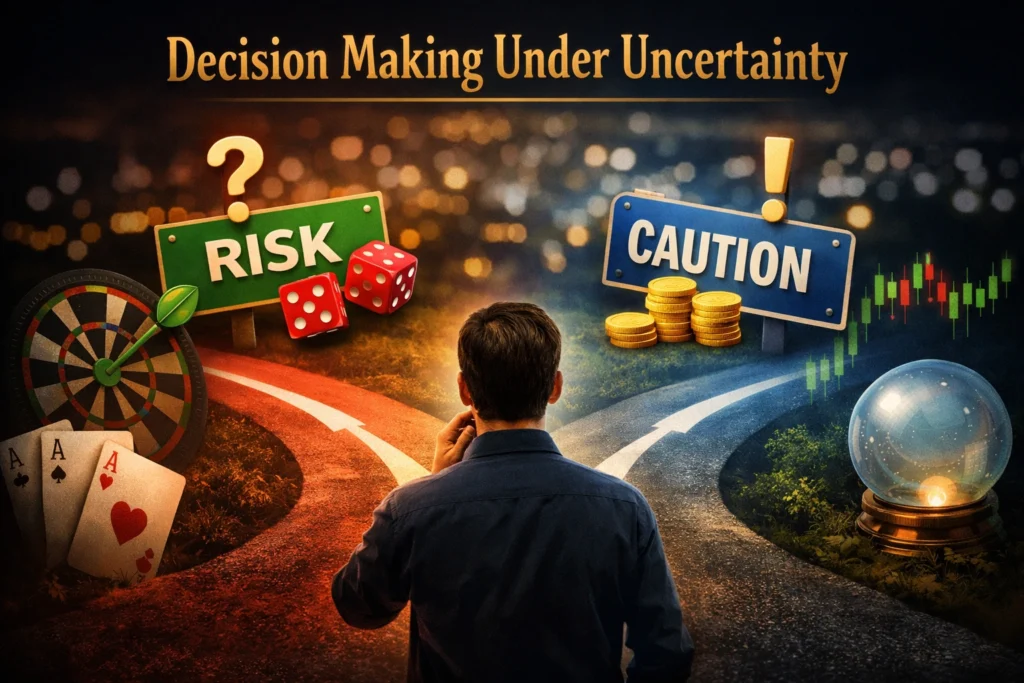
Human decision-making changes when outcomes cannot be predicted. In everyday life, choices are guided by experience and logic — study leads to results, effort leads to progress. In games of chance, this familiar structure disappears. A correct choice does not guarantee success, and an incorrect choice does not always lead to failure. This unusual condition forces the mind to adapt.
Players begin to rely on short-term signals. A recent outcome feels important even when it has no real influence on the next one. The brain prefers patterns because patterns create comfort. When none exist, it quietly invents them. A sequence of losses feels meaningful, while a random win feels deserved. These reactions happen automatically, not intentionally.
Some individuals respond by becoming cautious. They slow their pace, observe more, and reduce decisions. Others react in the opposite way — increasing activity in an attempt to regain balance. Both responses are natural attempts to restore predictability to an unpredictable situation.
Over time, experienced participants learn emotional separation. Instead of reacting to every result, they evaluate the session as a whole. This reduces impulsive choices and prevents frustration from influencing behavior. The goal shifts from controlling outcomes to controlling reactions.
This is why discipline becomes more valuable than knowledge. Knowing the rules is simple; managing emotion is complex. The most stable experience occurs when a person accepts uncertainty rather than fighting it. Once expectations align with reality, the activity becomes calmer and more deliberate.
Breaks, Pacing, and Self-Control
One of the most important skills during a gaming session is knowing when to pause. Continuous participation may feel engaging, but attention gradually weakens. Small details go unnoticed, decisions become faster, and reactions turn emotional instead of thoughtful. A short break often restores clarity more effectively than continuing without rest.
Pacing also affects enjoyment. Some people rush through rounds, focusing only on results. Others slow down and treat each moment as part of the experience. The slower approach usually produces steadier reactions because the mind has time to reset between outcomes. Speed increases intensity, while pauses maintain balance.
Physical signals provide useful guidance. Fatigue, irritation, or impatience often indicate reduced focus. Ignoring these signs leads to choices driven by mood rather than intention. Stepping away — even briefly — helps separate emotion from action. After returning, players frequently notice they evaluate situations more calmly.
Setting personal limits supports this process. A fixed duration or spending boundary creates a clear endpoint. Instead of deciding repeatedly whether to continue, the decision is already made in advance. This removes pressure and prevents extending the session beyond comfort.
In the end, control does not come from predicting results but from managing participation. A well-paced session feels complete regardless of outcome, while an uncontrolled one often feels unfinished even after long involvement. Balance turns the activity into leisure rather than tension.
Memory and Perception of Results
After a session ends, what people remember is rarely a precise record of events. Instead, memory keeps emotional highlights. A surprising win may dominate recollection even if many small losses occurred around it. Likewise, a single frustrating moment can overshadow long periods of calm enjoyment.
The mind simplifies complex experiences into short stories. Rather than recalling every round, it builds a narrative: a good night, a difficult night, or an unusual streak. These summaries feel accurate because they capture emotion, even if they ignore numerical detail. Human memory values meaning more than measurement.
This selective recall influences future expectations. Positive memories encourage return, while negative ones encourage caution. Interestingly, moderate experiences are forgotten fastest. Extreme moments — either fortunate or disappointing — remain strongest. Because of this, people often believe outcomes happen in dramatic patterns, even when they were evenly distributed.
Reflection can change this perception. When individuals review the experience calmly, they often notice how varied it truly was. Small ups and downs balanced each other more than memory suggested. Understanding this difference reduces overconfidence and prevents unnecessary frustration.
In everyday life, perception shapes behavior as much as reality. The same principle applies here. What a person believes happened matters more than what precisely occurred. Recognizing this gap helps keep expectations realistic and reactions measured.
Personal Meaning and Motivation
Different people participate for different reasons, and those reasons often change over time. At first, curiosity usually leads the way. The experience feels new, unfamiliar, and engaging. Later, the motivation may shift toward relaxation, routine, or simple diversion after daily responsibilities. The activity becomes less about outcome and more about occupying a focused mental space.
Some individuals enjoy the quiet concentration it provides. Repetitive structure allows the mind to rest from complex decisions. Others prefer the opposite — the brief adrenaline that interrupts normal rhythm. Both reactions come from the same source: a break from predictable schedules.
Personal expectations strongly influence satisfaction. A person seeking excitement reacts differently than someone seeking calm distraction. When expectations match the experience, the session feels complete. When they do not, even a favorable result may feel empty. The value comes from alignment between intention and participation.
Social influence also plays a role. Friends, shared routines, or familiar environments create attachment beyond the activity itself. Over time, the experience becomes associated with certain moods, places, or memories. This connection encourages return more reliably than outcomes ever could.
Ultimately, motivation shapes interpretation. Two people can share the same events yet leave with entirely different impressions. What matters most is not what happened, but why the person chose to be there in the first place.
Ending the Session and Afterthoughts
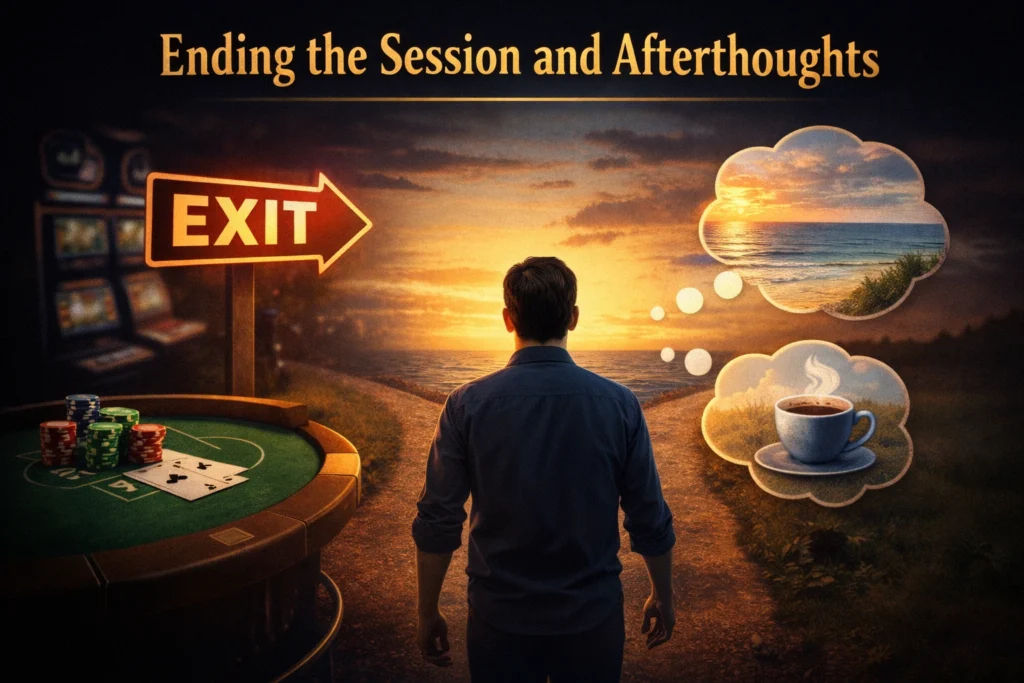
The final moments of participation often determine how the entire experience is remembered. A calm ending feels satisfying even if results were mixed, while an abrupt finish can leave a sense of incompleteness. Because of this, many people develop small personal rituals before leaving — pausing briefly, reviewing the session, or simply stepping away slowly instead of stopping suddenly.
This transition matters psychologically. The mind needs time to shift from an active state back to ordinary surroundings. Without that adjustment, thoughts about recent outcomes may continue longer than necessary. A short walk, conversation, or quiet moment helps separate the activity from the rest of the day.
Reflection usually changes perspective. Immediately afterward, emotions remain strong, but later the experience feels more balanced. What seemed significant may appear minor, and what felt disappointing may become part of a broader memory. Time reduces intensity and restores proportion.
Planning the next visit is also influenced by the ending. A controlled conclusion encourages confidence and comfort, while an unplanned one often leads to hesitation. The difference rarely depends on results; it depends on whether the person felt in control when finishing.
In this way, the closing moments shape future attitude. A thoughtful ending turns the activity into a contained experience — something that begins, unfolds, and concludes without lingering tension.
Long-Term Perspective
With repeated visits, short-term outcomes become less important. Patterns that once seemed dramatic begin to feel ordinary. The person starts recognizing that individual sessions vary widely, but over longer periods the experience remains surprisingly consistent. This realization reduces emotional swings and encourages steadier behavior.
Patience develops naturally. Instead of reacting to each moment, attention shifts to overall balance — time spent, comfort level, and personal limits. Decisions slow down, and pauses become intentional rather than accidental. The activity begins to fit into routine rather than interrupt it.
People also learn what suits them best. Some prefer brief, infrequent sessions; others enjoy longer but carefully planned ones. There is no universal approach. Comfort comes from matching habits with personality rather than copying others. Once this alignment forms, participation feels predictable even though outcomes remain uncertain.
Perspective changes expectations as well. Rather than seeking extraordinary results, individuals often value consistency of experience. A stable and controlled session becomes more satisfying than an intense but exhausting one. Familiarity replaces urgency.
Over time, the activity becomes just another optional form of leisure — not a special event, not a serious pursuit, but a chosen way to spend focused time. The uncertainty remains, yet the reaction to it becomes calmer and more measured.
Balance Between Excitement and Routine
Every leisure activity sits somewhere between stimulation and comfort. Too much intensity becomes tiring, while too much repetition becomes dull. The challenge is maintaining a middle ground where attention stays active but not overwhelmed.
At first, unpredictability provides most of the appeal. Later, familiarity takes over. Sounds, visuals, and pacing become recognizable, and the mind no longer reacts strongly to every change. Instead of sharp emotional spikes, there is a steady level of engagement. This shift often marks the moment when the activity turns from novelty into habit.
People naturally adjust to keep interest alive. Some shorten their sessions, others change timing, and some simply reduce frequency. Small adjustments prevent boredom without increasing pressure. The goal becomes maintaining enjoyment rather than intensifying excitement.
Routine can actually enhance satisfaction. Knowing what to expect reduces tension and allows attention to rest on the present moment rather than future results. The experience feels smoother, more controlled, and easier to step away from when finished.
In the end, the most comfortable approach is one that neither chases constant thrill nor eliminates it entirely. A balanced rhythm keeps the activity engaging while preserving its place as optional recreation rather than obligation.
Understanding Personal Limits
Awareness of limits develops gradually. At the beginning, boundaries often feel flexible because the experience is new and attention is focused on immediate events. With time, people begin noticing how duration, mood, and energy influence their decisions. This observation leads to clearer self-guidelines.
Limits are not only financial; they are mental as well. Concentration fades after extended focus, and reactions become faster but less thoughtful. Recognizing this moment is important. Stopping before fatigue appears usually feels comfortable, while stopping after exhaustion often feels forced.
Emotional signals also act as indicators. Frustration, impatience, or restlessness suggest the mind is no longer engaged in a balanced way. Leaving at that point restores perspective quickly. Ignoring these signs tends to prolong tension rather than enjoyment.
Consistency helps. Similar schedules, planned pauses, and defined endpoints remove the need for repeated decisions. Instead of debating whether to continue, the structure already answers the question. This makes finishing feel natural instead of abrupt.
Ultimately, limits protect the experience itself. They ensure the activity remains a choice rather than a reaction. When boundaries are clear, participation feels lighter, and returning later feels comfortable rather than compelled.
The Role of Environment Change
A change in surroundings often reshapes the experience more than the activity itself. Lighting, sound level, seating comfort, and even time of day influence attention and mood. The same session can feel energetic in one setting and calm in another simply because the atmosphere guides behavior.
People naturally adapt to their surroundings. In a lively environment, reactions become quicker and more expressive. In a quieter one, decisions slow down and observation increases. Neither approach is better; they just create different feelings. Some prefer occasional variation for freshness, while others prefer consistency for comfort.
Returning after a break also alters perception. What once felt intense may feel ordinary, and what once felt ordinary may feel interesting again. This reset helps prevent monotony. Stepping away for a period allows the mind to release expectations and approach the next session with a clearer perspective.
Environment change is also useful for maintaining control. Moving locations, adjusting schedule, or simply shifting position interrupts automatic behavior. The pause encourages awareness and prevents repetition without thought.
In many cases, enjoyment depends less on results and more on how well the surroundings match the person’s mood at that moment. When the environment feels right, the experience naturally feels balanced.
Looking Back on the Experience
After enough time has passed, individual sessions blend into a broader impression. Specific numbers fade, but the overall feeling remains clear. People rarely recall exact sequences; instead they remember whether the time felt relaxed, engaging, or tiring. The mind keeps atmosphere rather than detail.
This distance allows more objective thinking. Moments that once felt intense appear smaller, and decisions that seemed urgent appear ordinary. The experience becomes easier to evaluate because emotion no longer dominates judgment. Many realize the value was in the break from routine rather than the outcomes themselves.
Personal habits also become visible in hindsight. Some notice they preferred shorter visits, others that they enjoyed social interaction more than the activity. Recognizing these preferences helps shape future participation into something more comfortable and intentional.
The memory often settles into a simple conclusion: the experience worked best when approached calmly and ended deliberately. When it stayed within those boundaries, it felt complete. When it extended beyond them, it felt heavier than expected.
Looking back transforms scattered moments into understanding. Instead of focusing on isolated events, the person understands how the activity fits into their broader leisure time — as one option among many, meaningful only when balanced with the rest of life.
Final Thoughts
Casino play continues to attract people because casino play offers a controlled form of uncertainty combined with entertainment. When casino play is approached with clear intention, casino play remains enjoyable and balanced. When expectations grow unrealistic, casino play feels heavy instead of engaging. The difference in casino play always depends on mindset rather than outcome.
Many players explore casino play information through platforms like casinoidworld and onlinecricketid while following updates and guides on t20worldcup. These resources help users understand casino play environments, but the real experience of casino play still comes from personal control, pacing, and awareness during casino play sessions.
Healthy casino play requires boundaries. Responsible casino play means setting limits, accepting results, and leaving casino play at the right time. Without limits, casino play becomes reaction-driven; with limits, casino play stays recreational. The purpose of casino play is engagement, not dependence.
In the end, casino play works best as optional entertainment. Casino play should fit into life, not replace it. When casino play is treated as a temporary activity, the excitement, anticipation, and focus remain positive. Balanced casino play creates enjoyment, while uncontrolled casino play removes it.
FAQ — Casino Play
1. What is casino play?
Casino play refers to participating in games of chance or mixed skill and chance for entertainment. It includes table games, card games, and digital games where outcomes are uncertain and decided by probability.
2. Is casino play purely based on luck?
Not always. Some activities rely completely on randomness, while others involve decision-making and strategy. Over short periods luck dominates, but over longer periods behavior and discipline influence the experience.
3. Why do people enjoy casino play even when they lose?
Because the appeal is not only winning money. The anticipation, quick results, mental focus, and emotional stimulation make it feel engaging similar to other paid entertainment activities.
4. Can someone control the outcome?
No participant can control results in chance-based systems. What can be controlled is pacing, limits, and reactions to outcomes.
5. What is the best approach to stay responsible?
Set a budget, define a time limit, take regular breaks, and treat losses as the cost of entertainment rather than something to recover.
6. Does experience guarantee better results?
Experience improves emotional control and decision habits, but it does not remove randomness. It mainly helps maintain balance and avoid impulsive behavior.
7. Why do players believe patterns exist?
The human brain naturally searches for order in random events. Sequences feel meaningful even when each result is independent of the previous one.
8. Is online participation different from physical venues?
Yes. Online environments are faster and more private, while physical locations provide atmosphere and social interaction. The psychological impact can therefore feel different.
9. How long should a session last?
There is no fixed duration. A healthy session ends when the planned limit or comfort level is reached, not when trying to recover outcomes.
10. When should someone stop?
When frustration, fatigue, or urgency appears. Stopping at a calm moment helps maintain a positive overall experience.
