

Introduction
Cricket is often described as more than just a sport—it is an emotion that unites millions of fans across the globe. Over the years, the game has evolved to match the changing pace of modern life, giving birth to faster and more exciting formats. Among these, Twenty20 cricket, popularly known as T20, has emerged as the most dynamic and entertaining version of the game. At the heart of this format lies the T20 World Cup, a global tournament that showcases the best cricketing talent from different nations in a thrilling and action-packed competition.
The T20 World Cup has transformed the traditional image of cricket by introducing shorter matches filled with aggressive batting, innovative bowling, and spectacular fielding. Each game lasts only a few hours, yet it delivers intense drama and unforgettable moments that keep fans on the edge of their seats. From last-ball finishes to record-breaking performances, the tournament offers non-stop excitement and captures the attention of audiences of all ages.
Today, the T20 World Cup is not just a championship but a worldwide celebration of cricket, bringing together cultures, countries, and communities through the shared passion for the game.
History and Origin of the T20 World Cup
The T20 World Cup was introduced to meet the growing demand for a shorter and more exciting version of cricket. As traditional formats like Test matches and One Day Internationals required long viewing hours, cricket administrators realized the need for a fast-paced alternative that could attract modern audiences. This led to the development of Twenty20 cricket, a format limited to just 20 overs per team.
The first T20 World Cup was held in 2007, marking a turning point in the history of international cricket. The tournament immediately gained worldwide attention due to its aggressive style of play, thrilling finishes, and unpredictable outcomes. Unlike longer formats, T20 matches encouraged players to take risks, resulting in explosive batting performances and innovative bowling techniques.
The early success of the tournament proved that T20 cricket was not a temporary experiment but a permanent and powerful addition to the sport. Over the years, the T20 World Cup expanded with more participating nations, providing opportunities for emerging teams to compete on the global stage. This inclusiveness helped spread cricket beyond traditional strongholds and increased its global reach.
Today, the T20 World Cup stands as a symbol of modern cricket, blending entertainment, competition, and international unity into a single high-energy tournament.
Format and Tournament Structure of the T20 World Cup
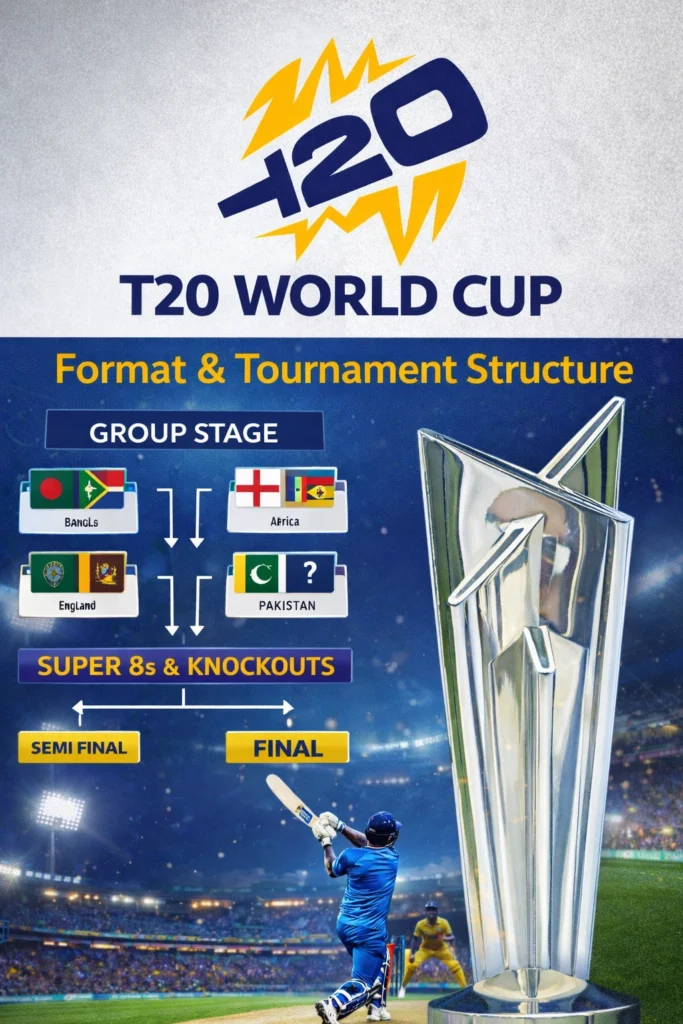
One of the main reasons behind the massive success of the T20 World Cup is its simple yet highly exciting tournament structure. The format is designed to ensure fairness, competitiveness, and non-stop entertainment for cricket fans around the world. Unlike longer cricket tournaments that can last for months, the T20 World Cup delivers fast results within a short time while still maintaining high intensity.
The tournament usually begins with a group stage, where participating teams are divided into different groups. Each team plays several matches against others in their group. Points are awarded for wins, and the top-performing teams qualify for the next stage. This system ensures that only the most consistent and skilled teams move forward in the competition.
After the group stage, the tournament progresses to the Super Stage or knockout rounds. These matches are more intense because a single loss can eliminate a team from the tournament. The pressure on players increases significantly, making every ball, run, and wicket extremely important. The semi-finals determine the two best teams, who then compete in the grand final for the championship trophy.
Each match consists of 20 overs per side, which forces teams to play aggressively from the very first over. Batsmen focus on scoring quickly with boundaries and sixes, while bowlers use clever strategies like slower balls, yorkers, and spin variations to control runs. Fielders must stay alert and athletic, as even one mistake can change the outcome of the game.
This fast-paced structure keeps spectators engaged throughout. There is no room for slow play or defensive strategies, which makes every match thrilling and unpredictable. As a result, the T20 World Cup offers the perfect balance of strategy, skill, and entertainment, making it one of the most watched sporting tournaments in the world.
Why the T20 World Cup Is So Popular
The T20 World Cup has become one of the most watched sporting events in the world, attracting millions of viewers from different countries and cultures. Its popularity continues to grow with every edition because it perfectly matches the fast-paced lifestyle of modern audiences. Unlike traditional cricket formats that last for an entire day or several days, T20 matches are completed within just three hours, making them convenient, exciting, and easy to follow.
One of the biggest reasons for its success is the non-stop entertainment it provides. Every ball brings action, whether it is a powerful six, a clever slower ball, or a stunning catch on the boundary. There is very little downtime, which keeps fans engaged throughout the match. The constant momentum makes the game feel more like a festival rather than just a sport.
Star players also add to the excitement. The tournament features the best cricketers from around the globe, and fans love watching their favorite players perform under pressure. Big hits, last-over thrillers, and record-breaking performances create unforgettable memories that are talked about for years.
Another factor behind its popularity is the vibrant stadium atmosphere. Music, lights, cheering crowds, and colorful flags make every match feel like a celebration. Families, young fans, and even people new to cricket can enjoy the experience. Social media further amplifies the craze, allowing supporters to share reactions and moments instantly.
Because of its speed, drama, and global appeal, the T20 World Cup has successfully transformed cricket into a modern entertainment spectacle, making it the favorite format for millions of fans worldwide.
Memorable Matches and Historic Moments
The T20 World Cup is famous not only for its fast format but also for the unforgettable moments it has produced over the years. Every edition of the tournament brings drama, surprises, and heart-stopping finishes that remain in the memories of fans forever. Because the game is so short and intense, even a single over can completely change the result, making every match unpredictable and thrilling.
One of the most exciting aspects of the tournament is the number of last-ball finishes. Many matches have been decided on the final delivery, where one run, one wicket, or one boundary determined the winner. These nail-biting situations create immense pressure for players and unmatched excitement for spectators. Fans often describe such moments as the true magic of T20 cricket.
The tournament has also witnessed extraordinary individual performances. Batsmen have scored quick centuries in record time, smashing sixes all around the ground. Bowlers have taken hat-tricks and defended low totals with brilliant strategies. Fielders have pulled off stunning catches and run-outs that seemed almost impossible. These exceptional displays of skill turn players into heroes overnight.
Upsets are another important part of T20 World Cup history. Smaller or underdog teams often defeat stronger sides, proving that reputation does not always guarantee victory. This element of surprise keeps the competition fresh and inspires emerging cricket nations to dream big.
Over time, these iconic matches and performances have built the legacy of the T20 World Cup. They remind fans why they love the game and why this tournament remains one of the most exciting spectacles in world sport.
Impact on Players and Their Careers

The T20 World Cup has played a major role in transforming the careers of cricketers across the world. More than just a tournament, it serves as a global stage where players can showcase their talent in front of millions of viewers, selectors, and sponsors. A single outstanding performance in this competition can turn an unknown player into an international star overnight.
Because the format is fast and aggressive, it allows players to display their skills more freely. Batsmen experiment with innovative shots such as reverse sweeps, scoops, and ramp shots to score quickly. Bowlers develop clever variations like slower balls, yorkers, and spin tricks to deceive opponents. This creativity has changed the way modern cricket is played and has made the game more exciting for fans.
The pressure of the T20 World Cup also builds mental strength. Players learn how to perform in high-stress situations, especially during close finishes or knockout matches. Handling such pressure improves their confidence and prepares them for other international tournaments. Many cricketers have admitted that performing well in the World Cup boosted their reputation and helped them secure places in professional leagues around the world.
Fitness is another area that has improved because of this format. The fast pace demands quick running between wickets, sharp fielding, and explosive energy. As a result, players focus more on training, diet, and overall health to maintain peak performance. Today’s cricketers are stronger, faster, and more athletic than ever before.
In many ways, the T20 World Cup acts as a launchpad for success. It not only creates match-winners but also shapes future legends of the game, inspiring young players to dream of representing their countries on the biggest stage.
Economic and Commercial Significance of the T20 World Cup
The T20 World Cup is not only a celebration of cricket but also a massive economic and commercial event. Over the years, the tournament has grown into a multi-million-dollar industry that generates huge revenue through broadcasting rights, sponsorships, advertisements, ticket sales, and merchandise. Its global popularity makes it one of the most valuable sporting properties in the world.
One of the biggest sources of income comes from television and digital broadcasting. Millions of viewers watch matches live across different countries, encouraging media companies to pay large sums for exclusive broadcasting rights. Online streaming platforms also contribute significantly, allowing fans to watch games anytime and anywhere. This worldwide reach increases the tournament’s financial strength every year.
Sponsorships and brand partnerships play another important role. Major companies invest heavily to associate their names with the event. Logos on jerseys, stadium banners, and advertisements during matches help brands connect with massive audiences. For businesses, the T20 World Cup becomes a powerful marketing platform to promote products globally.
Host countries also experience strong economic benefits. Tourism rises sharply as fans travel to watch matches in stadiums. Hotels, restaurants, transportation services, and local shops see increased business during the tournament. The event creates temporary jobs and boosts the local economy, making it beneficial beyond the cricket field.
Merchandise sales further add to the revenue. Fans proudly buy team jerseys, caps, flags, and souvenirs to support their favorite sides. This commercial activity shows how deeply the tournament connects with people emotionally and financially.
Overall, the T20 World Cup proves that modern sports are not just games but global industries that combine entertainment with economic growth. Its commercial success ensures that the tournament continues to expand and reach new heights every year.
Cultural and Global Influence of the T20 World Cup
Beyond the boundaries of the cricket field, the T20 World Cup has a powerful cultural and social influence across the world. It is more than just a sporting event—it is a global celebration that connects people from different nations, languages, and backgrounds through a shared love for cricket. During the tournament, millions of fans come together to cheer for their teams, creating a sense of unity and belonging.
One of the most beautiful aspects of the T20 World Cup is how it brings cultures closer. Stadiums are filled with colorful flags, traditional chants, and passionate supporters representing their countries. Fans travel across borders to watch matches, turning the tournament into an international festival. This exchange of cultures promotes friendship, respect, and sportsmanship among nations.
The event also plays a huge role in family and community bonding. Friends gather to watch matches, families celebrate victories together, and entire neighborhoods discuss the game’s highlights. Cricket becomes a shared experience that strengthens relationships and creates lasting memories. Even people who do not usually follow the sport get involved because of the excitement and national pride surrounding the World Cup.
Social media has further amplified this influence. Fans share match reactions, memes, videos, and opinions online, making the tournament trend worldwide. Every big moment—whether it’s a stunning six or a dramatic wicket—spreads instantly across platforms, connecting millions of people in real time.
Most importantly, the T20 World Cup inspires the younger generation. Children watching their heroes perform on the world stage dream of becoming cricketers themselves. Many start playing the game in streets, parks, and schools, hoping to represent their country one day. In this way, the tournament helps nurture future talent and keeps the spirit of cricket alive.
Ultimately, the T20 World Cup proves that sport has the power to unite humanity. It breaks barriers, builds friendships, and spreads joy far beyond the stadium, making it a true global phenomenon.
Challenges and Future of the T20 World Cup
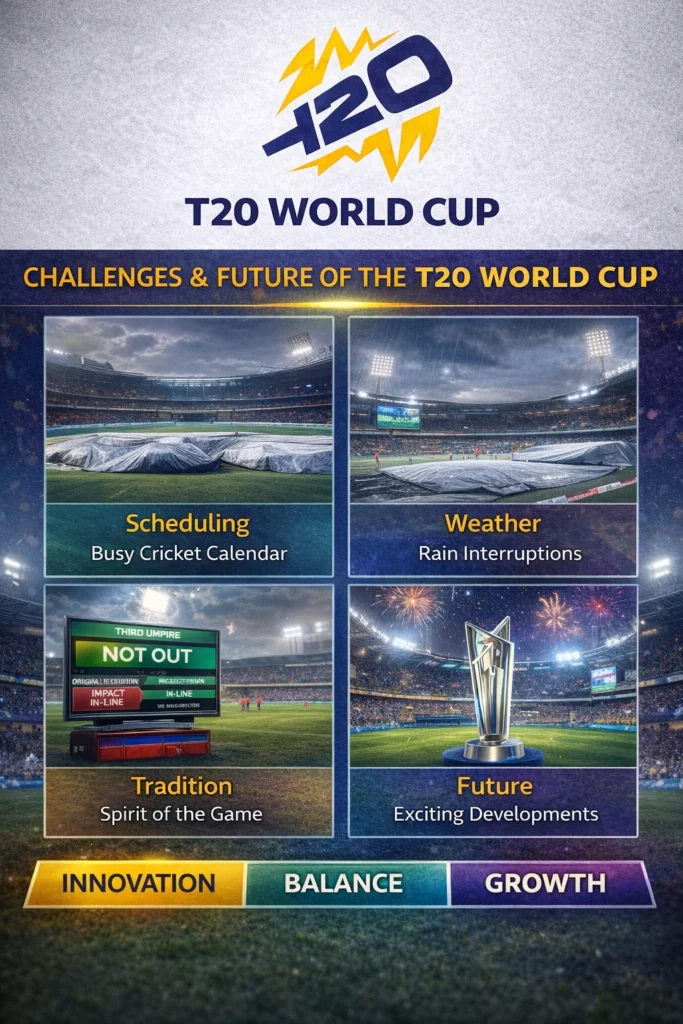
Although the T20 World Cup has achieved massive success and worldwide popularity, it also faces several challenges that organizers must carefully manage. Like any major international sporting event, maintaining balance between entertainment, fairness, and tradition is not always easy. These challenges test the tournament’s structure and require constant improvement to keep the competition exciting and credible.
One of the biggest problems is scheduling. Modern cricket calendars are already crowded with bilateral series, domestic leagues, and other international tournaments. Finding the right time to host the T20 World Cup without overloading players is difficult. Continuous matches can cause fatigue and injuries, which may affect the quality of performances.
Weather conditions also create obstacles. Rain interruptions sometimes shorten matches or even cancel games, disappointing fans and teams alike. Because T20 matches depend heavily on momentum, interruptions can change results unfairly. Organizers must plan better venues and backup schedules to reduce such risks.
Another challenge is preserving the traditional spirit of cricket. Some critics argue that the shorter format focuses too much on power hitting and entertainment while reducing the technical and strategic depth of the game. However, supporters believe that T20 cricket simply adds variety and attracts new audiences. Striking the right balance between excitement and skill remains important for the future.
Despite these issues, the future of the T20 World Cup looks extremely bright. Technology is improving the viewing experience through ultra-HD broadcasting, real-time statistics, and decision-review systems. More associate nations are participating, making the tournament truly global. Women’s T20 competitions are also growing rapidly, promoting inclusiveness and gender equality in cricket.
With better organization, innovation, and expanding fan support, the T20 World Cup is expected to reach even greater heights in the coming years. It will continue to evolve, entertain, and inspire generations of cricket lovers around the world.